
A classic potato soup recipe is a creamy, comforting dish made from simple ingredients like potatoes, onions, garlic, broth, and a dairy product like milk or heavy cream. The soup is typically puréed or mashed to achieve a smooth texture and can be customized with toppings such as bacon, shredded cheese, and chives for a ‘loaded baked potato’ style.
Craving a warm, simple, and satisfying meal? Nothing hits the spot quite like a creamy bowl of homemade potato soup. It’s the ultimate comfort food, perfect for chilly evenings or any time you need a little warmth. But classic recipes can feel overwhelming, especially when you need a quick and easy meal.
This guide will help you master the perfect potato soup. Our recipe is easy to follow, incredibly delicious, and ideal for beginners and busy cooks. We’ll show you how to create a rich, creamy soup without the fuss. We’ll also explore how tools like Recipe-GPT can instantly suggest variations based on your preferences—like a potato soup crock pot meal or a loaded baked potato soup.
Get ready to discover just how simple this classic dish can be. We cover everything from basic ingredients to smart tips for customizing your bowl. You’ll learn how to make a hearty loaded baked potato soup or adapt the recipe for your Crock Pot. We’re here to make your cooking experience enjoyable and successful. Say goodbye to mealtime indecision and hello to your new favorite potato soup!
Why You’ll Love This Easy Potato Soup Recipe
Imagine a warm, comforting bowl of soup that feels like a hug. Our easy potato soup recipe delivers just that. Simple to make and incredibly satisfying, it’s the perfect choice for busy weeknights or cozy weekends.
You’ll love how straightforward this recipe is, starting with common ingredients you likely already have. It’s proof that preparing a delicious meal doesn’t need to be complicated. In fact, soup is often praised for its comforting simplicity, making it an ideal weeknight meal [1].
Best of all, this recipe introduces you to Recipe-GPT, our AI tool that makes cooking even easier. Use it to personalize this simple potato soup and get tailored meal inspiration instantly. You can go from mealtime indecision to a clear, customized recipe in seconds.
Here’s why this will become your go-to potato soup recipe:
- Effortless Preparation: This recipe features quick, practical cooking steps designed for cooks of all skill levels.
- AI-Powered Customization: Use Recipe-GPT to transform this base recipe. Ask our AI to create a rich loaded baked potato soup or a quick and easy Crockpot potato soup.
- Perfect for Any Diet: Our AI can adapt this recipe for vegetarian cream of potato soup. Simply ask for a plant-based twist!
- Fast & Flexible: Get personalized recipe suggestions in moments. Discover how to use ingredients on hand or adjust serving sizes with ease.
- Guaranteed Comfort: Enjoy the classic, hearty goodness of this potato soup. It’s warm, filling, and always a family favorite.
With the help of AI, this recipe transforms cooking from a chore into an enjoyable experience. You’ll gain confidence in the kitchen while making quick, practical, and delicious meals every time.
What Ingredients Do You Need for Homemade Potato Soup?

Core Ingredients for the Best Potato Soup
The best homemade potato soup starts with simple, fresh ingredients. You don’t need a gourmet pantry to create a comforting and flavorful dish, and Recipe-GPT can help suggest substitutions for anything you’re missing.
This easy potato soup recipe focuses on key components that deliver a creamy texture and rich taste. Gathering these essentials is the first step to a delicious meal.
- Potatoes: Russet or Yukon Gold potatoes are ideal. They break down beautifully to create a creamy base, helping to thicken your soup naturally [2].
- Aromatics: Yellow onion and fresh garlic build a foundational layer of flavor. They are sautéed first to release their fragrant oils.
- Fats: Butter or olive oil helps you sauté the vegetables. A little all-purpose flour works with the fat to create a roux, thickening the soup.
- Broth: Chicken broth or vegetable broth provides the liquid base. Choose a high-quality broth for the best flavor.
- Dairy: Whole milk, half-and-half, or heavy cream adds richness and creaminess. Heavy cream yields the thickest, most indulgent soup.
- Seasonings: Salt and black pepper are crucial. You can adjust these to your taste preferences as the soup cooks.
Recipe-GPT can also offer personalized suggestions. For instance, if you only have vegetable broth, it can adapt the recipe for a vegetarian version. This tool simplifies ingredient decisions so you always have a plan.
Optional Toppings for a Loaded Version
While this potato soup is delicious on its own, adding toppings can transform it into a loaded baked potato soup. These simple additions enhance both texture and flavor, making a simple meal feel special.
Consider these popular options to elevate your soup, whether you’re making family-friendly dishes or want to impress guests. Recipe-GPT can also suggest toppings based on your dietary preferences or the ingredients you have on hand.
- Crispy Bacon: Crumbled, cooked bacon adds a smoky, salty crunch. This is a classic topping for any loaded potato dish.
- Shredded Cheese: Sharp cheddar cheese melts beautifully into the hot soup. Other great choices include Monterey Jack or a Colby-Jack blend.
- Fresh Herbs: Chopped green onions or chives provide a fresh, mild onion flavor and a pop of color.
- Sour Cream or Greek Yogurt: A dollop adds a tangy creaminess. Greek yogurt can be a lighter alternative, offering a similar tang.
- Jalapeños: Sliced fresh or pickled jalapeños offer a touch of heat for those who enjoy a spicy kick.
- Croutons: Toasted bread croutons add an extra layer of crunch. You can even use crumbled potato chips for a fun twist.
You can also use Recipe-GPT to customize your soup. Simply input your preferences, and it can generate specific variations, such as a loaded baked potato soup crock pot recipe. This tool helps you spend less time planning and more time enjoying your meal.
How to Make Creamy Potato Soup Step-by-Step
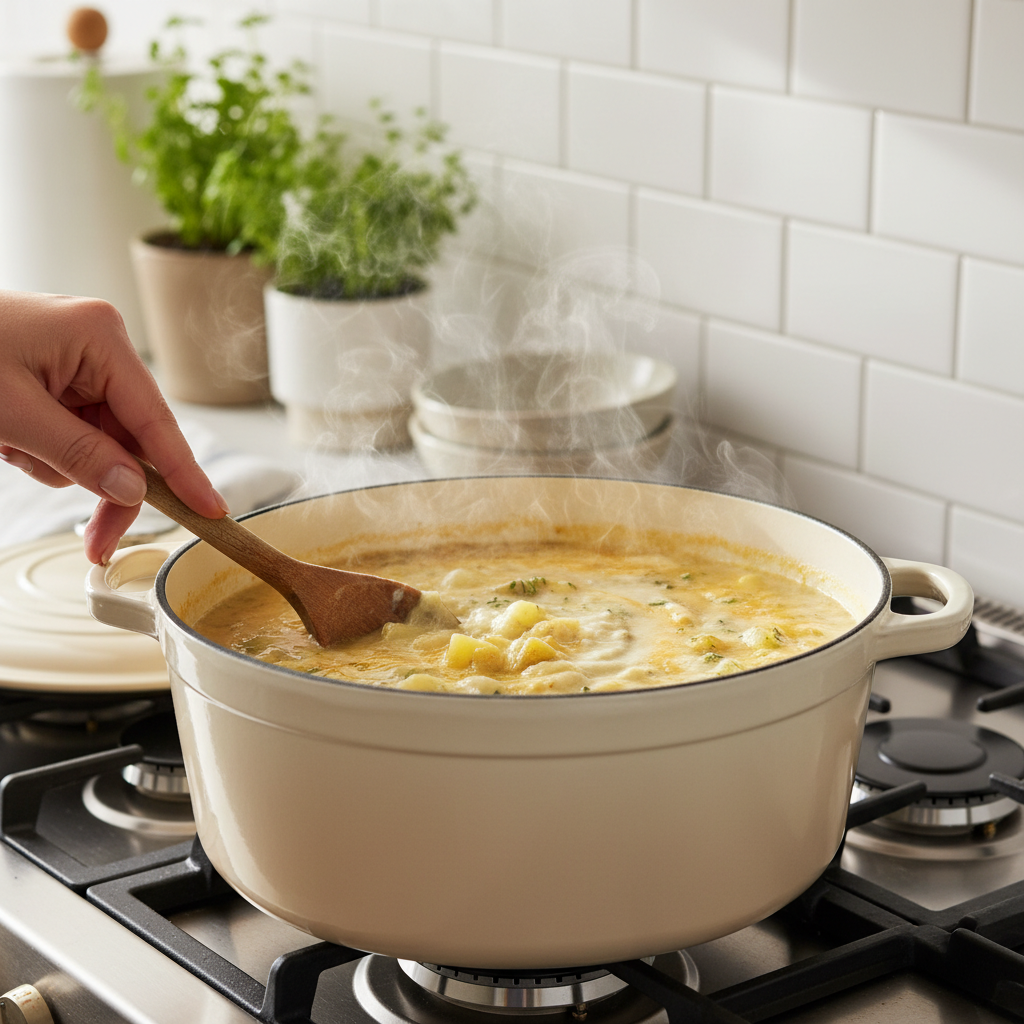
Step 1: Prepare the Vegetables
The key to delicious potato soup is starting with fresh, well-prepared vegetables. This step builds the foundation for the soup’s rich flavor.
- First, wash the potatoes thoroughly. Peel and dice them into uniform, bite-sized pieces. Smaller pieces will cook faster and more evenly.
- Next, peel and finely chop the onion, aiming for a consistent dice.
- Finally, peel and mince the garlic cloves. Precise mincing helps distribute the flavor throughout the soup.
AI Tip: Recipe-GPT can easily adjust ingredient amounts for you. Just tell it how many servings you need, and it instantly updates the list!
Step 2: Sauté Aromatics and Cook Potatoes
Building flavor begins with a good sauté, which brings out the sweetness of the onions and the aromatic depth of the garlic.
- In a large pot or Dutch oven, heat the olive oil or butter over medium heat.
- Add the chopped onion and sauté until translucent and soft, about 5-7 minutes. Avoid browning.
- Stir in the minced garlic and cook for one more minute until fragrant. Watch carefully to prevent it from burning and turning bitter.
- Add the diced potatoes to the pot, then pour in the chicken or vegetable broth. Make sure the potatoes are mostly submerged.
- Bring the mixture to a boil, then reduce the heat to low. Simmer for 15-20 minutes, or until the potatoes are tender enough to be easily pierced with a fork.
Step 3: Blend for a Smooth Texture
This is where the soup transforms into a creamy delight. Choose the blending method that best suits your desired texture.
- Option 1: Immersion Blender. Place the immersion blender directly into the pot. Blend to your desired consistency—longer for a super-smooth soup, or for less time to leave some chunky potato pieces.
- Option 2: Regular Blender. Working in batches, carefully ladle soup into the blender, filling it no more than halfway. Secure the lid, leaving it slightly vented to let steam escape. Blend until smooth, then return the blended portion to the pot.
Blending creates the luxurious, velvety texture that makes this soup so comforting.
Step 4: Add Cream and Season
These final touches bring all the flavors together, adding richness and perfecting the taste.
- Remove the pot from the heat before stirring in the heavy cream or half-and-half. This adds a rich, creamy texture.
- Season generously with salt and freshly ground black pepper. Taste the soup and adjust the seasoning as needed. A tiny pinch of nutmeg can also add extra warmth.
- Once seasoned, your creamy potato soup is ready to be ladled into bowls.
- Optional Toppings: Garnish with your favorite toppings, such as shredded cheddar cheese, crispy bacon bits, fresh chives, or a dollop of sour cream. These additions can turn a simple recipe into a loaded baked potato soup experience!
AI Tip: Curious about dietary swaps? Recipe-GPT can instantly suggest variations, like a vegetarian version using vegetable broth, or a dairy-free soup using plant-based creams. It makes customizing any simple potato soup recipe effortless!
How Can AI Help Customize Your Soup?
Making delicious potato soup is already simple, but Recipe-GPT takes it a step further. Our AI tool helps you personalize your meal by adapting any recipe to your unique tastes and pantry ingredients.
You can quickly transform a basic recipe by telling Recipe-GPT your needs. In return, it provides instant ideas and modifications, resulting in a meal that’s tailored for you, every time.
Forget mealtime stress. Our AI companion simplifies the entire cooking process, ensuring you create the perfect bowl of soup. This frees up more of your time to simply enjoy your meal.
Easy Crockpot Potato Soup Variation
For a truly hands-off approach, Recipe-GPT can easily convert any potato soup recipe for a slow cooker.
Simply input “Crockpot” or “slow cooker,” and our AI will generate adjusted instructions. It provides the correct cooking times and steps to make your dinner preparation completely effortless.
Here’s how AI can help with your Crockpot potato soup:
- Ingredient Adjustment: Suggests the ideal ingredient quantities for slow cooking.
- Time Management: Provides precise cook times for both low and high settings.
- Preparation Tips: Offers advice on key steps, like whether to sauté aromatics first.
- Recipe Reminders: Reminds you when to add dairy ingredients for the best results.
This way, you get a hearty, warm soup with minimal effort.
Loaded Baked Potato Soup Variation
If you’re craving something extra indulgent, let Recipe-GPT help you create a comforting, classic loaded baked potato soup.
Just ask the AI for “loaded” variations, and it will suggest the perfect additions to create a rich and flavorful experience.
AI makes customizing easy:
- Topping Suggestions: Get a list of classic and creative toppings, like crispy bacon, cheddar cheese, green onions, and sour cream.
- Ingredient Ratios: Helps balance all the flavors, ensuring your soup is perfectly “loaded” without being overwhelming.
- Dietary Adjustments: Suggests healthier swaps for toppings if you need a lighter version of the soup.
- Step-by-Step Integration: Blends these new additions seamlessly into your base recipe.
Enjoy a restaurant-quality bowl at home, perfectly tailored by AI.
Simple 4-Ingredient Potato Soup Idea
When life gets busy, you need a quick and easy meal solution. Recipe-GPT shines in these moments, helping you craft a delicious soup with minimal ingredients.
If you only have a few items on hand, just tell the AI what’s in your pantry. It will generate a simple potato soup recipe that reduces food waste and cooking stress.
Recipe-GPT simplifies your cooking with:
- Ingredient Pairing: Identifies the most compatible ingredients you already have.
- Minimalist Recipes: Creates recipes focused on core flavors and essential steps.
- Creative Substitutions: Suggests easy swaps if you’re missing a key ingredient.
- Fast Preparation: Generates simple recipes that are ready in under 30 minutes, ideal for busy weeknights.
Our AI makes mealtime decisions easier by offering fast and practical inspiration.
Vegetarian Cream of Potato Soup
Accommodating dietary preferences is important, and Recipe-GPT makes it simple. You can easily adapt any potato soup recipe to be fully vegetarian.
Simply indicate “vegetarian” or “plant-based” to the AI. It will then remove any meat-based ingredients and offer delicious plant-forward alternatives to ensure a creamy, satisfying soup.
Here’s how AI helps with vegetarian options:
- Broth Swaps: Recommends using vegetable broth instead of chicken broth.
- Cream Alternatives: Provides dairy-free options like oat milk, cashew cream, or full-fat coconut milk.
- Flavor Enhancers: Suggests ingredients like nutritional yeast or smoked paprika to add rich, savory depth.
- Complete Recipes: Delivers full, beginner-friendly instructions tailored for a perfect vegetarian meal.
Our AI ensures your cooking journey is both inclusive and enjoyable.
Expert Tips for the Perfect Bowl Every Time

Crafting the perfect bowl of potato soup is easier than you think. With a few expert insights, you can elevate your homemade soup from good to truly exceptional, ensuring a rich, flavorful, and perfectly textured dish every time.
Recipe-GPT can help you personalize these tips. Use it to tailor ingredients and methods to your specific preferences and achieve delicious results with confidence.
Choosing Your Spuds Wisely
The type of potato you choose will significantly impact your soup’s final texture. Starchy potatoes, for example, break down easily to create a naturally thick and creamy base. In contrast, waxy potatoes hold their shape better, making them ideal for chunky soups.
- Russet Potatoes: High in starch, these break down beautifully to create a very creamy, smooth texture, perfect for a classic, thick soup.
- Yukon Gold Potatoes: A versatile, all-around choice. They offer a balance of creaminess and body, as they are slightly waxy but still starchy enough to thicken the soup.
- Red or White Potatoes: These waxy potatoes hold their shape well, making them ideal for soups with distinct potato chunks. For a creamier texture, you may need to blend more thoroughly or use a thickener.
Not sure which to pick? Recipe-GPT can suggest the best potato for your desired consistency. Just tell it if you want your soup super creamy or slightly chunky!
Mastering the Creamy Texture
A silky-smooth texture is the hallmark of a great cream of potato soup. To achieve this, focus on proper cooking, smart blending, and adding dairy at the right moment.
- Cook Potatoes Until Very Tender: Make sure your potato pieces are soft enough to mash easily, which allows for effortless blending.
- Blend Partially for More Body: For a soup with great texture, try blending only two-thirds of it, leaving some chunks behind. An immersion blender makes this process simple and mess-free.
- Add Dairy at the End: Stir in heavy cream, milk, or half-and-half after the soup has finished simmering. To prevent curdling, avoid boiling the soup once the dairy has been added.
Recipe-GPT can suggest dairy-free alternatives or different thickeners to ensure your soup always meets your dietary needs.
Elevate Your Flavor Profile
Even a simple soup can become extraordinary with a few flavor-building steps. Use these techniques to deepen the taste and create a more memorable dish.
- Sauté Aromatics First: Start by cooking onions, garlic, and celery until softened to build a foundational layer of flavor.
- Use a Quality Broth: Since broth is the backbone of your soup, choose a high-quality, low-sodium brand to better control the final seasoning.
- Season in Layers: Don’t wait until the end to season. Add salt, black pepper, and other spices at different stages, tasting and adjusting as you go.
- Finish with Fresh Herbs: Stir in fresh chives, parsley, or dill just before serving to add a final touch of brightness and aroma.
Recipe-GPT can generate a personalized ingredient list for you, including suggestions for herbs and spices based on your flavor preferences.
Topping It Off Perfectly
Toppings are a fun way to transform a simple soup into a loaded baked potato experience. They add texture, flavor, and visual appeal, so don’t be afraid to get creative.
- Crispy Bacon Bits: Provides a classic salty, smoky crunch.
- Shredded Cheese: Cheddar or Monterey Jack melts beautifully into the warm soup.
- Fresh Chives or Green Onions: Adds a mild onion flavor and a pop of vibrant color.
- Sour Cream or Greek Yogurt: A dollop introduces a pleasant tang and extra creaminess.
- Croutons or Toasted Bread: Offers a satisfying crunch and is perfect for soaking up the broth.
Recipe-GPT can offer creative topping suggestions tailored to what you have in your pantry, including options for a hearty loaded potato soup crock pot version.
Easy Crockpot Potato Soup Secrets
Using a crock pot is a fantastic, time-saving way to make potato soup with tender potatoes and deep, melded flavors. Follow these tips for the best results.
- Dice Evenly: Cut your potatoes and other vegetables into uniform pieces to ensure they all cook at the same rate.
- Cook Low and Slow: For perfectly tender potatoes, cook on low for 6-8 hours or on high for 3-4 hours.
- Add Dairy at the End: To prevent scorching or curdling, stir in milk, cream, or cheese during the last 30-60 minutes of cooking.
- Adjust Thickness After Cooking: Once cooked, use an immersion blender directly in the pot, or blend a portion of the soup separately and stir it back in to reach your desired consistency.
Recipe-GPT can instantly convert soup recipes into baked potato soup crock pot instructions, saving you planning time and effort.
With these expert tips and Recipe-GPT’s intelligent assistance, you’re ready to confidently create the perfect potato soup every single time. Enjoy your delicious, personalized meal!
How to Store and Reheat Potato Soup
Have leftover homemade potato soup? Storing and reheating it properly is the key to enjoying it again. Recipe-GPT is here to guide you, helping you make the most of every meal—including your delicious leftovers.
Storing Your Easy Potato Soup
Proper storage keeps your potato soup fresh and safe, making meal planning and quick lunches much easier. For the best results, follow these simple steps:
- Cool Quickly: Never leave soup out for more than two hours. To help it cool faster, divide the soup into smaller, shallow containers before placing it in the fridge.
- Use Airtight Containers: Store the soup in clean, airtight containers. This prevents contamination from other foods and locks in freshness.
- Refrigerate: You can store potato soup in the refrigerator for 3 to 4 days. This guideline applies to most dairy-based soups [3].
- Freeze with Caution: Freezing can alter the texture of dairy-based soups, causing them to separate or become grainy when thawed. For best results, freeze the soup base *before* adding milk or cream. You can then stir in fresh dairy as you reheat it.
Reheating Your Delicious Leftovers
Reheating your potato soup correctly brings back its warm, comforting flavor. Whether you’re in a hurry or warming up a large batch, choose the method that best fits your schedule.
Stovetop Reheating (Recommended)
This method is recommended for the best results. It helps preserve the soup’s creamy texture and gives you more control over the heat.
- Pour the desired amount of soup into a saucepan.
- Warm the soup over medium-low heat.
- Stir frequently to prevent it from scorching at the bottom.
- If the soup has thickened, add a splash of milk, cream, or broth to reach your desired consistency.
- Heat until the soup is warmed through, but do not let it boil.
Microwave Reheating (Quick Option)
For a fast and simple solution, the microwave is a great choice for single servings.
- Pour a single serving of soup into a microwave-safe bowl.
- Cover the bowl loosely with a microwave-safe lid or paper towel to prevent splatters.
- Heat on medium power (50%) for 1-2 minutes.
- Stir the soup well, then continue heating in 30-second intervals until hot.
- If needed, add a splash of liquid to thin the soup and stir again before serving.
Crockpot/Slow Cooker Reheating (For Larger Batches)
If you’re reheating a large amount of soup for a family or gathering, the gentle heat of a slow cooker is an ideal option.
- Add the cold soup to your slow cooker.
- Set the cooker to the “Low” setting.
- Heat for 1-2 hours, stirring occasionally to ensure it heats evenly.
- Make sure the soup is piping hot throughout before you serve it.
Expert Tips for Perfect Reheated Soup
Keep these final pointers in mind to guarantee your leftover soup is just as delicious the second time around.
- Adjust Consistency: Potato soup naturally thickens in the refrigerator. Don’t hesitate to thin it with a little extra milk, cream, or broth while reheating.
- Taste and Season: Flavors can mellow during storage. Always taste your reheated soup and add a pinch of salt, pepper, or other seasonings to brighten it up.
- Add Fresh Toppings: Revive your soup with fresh toppings. Just before serving, add shredded cheese, bacon bits, fresh chives, or a dollop of sour cream.
- Use Gentle Heat: Always use low to medium heat when reheating dairy-based soups. Boiling can cause the dairy to separate, resulting in a grainy texture.
Recipe-GPT is here to help you confidently store and reheat your delicious, personalized meals. With our quick and practical advice, you can say goodbye to guesswork and enjoy your cooking every time!
Frequently Asked Questions
What are the best potatoes to use for potato soup?
For a wonderfully creamy potato soup, starchy potatoes are your best friend. They break down easily during cooking, which makes the soup naturally smooth and rich.
- Russet potatoes are a top choice. Their fluffy texture when cooked is perfect for mashing into a creamy base.
- Yukon Gold potatoes are also excellent. They offer a buttery flavor and a slightly waxy texture that holds its shape a bit better than Russets while still creating a creamy soup.
- Waxy potatoes, like red or new potatoes, keep their form well. Choose these if you prefer distinct chunks of potato in your soup.
However, don’t worry if you only have one type of potato on hand. Recipe-GPT can adapt! Just tell our AI what you have, and it will adjust the recipe steps to ensure your homemade potato soup is a success.
How do you thicken up potato soup?
Achieving a perfect, cozy thickness in your potato soup is simple. Here are a few easy methods:
- Mash some potatoes: For a natural thickener, remove 1-2 cups of cooked potatoes from the pot. Mash them thoroughly and stir them back into the soup to add body.
- Create a roux: Melt butter in a separate pan and whisk in an equal amount of flour. Cook for a minute until golden, then gradually whisk this mixture into your simmering soup.
- Use a cornstarch slurry: In a small bowl, dissolve 1-2 tablespoons of cornstarch in an equal amount of cold water. Slowly pour the slurry into your hot soup, whisking constantly until it thickens.
Not sure which method to choose? Recipe-GPT can help. Our AI can suggest the best option and adjust ingredient amounts for your desired consistency, taking the guesswork out of the process.
What can I substitute for heavy cream in potato soup?
Making a delicious potato soup without heavy cream is easy, whether for dietary needs or because you’ve simply run out. Recipe-GPT can help you tailor the recipe perfectly.
Consider these simple alternatives:
- Milk or Half-and-Half: These are lighter options that still add creaminess with less fat. You may need a bit more flour or cornstarch to thicken the soup.
- Evaporated Milk: This concentrated milk offers a richer flavor and texture than regular milk.
- Dairy-Free Milk: For a vegan soup, try unsweetened full-fat coconut milk for a lovely creaminess. Another excellent vegan choice is cashew cream, made by blending soaked cashews with water until smooth.
- Cream Cheese or Sour Cream: Stir in a few tablespoons at the end of cooking for extra tang and richness. Just be sure to temper them first to prevent curdling.
Tell Recipe-GPT your preferences, and our AI will instantly generate a personalized recipe using your chosen substitute. This ensures your soup fits your needs perfectly.
Can I use frozen hash browns for potato soup in a Crock Pot?
Yes, absolutely! Using frozen hash browns is a fantastic shortcut for an easy Crock Pot potato soup. It saves you the time and effort of peeling and chopping, making meal prep a breeze.
Here’s why they work so well:
- Convenience: Just open the bag and pour them in. No knife skills are required.
- Quick Cooking: Since they are already shredded or diced, they cook faster in your slow cooker.
- Great Texture: They break down nicely during cooking, contributing to a wonderfully creamy base.
Simply add your frozen hash browns to the Crock Pot with broth, onions, and seasonings, and let your slow cooker do the work. Recipe-GPT can easily adapt any potato soup recipe to use this shortcut, ensuring you get a simple and delicious meal every time.