Tag: dinner

  • Easy Slow Cooker Beef Short Ribs: A Step-by-Step Guide

    Easy Slow Cooker Beef Short Ribs: A Step-by-Step Guide

    Making beef short ribs in a slow cooker is simple. First, season and sear the ribs in a hot pan until browned on all sides. Next, sauté aromatics like onion and garlic, then add liquid like beef broth to the pan. Transfer everything to the slow cooker and cook on low for 7-8 hours or on high for 4-5 hours until the meat is tender and falling off the bone.

    Imagine a chilly evening, the aroma of a rich, savory meal filling your home, and not a single complicated step in sight. That’s the magic of classic comfort food, and few dishes deliver quite like tender, fall-off-the-bone beef short ribs. Though often seen as a fancy restaurant dish, making beef short ribs in a slow cooker is surprisingly simple. It’s an incredibly rewarding process that transforms tough cuts into melt-in-your-mouth perfection with minimal effort.

    Forget about complex cooking techniques or spending hours tied to the stove. This guide will walk you through everything you need to know to create the most delicious short ribs in a crock pot, turning everyday ingredients into an extraordinary meal. We’ll also explore how AI can step in to personalize your recipe, suggest ingredient swaps, or even adjust for dietary needs. This makes your meal planning even easier and more tailored to your family’s tastes.

    Ready to embrace the effortless joy of slow cooking? Get ready to unlock the secrets to perfectly tender beef short ribs, crock pot style. Let’s dive in and transform your mealtime with this ultimate comfort food!

    Why Are Slow Cooker Beef Short Ribs the Perfect Comfort Food?
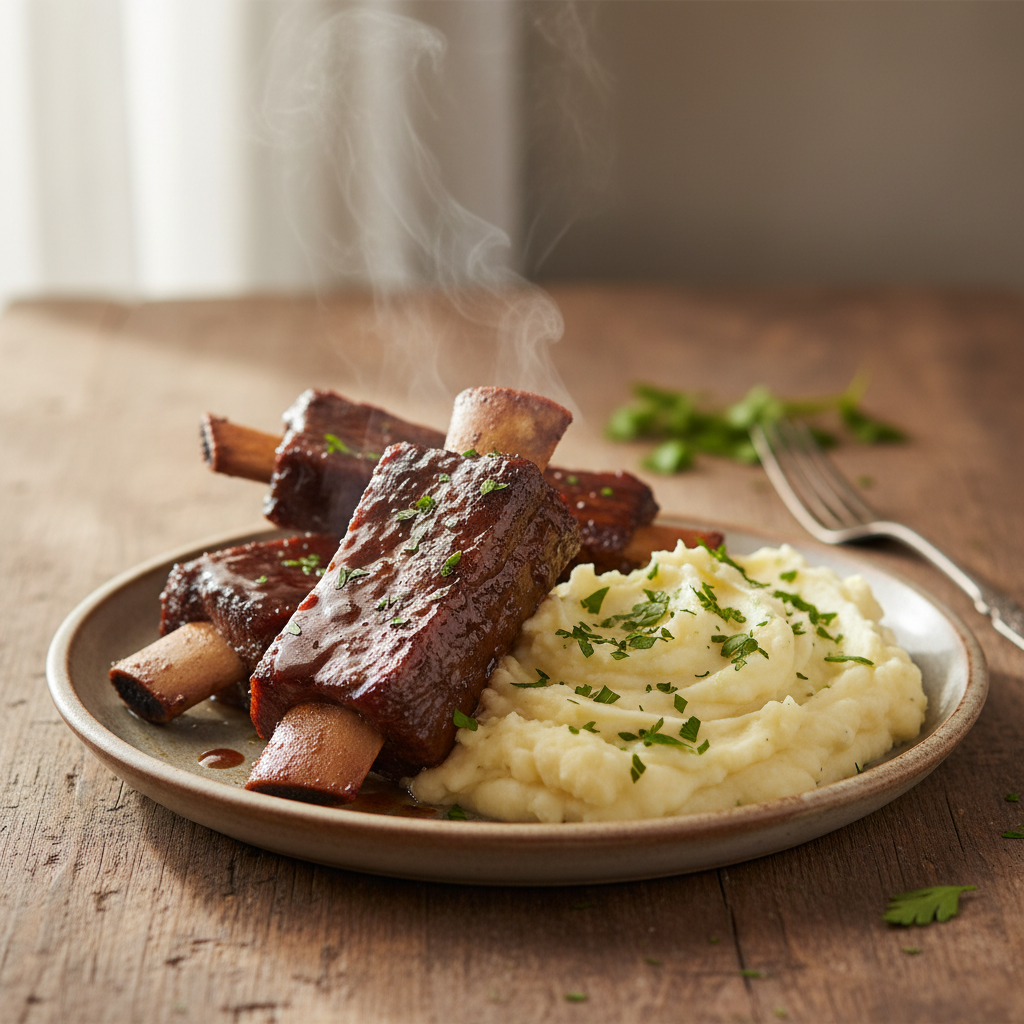
    A plate of succulent beef short ribs with creamy mashed potatoes and fresh parsley.
    A close-up, professional food photography shot of a perfectly plated dish of three tender, fall-off-the-bone beef short ribs, richly coated in a glossy, dark sauce. The ribs are nestled beside a generous serving of creamy, fluffy mashed potatoes, garnished with a sprinkle of fresh, vibrant green chopped parsley. Gentle steam rises from the dish, indicating warmth and freshness. The scene is set on a rustic wooden table with soft, inviting lighting, reflecting a high-quality food magazine photo style, photorealistic.

    There’s something truly special about a meal that wraps you in warmth and nostalgia. For many, this feeling is perfectly captured by slow cooker beef short ribs. These aren’t just any ribs. They’re the essence of comforting, hearty home cooking.

    Imagine tender, fall-off-the-bone meat swimming in a rich, savory sauce. That’s exactly what you get with crock pot beef short ribs. The slow cooking process effortlessly transforms tougher cuts into incredibly succulent dishes.

    Here’s why slow cooker beef short ribs stand out as the ultimate comfort food:

    • Effortless Perfection: The beauty of a slow cooker is its simplicity. You do a little prep, then let the appliance do all the hard work. This means less time fussing in the kitchen and more time enjoying your day.
    • Unmatched Tenderness: Long, slow cooking breaks down the connective tissues in the beef. As a result, your short ribs become incredibly tender, practically melting in your mouth.
    • Deep, Rich Flavors: Hours of simmering allow all the ingredients to meld beautifully. This creates a deeply flavorful sauce that coats every piece of meat. The aroma alone is pure comfort.
    • Hands-Off Cooking: For busy families or new cooks, the ‘set it and forget it’ nature of a slow cooker is a game-changer. You can achieve gourmet results without constant attention.
    • Nourishing and Satisfying: A hearty meal like beef short ribs is wonderfully filling. It provides a sense of satisfaction that lighter meals often can’t match.

    How Recipe-GPT Enhances Your Comfort Food Experience

    At Recipe-GPT, we believe comfort food should also be easy food. Our AI-powered platform makes preparing dishes like these beef short ribs even simpler. For instance, you can quickly find personalized recipe suggestions, helping you skip the guesswork and get straight to deliciousness.

    Want to adjust the recipe for dietary preferences? Or perhaps you need quick side dish ideas? Recipe-GPT has you covered. Our AI can instantly provide variations or suggest the perfect accompaniments. This way, your short rib meal is always tailored to your needs. We take the stress out of meal planning, allowing you to focus on enjoying your culinary creations.

    What Ingredients Do You Need for This Crock Pot Recipe?

    An overhead view of fresh ingredients for slow cooker beef short ribs, including meat, vegetables, and seasonings.
    A beautifully arranged flat lay, professional food photography shot showcasing all the fresh, raw ingredients for slow cooker beef short ribs. On a clean, light-colored kitchen counter, include bone-in beef short ribs, neatly chopped carrots, celery, and onion, whole garlic cloves, a carton of beef broth, a tube of tomato paste, a bottle of red wine, bay leaves, fresh sprigs of thyme, a salt shaker, a pepper grinder, and a bottle of olive oil. All ingredients are perfectly lit with bright, natural lighting, reflecting a high-quality food magazine photo style, photorealistic.

    First, let’s gather your ingredients. This recipe uses simple items you likely already have. Recipe-GPT helps you make the most of what’s in your pantry and can even suggest smart substitutions!

    Choosing Your Beef Short Ribs: Bone-In vs. Boneless

    The star of our dish is beef short ribs. Both bone-in and boneless varieties work beautifully, offering slightly different cooking experiences and benefits.

    Bone-in short ribs often provide a richer, deeper flavor. The bone releases collagen as it cooks, which contributes to a more luxurious sauce and overall taste [1]. However, they can take a bit longer to cook and are slightly less convenient to serve.

    Boneless short ribs are incredibly convenient. They cook a bit faster than bone-in cuts and are much easier to portion and serve. This makes them a fantastic choice for busy weeknights or family meals.

    Here’s a quick comparison to help you choose:

    Feature Bone-In Short Ribs Boneless Short Ribs
    Flavor Depth Richer, more robust Still flavorful, very tender
    Cooking Time Can take slightly longer Cooks a bit faster
    Ease of Serving Requires bone removal Effortless to portion
    Meat Texture Often falls off the bone Uniformly tender pieces

    No matter your preference, Recipe-GPT can guide you. You can tell the AI if you have bone-in or boneless ribs, and it will adjust the cooking instructions specifically for you. This ensures a perfect, personalized result every time.

    The Aromatic Base: Onions, Carrots, and Garlic

    These three humble ingredients are essential. They build the flavorful foundation for our delicious short ribs. Think of them as the irreplaceable trio for any savory slow-cooked meal.

    Here’s why they are so important:

    • Onions: They caramelize and sweeten during cooking, adding wonderful depth and a subtle sweetness to your sauce.
    • Carrots: Carrots contribute natural sweetness and a hint of earthiness, and they add a pleasing color to the dish.
    • Garlic: Garlic provides a pungent, savory aroma that boosts and complements all the other flavors in the pot.

    These aromatics soften beautifully in the slow cooker, slowly infusing the entire dish with their rich essence. As a result, your kitchen will smell incredible!

    What if you don’t have one of these items? Recipe-GPT is here to help! Just tell the AI what ingredients you have on hand. It can suggest clever, practical substitutions. For example, shallots could replace onions. This means you can always make a delicious meal, even with limited ingredients.

    Creating a Rich Sauce

    A fantastic sauce transforms short ribs into pure comfort food. Our recipe creates a rich, savory, and perfectly balanced sauce. It’s designed to be simple yet incredibly flavorful.

    You will need these key liquid ingredients:

    • Beef Broth: This forms the main flavorful base. Opt for a good quality broth for the best results.
    • Tomato Paste: A small amount adds deep umami flavor and a touch of acidity, which perfectly balances the richness of the beef.
    • Worcestershire Sauce: This special ingredient adds complexity and depth, bringing a unique savory and tangy note to the sauce.
    • Herbs and Spices: Ingredients like bay leaves, dried thyme, and black pepper are vital. They infuse the sauce with warmth and aromatic complexity.

    These ingredients simmer together for hours. The slow cooking process allows their flavors to meld seamlessly. The result is a sauce that thickens beautifully and coats every tender rib.

    Want to explore different sauce flavors? Recipe-GPT can customize your recipe! It offers personalized variations based on your preferences or dietary needs. Perhaps you’d prefer a smokier sauce or a gluten-free option. The AI can adapt the recipe quickly, making personalized, confident cooking easy and fun.

    How to Make Beef Short Ribs in a Slow Cooker: A Step-by-Step Guide
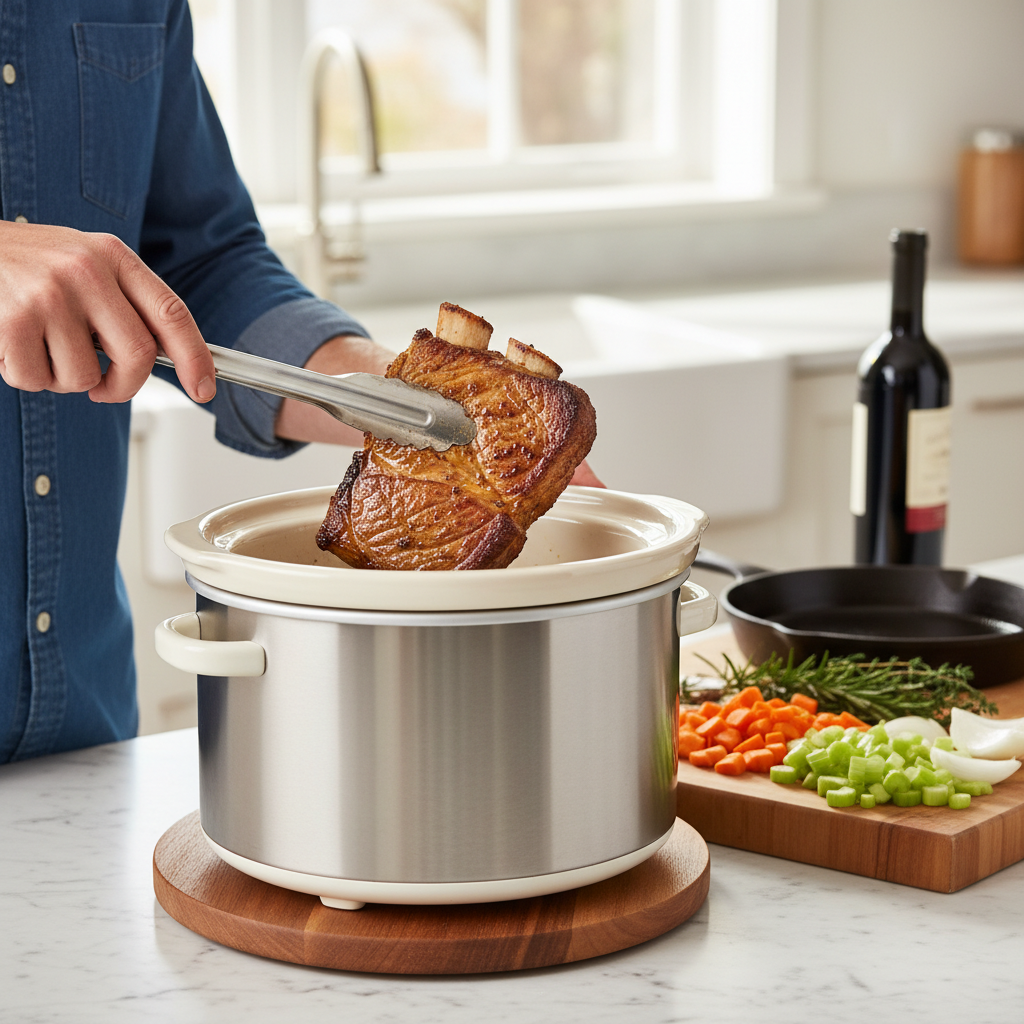
    A home cook is placing browned beef short ribs into a slow cooker.
    A professional food photography shot in a bright, modern home kitchen. A real human home cook, with sleeves slightly rolled, is using metal tongs to carefully place a beautifully seared and browned beef short rib into a gleaming, ceramic-insert slow cooker. The slow cooker is on a clean counter, and other prepped ingredients like chopped vegetables are visible nearby. The focus is on the action and the rich, golden-brown crust of the short rib. The scene is photorealistic, with inviting, warm lighting, reflecting a high-quality food magazine photo style.

    Step 1: Season and Sear the Short Ribs

    This first step is key for developing a rich flavor. Searing creates a beautiful crust that locks in all those delicious juices.

    Recipe-GPT can even suggest custom seasoning blends, tailoring them to your pantry or taste to make meal prep simple and fast.

    Here’s how to do it:

    1. Pat dry: Using paper towels, gently pat your beef short ribs dry. This is important because dry meat browns better.
    2. Season well: Generously sprinkle salt, black pepper, and garlic powder over the ribs, coating all sides.
    3. Heat oil: In a large, heavy-bottomed pan or Dutch oven, warm a tablespoon of olive oil over medium-high heat.
    4. Sear ribs: Place the ribs in the hot pan, being careful not to overcrowd it. Sear for 2-3 minutes per side until a deep golden-brown crust forms. Work in batches if needed.
    5. Set aside: Remove the seared ribs from the pan and place them on a plate.

    Pro Tip: Don’t skip the searing! It adds an incredible depth of flavor—a small effort for a huge reward.

    Step 2: Sauté the Vegetables

    Building a flavorful base is crucial. Aromatics like onions and garlic add incredible depth, becoming wonderfully sweet and tender as they cook.

    AI from Recipe-GPT can help here, too. For example, it might suggest adding bell peppers or celery to personalize your crock pot short ribs recipe.

    Here’s how to do it:

    1. Add more oil (if needed): In the same pan you used for searing, add another splash of olive oil if needed.
    2. Sauté onions and carrots: Add the chopped onions and carrots, and cook for 5-7 minutes, stirring occasionally until they soften.
    3. Add garlic: Stir in the minced garlic and cook for another minute. Be careful not to let it burn, as burnt garlic tastes bitter.

    These vegetables create the perfect foundation for your slow cooker beef short ribs.

    Step 3: Deglaze and Build the Sauce

    Now it’s time to create the rich sauce. Deglazing the pan captures all those browned bits from the bottom, which are packed with flavor.

    Recipe-GPT can suggest different liquids, such as red wine for a richer flavor or beef broth for a classic taste. It adapts to your preferences, making meal planning both exciting and easy.

    Here’s how to do it:

    1. Deglaze the pan: Pour the beef broth or red wine into the hot pan. Using a wooden spoon, scrape up any browned bits from the bottom—these add immense flavor to the sauce.
    2. Add remaining sauce ingredients: Stir in the tomato paste, Worcestershire sauce, and herbs like bay leaves and fresh thyme.
    3. Bring to a simmer: Bring the sauce to a gentle simmer and cook for a few minutes to allow the flavors to meld together.

    Your kitchen will start to smell amazing! This rich sauce is now ready for your crock pot short ribs.

    Step 4: Slow Cook to Perfection

    Now it’s time to let the slow cooker do all the work, transforming tough ribs into tender, fall-off-the-bone goodness. This step is why slow cooker beef short ribs are so popular.

    Recipe-GPT can help you choose between high or low settings and adjust cooking times accordingly. This ensures perfect results every time and is a great example of personalized recipe suggestions.

    Here’s how to do it:

    1. Transfer to slow cooker: Carefully place the seared short ribs into your slow cooker.
    2. Pour over sauce: Pour the vegetables and sauce over the ribs, ensuring they are mostly submerged.
    3. Cook slowly: Cover and cook on LOW for 6-8 hours or on HIGH for 3-4 hours. The ribs are done when they are fork-tender.
    4. Check for tenderness: The ribs are ready when they are incredibly tender and pull apart easily with a fork.
    5. Rest and serve: Once cooked, remove the ribs from the slow cooker and let them rest briefly. Before serving, skim any excess fat from the sauce.

    You’ve just created a mouthwatering meal! This easy slow cooker beef short ribs recipe is perfect for busy nights. It’s a true testament to simple, practical cooking.

    How Can AI Personalize Your Short Ribs Recipe?

    Imagine your perfect plate of slow cooker beef short ribs. Now, picture an AI that helps you create it effortlessly. Recipe-GPT does exactly that, taking your preferences and transforming a classic recipe into something uniquely yours.

    Our platform is designed to give you tailored meal inspiration fast, make cooking decisions easy, and boost your confidence in the kitchen.

    Tailor Your Short Ribs to Your Tastes and Pantry

    With Recipe-GPT, personalization is simple. Instead of hunting for recipes that fit your exact situation, you can let our AI do the heavy lifting.

    Here’s how Recipe-GPT helps you customize your beef short ribs:

    • Ingredient Swaps: Don’t have an ingredient? Tell Recipe-GPT what’s in your pantry. It can suggest clever substitutions for herbs, spices, or even vegetables.
    • Dietary Adjustments: Whether you need a gluten-free sauce or want to explore lower-carb options, our AI can adapt the recipe to fit your dietary preferences.
    • Flavor Profiles: Craving a smoky BBQ twist or perhaps a richer, herb-infused version? The AI can adjust seasonings and sauces to match your desired flavor.
    • Spice Level: From mild and comforting to a fiery kick, you can specify exactly how spicy you want your short ribs, and Recipe-GPT will guide you.

    Adjust Servings and Simplify Meal Planning

    Whether you’re cooking for one or a crowd, Recipe-GPT easily scales your slow cooker short ribs recipe. This saves you from tedious calculations and ensures perfect portions every time.

    Meal planning also becomes a breeze. Just tell Recipe-GPT your available time or other meals you’re making this week, and it will help integrate your short ribs into a balanced plan.

    Our AI-powered tool provides clear, step-by-step instructions, making even complex dishes like beef short ribs approachable for any skill level. Enjoy delicious, personalized meals without the fuss!

    Expert Tips for the Best Slow Cooker Short Ribs

    Ready to make your slow cooker short ribs truly unforgettable? These expert tips will elevate your dish, helping you achieve that fall-off-the-bone tenderness and rich flavor every time. Plus, we’ll show you how Recipe-GPT can make customizing your recipe a breeze.

    Master the Maillard Reaction

    Never skip searing your short ribs, as this step creates an incredible depth of flavor. Searing browns the meat—a process called the Maillard reaction [2]—which develops hundreds of new flavor compounds and adds a beautiful color.

    • Pat Dry: Always pat your short ribs dry with paper towels. Moisture is the enemy of a good sear.
    • Hot Pan: Heat a skillet over medium-high heat and add a small amount of high-smoke-point oil.
    • Sear in Batches: Avoid overcrowding the pan. Sear the ribs on all sides until a deep golden-brown crust forms, which usually takes a few minutes per side.

    The Right Amount of Liquid

    Slow cookers are highly efficient at retaining moisture, so you don’t need much liquid. In fact, using too much can dilute the flavors and result in a watery sauce.

    • Halfway Point: Aim for the liquid to come about halfway up the sides of the ribs.
    • Concentrated Flavor: This ensures a rich, concentrated sauce with robust flavors.

    Thicken Your Sauce for Restaurant Quality

    A thin, watery sauce can be disappointing. To elevate your dish, create a rich, thick sauce that coats the ribs beautifully and enhances the overall experience.

    • Cornstarch Slurry: After cooking, remove the ribs and skim any excess fat from the liquid. In a small bowl, whisk together one tablespoon of cornstarch with two tablespoons of cold water. Stir this slurry into the hot sauce and simmer on the stovetop until thickened.
    • Reduction: Alternatively, reduce the sauce by transferring the cooking liquid to a saucepan. Simmer over medium heat until it has reduced by about one-third, which naturally intensifies the flavor.

    Low and Slow is the Way to Go

    Patience is key for tender short ribs. The “low” setting on your slow cooker is best because it allows the connective tissues to break down slowly, resulting in incredibly tender meat.

    • No Rushing: Resist the urge to open the lid while cooking, as each peek can add up to 30 minutes to your cooking time.
    • Optimal Tenderness: Cooking on low for a longer duration ensures fork-tender results, creating meat that simply melts in your mouth.

    Personalize Your Ribs with Recipe-GPT

    This is where your AI cooking companion shines. Recipe-GPT helps you adjust recipes effortlessly, allowing you to tailor your slow cooker short ribs to your exact preferences. Say goodbye to guesswork and endless searching for new ideas.

    • Quick Ingredient Swaps: Forgot an ingredient? Ask Recipe-GPT for instant substitutions and smart alternatives based on what you have on hand.
    • Dietary Adjustments: Need a gluten-free or lower-sodium option? Recipe-GPT can modify the recipe in seconds, providing clear, actionable changes.
    • Flavor Variations: Craving something different? Ask Recipe-GPT for a smoky BBQ version or a spicy twist to get personalized ideas.
    • Perfect Pairings: Not sure what to serve with your ribs? Recipe-GPT can suggest complementary side dishes, making meal planning simple and fast.

    With Recipe-GPT, you get tailored meal inspiration quickly, transforming mealtime indecision into a confident, enjoyable cooking experience.

    What Should You Serve with Beef Short Ribs?

    So, you’ve mastered making tender, falling-off-the-bone beef short ribs in your slow cooker. But what’s the perfect accompaniment for this rich, savory dish? Deciding on the right sides can be tricky, but Recipe-GPT makes it simple to find ideal pairings.

    Our AI-powered assistant quickly suggests sides that match your preferences and work with the ingredients you already have on hand. Say goodbye to guessing what to serve!

    Classic Comfort Food Sides

    For a truly satisfying meal, classic comfort sides are always a hit. They’re perfect for soaking up every drop of that delicious short rib sauce and adding a hearty touch to your plate.

    • Creamy Mashed Potatoes: A timeless choice, their smooth texture and buttery flavor are an ideal match for slow-cooked meats.
    • Soft Polenta: A wonderful, creamy alternative to potatoes, offering a slightly sweet corn flavor.
    • Egg Noodles or Pasta: Wide egg noodles or a hearty pasta like pappardelle are perfect for catching every drop of the rich sauce.
    • Rice Pilaf: Fluffy and flavorful, a rice pilaf complements the savory ribs with a lighter texture.

    Fresh & Vibrant Vegetable Pairings

    Adding vegetables is a great way to balance the richness of the short ribs, bringing freshness, color, and essential nutrients to the meal. Recipe-GPT can suggest vegetable dishes based on your preferences, such as options that are quick to prepare.

    • Garlic Roasted Green Beans: Simple and delicious, crisp-tender green beans with garlic add a bright contrast.
    • Glazed Carrots: Sweet and earthy, glazed carrots complement the savory ribs beautifully, especially when roasting enhances their natural sugars.
    • Sautéed Mushrooms: Mushrooms bring an extra layer of umami that pairs wonderfully with slow cooker beef short ribs.
    • Asparagus with Lemon: Lightly steamed or roasted asparagus offers a refreshing, slightly tangy bite.
    • Roasted Root Vegetables: Root vegetables like parsnips, sweet potatoes, and turnips add depth and a hint of sweetness.

    Lighter & Quick Side Options

    Sometimes you want something less heavy. Recipe-GPT can help you find quick, lighter sides that ensure your meal stays balanced without adding too much richness.

    • Simple Green Salad: A fresh salad with a light vinaigrette cuts through the richness and provides a refreshing element.
    • Crusty Bread: A warm baguette is always a good idea, perfect for soaking up any remaining sauce.
    • Coleslaw: A tangy, crunchy coleslaw offers a refreshing counterpoint, which is particularly good if your crock pot short ribs have a slightly sweet profile.

    How Recipe-GPT Personalizes Your Side Dishes

    Recipe-GPT goes beyond generic suggestions, offering tailored meal inspiration based on your unique needs. It transforms mealtime indecision into clear, delicious choices. Here’s how it works:

    • Customized to Your Pantry: Tell Recipe-GPT what ingredients you have, and it will suggest side dishes using those items, helping you reduce food waste.
    • Dietary Adaptations: Need a gluten-free or low-carb option? Just input your dietary needs, and our AI will provide suitable recommendations.
    • Speed and Simplicity: If you’re short on time, ask for “quick and easy sides,” and Recipe-GPT will prioritize recipes with fast prep times.
    • Flavor Profile Matching: The AI understands flavor profiles, suggesting sides that enhance your crock pot beef short ribs to ensure a harmonious meal.
    • Complete Meal Planning: Recipe-GPT can even build a full meal plan, pairing main dishes with complementary sides and desserts.

    Using Recipe-GPT simplifies meal decisions, allowing you to confidently cook diverse and tailored recipes. You get quick, practical, and instant suggestions to complete your meal.

    Frequently Asked Questions

    Can you use boneless beef short ribs in the crock pot?

    Absolutely! Boneless beef short ribs work wonderfully in a slow cooker.

    They offer the same rich, tender results, and you might even find them easier to prepare.

    The main difference is the cooking time. Boneless ribs may cook slightly faster because there’s no bone to insulate the meat. Expect them to be perfectly shreddable after the recommended slow cook time.

    Recipe-GPT can easily adjust recipes for you. Just specify “boneless” when you search for slow cooker beef short ribs [3]. Our AI will personalize the instructions and cooking times, ensuring your meal is a success. This feature makes meal decisions much simpler.

    How do you make BBQ beef short ribs in a slow cooker?

    Making BBQ beef short ribs in a slow cooker is simple.

    First, follow the initial steps to sear the short ribs and sauté the vegetables. This step builds a great flavor base.

    Instead of the braising liquid, simply use your favorite BBQ sauce. For an extra smoky taste, add some liquid smoke. A splash of apple cider vinegar also adds a nice brightness.

    Here’s a quick guide:

    • Sear Ribs and Sauté Veggies: Complete Steps 1 and 2 from the main guide.
    • Add BBQ Sauce: Place the seared ribs back into the slow cooker. Pour about 1.5 to 2 cups of your preferred BBQ sauce over them.
    • Enhance Flavor (Optional): Stir in a teaspoon of liquid smoke and a tablespoon of apple cider vinegar to deepen the BBQ flavor profile.
    • Slow Cook: Cook on low for 6-8 hours or on high for 3-4 hours, until fork-tender.

    Recipe-GPT can instantly suggest delicious BBQ variations. You can even ask for homemade BBQ sauce recipes [4] that fit your dietary needs. Our AI provides tailored meal inspiration quickly.

    Can you add red wine to this slow cooker short rib recipe?

    Yes, absolutely! Red wine enhances the richness of beef short ribs beautifully, adding depth and complexity to the sauce.

    To incorporate it, add about 1 cup of red wine in Step 3. After sautéing the vegetables, pour in the wine and let it simmer for a few minutes. This cooks off the alcohol and concentrates the flavor.

    You can use a dry red wine like Cabernet Sauvignon or Merlot. These types pair well with beef, but even a splash of cooking wine [5] works in a pinch.

    Recipe-GPT can suggest complementary ingredients or offer variations based on your pantry. Just ask our AI for ideas to elevate your dish!

    Is it better to cook short ribs on high or low in a crock pot?

    For the most tender and flavorful short ribs, cooking on the “low” setting is generally recommended.

    Here’s why:

    • Low Heat: Cooking on low allows the connective tissues in the short ribs to break down slowly, resulting in incredibly tender, fall-off-the-bone meat. This method takes longer, typically 6-8 hours.
    • High Heat: While cooking on high (3-4 hours) is faster, it can result in less tender meat. The intense heat can cause the proteins to seize up.

    Most experts recommend the low-and-slow method for tough cuts of meat to ensure maximum tenderness [source: https://www.seriouseats.com/how-to-braise-meat-and-vegetables-stovetop-oven-slow-cooker].

    Recipe-GPT makes the choice easy. Our AI-powered guidance can adjust cooking times to fit your schedule, helping you make efficient decisions for perfect results every time.


    Sources

    1. https://www.seriouseats.com/why-bones-add-flavor-braised-meat-dishes
    2. https://www.compoundchem.com/2015/01/29/maillardreaction/
    3. https://www.google.com/search?q=slow+cooker+beef+short+ribs+boneless
    4. https://www.google.com/search?q=homemade+bbq+sauce+recipe
    5. https://www.foodandwine.com/essential-wine-to-keep-on-hand-6944648
  • Ultimate Guide to Slow Cooker Pot Roast (Easy & Foolproof Recipe)

    Ultimate Guide to Slow Cooker Pot Roast (Easy & Foolproof Recipe)

    To make a slow cooker pot roast, sear a 3-4 pound beef chuck roast on all sides. Place it in the slow cooker with chopped onions, carrots, and potatoes, then add beef broth and seasonings. Cook on low for 8-10 hours or on high for 4-5 hours until the meat is tender and falls apart easily.

    Feeling overwhelmed by dinner decisions, especially when you crave something hearty and comforting? Imagine a classic meal so tender it melts in your mouth—one that warms up any table with minimal fuss. That’s the magic of a perfect slow cooker pot roast. This foolproof recipe eliminates the guesswork and is sure to become a family favorite.

    The beauty of the slow cooker lies in its ability to transform simple ingredients into an extraordinary dish with minimal hands-on time. Our guide will walk you through making the ultimate crock pot beef roast, ensuring every bite is rich, flavorful, and unbelievably tender. At Recipe-GPT, we believe mealtimes should be easy and inspiring. We’re here to show you how AI can personalize your cooking journey with quick ideas and tailored guidance for dishes just like this one.

    Ready to master the slow cooker beef roast? This guide covers everything you need, from choosing the best cuts of beef to step-by-step instructions for a perfect crock pot roast with savory gravy. You’ll simplify meal prep, boost your kitchen confidence, and enjoy a truly unforgettable meal—all with the help of smart, intuitive cooking inspiration.

    Why is a Slow Cooker Perfect for Pot Roast?

    A slow cooker is more than just an appliance—it’s the secret weapon for creating a tender, flavorful pot roast. Many home cooks consider it the ideal tool for a truly comforting meal because it transforms tougher cuts of beef into fork-tender perfection.

    The magic lies in the “low and slow” cooking method. This gentle heat works wonders on beef, slowly breaking down connective tissues over several hours. As a result, even less expensive cuts become incredibly succulent.

    This process also allows flavors to deepen beautifully. As vegetables, herbs, and spices meld, they create a rich, aromatic broth that infuses every bite. The result is a hearty, delicious meal with minimal effort.

    Why Your Slow Cooker is a Pot Roast Hero

    • Unbeatable Tenderness: The long, gentle cooking time ensures your beef roast is so soft it virtually falls apart.
    • Rich Flavor Development: Hours of slow cooking allow all the ingredients to mingle, resulting in a deeply savory and complex flavor.
    • Hands-Off Convenience: Simply set it and forget it. Prepare your meal in the morning and come home to a ready-made dinner.
    • Budget-Friendly: A slow cooker excels at tenderizing tougher, more affordable cuts of meat, making a pot roast a smart, economical choice.
    • Consistent Results: It’s hard to overcook a pot roast in a slow cooker, so you can expect a perfect, tender result almost every time.

    With Recipe-GPT, finding the perfect slow cooker pot roast recipe is even easier. Our AI helps you personalize ingredients and cooking times, guiding you to the ideal meal based on your preferences. This tailored approach takes the guesswork out of your dinner plans.

    Recipe-GPT turns mealtime indecision into clear, personalized suggestions, simplifying your cooking journey. Enjoy a confident, delicious experience with every pot roast you make.

    What cut of roast is best for a crock pot?

    A raw, well-marbled beef chuck roast resting on a rustic wooden cutting board.
    Professional food photography, photorealistic, high-quality food magazine photo style. A raw, well-marbled beef chuck roast, about 3-4 pounds, positioned centrally on a rustic wooden cutting board. The meat is fresh and vibrant, with natural lighting highlighting its texture and rich red color. In the soft-focus background, a clean, inviting home kitchen counter with a gentle blur of herbs or spices. No people are visible. The image evokes quality and freshness.

    Understanding Beef Cuts for Your Crock Pot

    Choosing the right beef cut is key to a delicious pot roast. The magic of a slow cooker is how it transforms tougher, less expensive cuts into fork-tender meals. The low, slow heat gently breaks down the meat’s connective tissues, making it wonderfully tender and juicy.

    When selecting beef for your crock pot, look for cuts with good marbling—the small flecks of fat within the muscle. As the beef cooks, this fat melts slowly, adding incredible flavor and moisture to your dish. A well-marbled cut is your secret to a richer, more succulent pot roast.

    Recipe-GPT understands these culinary nuances. Our AI can guide you to the perfect cut for your slow cooker beef roast. Just tell it what ingredients you have, and it will offer personalized suggestions. This feature makes mealtime decisions quick, easy, and stress-free.

    Chuck Roast vs. Rump Roast

    Chuck roast and rump roast are two popular choices for the slow cooker, but they produce very different results. Understanding their unique characteristics will help you achieve the perfect pot roast.

    Let’s compare these two common cuts for your next crock pot roast recipe:

    Feature Chuck Roast Rump Roast
    Location From the shoulder area of the cow. From the rear leg or round primal.
    Marbling/Fat High marbling and rich connective tissue. Very lean, with minimal marbling.
    Tenderness (Slow Cooked) Becomes incredibly tender; easily shreds. Can be tender, but often firmer; best sliced.
    Flavor Deep, rich, beefy flavor due to fat content. Milder beef flavor profile.
    Best For Classic, melt-in-your-mouth pot roast; shredded beef. Slicing for sandwiches; leaner specific recipes.

    For the ultimate slow cooker experience, chuck roast is the champion. Its abundant marbling and connective tissue break down beautifully, creating a desirable fall-apart texture and infusing the dish with deep, rich flavor [1]. It’s widely considered the best cut for a classic crock pot roast.

    In contrast, a rump roast is much leaner. While it can work in a slow cooker, it won’t achieve the same shreddable tenderness as chuck. It’s a good choice if you prefer a leaner pot roast, but you must be careful to keep it moist during cooking to prevent it from drying out.

    Recipe-GPT can help you adapt any recipe instantly. If you’re using a leaner cut like rump roast, just tell our AI. It will suggest smart adjustments to cooking times or ingredients, ensuring your crock pot roast turns out perfectly every time.

    Our Best Slow Cooker Pot Roast Recipe

    A hearty slow cooker pot roast dinner served on a plate with tender carrots, potatoes, and rich gravy.
    Professional food photography, photorealistic, high-quality food magazine photo style. A generous portion of perfectly cooked slow cooker pot roast, falling apart tender, served on a beautiful off-white ceramic plate. It’s surrounded by fork-tender carrots, potatoes, and pearl onions, all generously coated in a rich, glossy brown gravy. A subtle wisp of steam rises from the dish. The plate is placed on a warm, inviting dining table with soft, natural light creating appealing highlights on the food. The scene is comforting and appetizing.

    Essential Ingredients for a Classic Pot Roast

    Making a delicious slow cooker pot roast is surprisingly simple. Use these core ingredients as your guide, and let Recipe-GPT help you adjust the recipe or find smart substitutions based on what’s in your kitchen.

    Here are the core ingredients for a classic, comforting beef roast:

    • Beef Roast: A 3-4 pound chuck roast is ideal.
    • Aromatics: One large onion, roughly chopped.
    • Root Vegetables: 3-4 carrots, peeled and cut into large chunks; 2-3 celery stalks, chopped.
    • Broth: 2 cups of beef broth for rich flavor.
    • Seasoning: 1 teaspoon dried thyme, 1 teaspoon dried rosemary (or 1 tablespoon fresh), 1 tablespoon Worcestershire sauce, salt, and freshly ground black pepper to taste.
    • Oil: 1-2 tablespoons of olive oil or vegetable oil for searing.

    Want to try a variation? Ask Recipe-GPT for ideas, from a creamy mushroom version to a lighter, healthier pot roast. Just share your preferences with our AI!

    Step-by-Step Instructions

    This straightforward recipe requires minimal effort but delivers a melt-in-your-mouth pot roast with incredible flavor. Follow these simple steps for perfect results.

    1. Season the Beef: Pat the chuck roast dry with paper towels, then generously season all sides with salt and pepper.
    2. Sear for Flavor: Heat olive oil in a large skillet over medium-high heat. Sear the roast for 3-5 minutes per side until beautifully browned. This step locks in juices and adds deep flavor [2].
    3. Layer the Crock Pot: Place the chopped onions, carrots, and celery at the bottom of your slow cooker. This forms a natural bed for the beef.
    4. Add the Roast: Carefully transfer the seared beef roast to the slow cooker, placing it on top of the vegetables.
    5. Pour in Liquids and Seasonings: Whisk together the beef broth, thyme, rosemary, and Worcestershire sauce in a bowl, then pour the mixture over the roast and vegetables.
    6. Cook Low and Slow: Cover the slow cooker and cook on LOW for 6-8 hours, or until the beef is fork-tender. The low setting is key for a moist and tender result.
    7. Rest and Shred: Once cooked, carefully remove the roast from the slow cooker. Let it rest on a cutting board for 10-15 minutes to allow the juices to redistribute. Then, shred the beef with two forks.
    8. Serve: Serve the shredded beef with the cooked vegetables and plenty of the flavorful broth from the slow cooker.

    Remember, you can ask Recipe-GPT to instantly adjust cooking times for different roast sizes. Just enter your roast’s weight for a personalized guide!

    How to Make Savory Gravy from the Drippings

    Don’t discard those flavorful drippings! It’s easy to transform them into a rich, savory gravy that will elevate your entire meal.

    1. Strain the Drippings: After removing the roast and vegetables, strain the liquid from the slow cooker into a fat separator or large measuring cup to remove any solids.
    2. Separate the Fat: Let the liquid sit for a few minutes so the fat can rise to the top. Skim off as much fat as you can with a spoon or your fat separator.
    3. Create a Slurry: In a small bowl, whisk together 2 tablespoons of cornstarch and 1/4 cup of cold water until smooth.
    4. Thicken the Gravy: Pour the defatted drippings into a saucepan and bring to a simmer over medium heat. While stirring constantly, slowly whisk in the cornstarch slurry.
    5. Simmer to Thicken: Continue to simmer and stir for 2-3 minutes, or until the gravy thickens to your desired consistency.
    6. Taste and Adjust: Taste the gravy and adjust the seasoning as needed, adding more salt or pepper for perfect flavor.

    Serve this homemade gravy generously over your shredded pot roast for incredible depth of flavor. For an extra special touch, ask our AI for unique additions like a splash of red wine or a hint of garlic powder.

    Expert Tips for a Melt-in-the-Mouth Beef Roast

    A close-up of a fork gently shredding a tender, juicy piece of slow cooker pot roast.
    Professional food photography, photorealistic, high-quality food magazine photo style. A tight, close-up shot of a gleaming silver fork gently pulling apart a succulent piece of slow cooker pot roast, demonstrating its incredible tenderness and ‘melt-in-your-mouth’ texture. The rich, dark brown meat is visibly juicy and easily shreds. In the softly blurred background, hints of gravy and soft vegetables are visible, emphasizing the finished dish. The focus is sharp on the texture and moistness of the beef, conveying irresistible tenderness.

    The Importance of Searing Your Beef

    To get a rich, deep flavor from your slow cooker pot roast, start by searing the beef. This simple step is a game-changer, creating a beautiful, brown crust on the outside.

    Searing uses high heat to caramelize the meat’s surface. This process, known as the Maillard reaction [3], develops complex, savory flavors that you can’t get from slow cooking alone.

    Think of it as building a flavor foundation for your pot roast. Searing also adds incredible depth to the final gravy. To make sure you don’t miss this crucial step, Recipe-GPT can remind you to sear your beef as part of your personalized recipe, ensuring you get the best results.

    High vs. Low: Adjusting Your Slow Cooker Settings

    Your slow cooker offers two main settings: High and Low. Choosing the right one depends on your schedule and the final texture you want.

    • Low Setting: This is generally the best option for beef roast. Cooking the meat slowly over a longer period allows tough cuts to become incredibly tender and moist. Most roasts take 6-8 hours on the Low setting, which is usually around 200°F (93°C). [4]
    • High Setting: This setting cooks food faster, usually at around 300°F (149°C), cutting the cooking time roughly in half. It’s a great choice if you’re short on time. For example, a 2 lb roast might be ready in 3-4 hours. However, be aware that high heat can lead to a slightly less tender result, especially with tougher cuts of meat.

    For the most melt-in-your-mouth beef, we recommend the Low setting. If you’re unsure, Recipe-GPT can help. Just tell the AI your available cooking time, and it will instantly generate a recipe with the optimal slow cooker setting and duration for your roast size, making meal planning effortless.

    Adding Potatoes and Carrots for a One-Pot Meal

    You can easily transform your pot roast into a complete one-pot meal by adding vegetables. Potatoes and carrots are classic choices because they soak up all the delicious flavors from the roast and its broth.

    Here’s how to get the best results:

    • Choose Hearty Veggies: Select vegetables that can withstand long cooking times, such as carrots, potatoes (Yukon Gold or red potatoes work well), and celery.
    • Cut Them Uniformly: Aim for roughly 1- to 1.5-inch chunks when cutting your vegetables. This uniform size helps them cook evenly.
    • Add Later: For the best texture, add most vegetables during the last 2-3 hours of cooking on Low (or the last hour on High). Adding them too early can make them mushy.
    • Arrange Them: Place the vegetables around the roast, making sure they are partially submerged in the cooking liquid.

    Recipe-GPT can suggest creative vegetable additions and the perfect timing for them. Simply ask for a “pot roast with root vegetables” or “healthy veggie pot roast,” and our AI will tailor the recipe instructions for you, making meal customization quick and simple.

    Customize Your Pot Roast with Recipe-GPT

    AI-Powered Variations: Cream of Mushroom or Healthy Twists

    While your slow cooker pot roast is already amazing, sometimes it’s fun to switch things up. Recipe-GPT makes customizing your meal incredibly simple, eliminating the need to guess or search through countless cookbooks.

    Imagine your perfect slow cooker pot roast. Whether you crave creamy richness or a lighter, healthier option, just tell Recipe-GPT your idea.

    • Cream of Mushroom Dream: Love that savory, comforting flavor? Simply ask Recipe-GPT to “add cream of mushroom soup to my crock pot roast recipe.” Our AI will instantly adjust the ingredients and instructions to create a rich, deeply flavored sauce.
    • Healthy Twists: Looking for a lighter slow cooker beef roast? Request variations like “less sodium,” “more vegetables,” or a “lower fat” version of your easy pot roast in crock pot. Recipe-GPT provides smart substitutions without sacrificing flavor.
    • Dietary Preferences: Need a gluten-free twist or want to add more protein? With a simple request, Recipe-GPT can adapt your beef roast crock pot recipe to fit many dietary needs.
    • Budget-Friendly Meals: If you’re working with a budget or specific ingredients, just ask Recipe-GPT for suggestions. It helps you use what you already have, making meal planning easier and more efficient.
    • Family-Friendly Dishes: Keep everyone at the table happy by requesting mild flavors for kids or adding specific vegetables the whole family loves.

    Recipe-GPT transforms mealtime indecision into clear, personalized recipes. You get tailored meal inspiration in seconds, helping you cook diverse and delicious dishes with confidence.

    Calculating Cooking Times for Any Size Roast

    Getting the cooking time just right is one of the trickiest parts of making a slow cooker pot roast. A 2-pound roast needs less time than a 5-pound one, and the difference between “low” and “high” settings is significant. Recipe-GPT removes all that guesswork.

    Our AI quickly calculates accurate cooking times for any size of beef roast. This means less stress and perfectly tender results, every time.

    Here’s how Recipe-GPT helps perfect your best slow cooker pot roast:

    • Instant Adjustments: Simply tell Recipe-GPT, “I have a 3-pound chuck roast,” or “Adjust this for a 5-pound cut.” It will instantly provide the recommended cooking duration for both low and high settings.
    • Eliminate Over/Under-cooking: Knowing the precise time is key to avoiding dry, overcooked meat or a tough, underdone roast. While a 3-4 pound beef roast generally needs 6-8 hours on low or 3-4 hours on high [5], Recipe-GPT fine-tunes this guideline for your specific cut and weight.
    • Tailored Recommendations: Our AI considers the specific best roast for crock pot you are using and its weight to provide a truly tailored cooking time, not just a generic estimate.

    Recipe-GPT turns kitchen uncertainty into a confident, enjoyable cooking experience. Get quick, practical suggestions that simplify your meal planning and ensure your crock pot roast recipe turns out perfectly.

    Frequently Asked Questions

    What is the most tender roast for pot roast?

    For a truly melt-in-your-mouth pot roast, the chuck roast is your best choice. It’s a forgiving cut that’s also known as a chuck eye roast, shoulder roast, or simply pot roast.

    The secret to its tenderness lies in two key features:

    • Marbling: Generous streaks of fat run through the meat, melting during cooking to keep the roast moist and flavorful.
    • Connective Tissue: This tough tissue breaks down into rich gelatin during a long, slow cook, resulting in that signature fall-apart texture.

    If you’re ever unsure which cut to grab, Recipe-GPT can help. Just tell our AI what you have, and it can suggest the best cooking method to achieve ultimate tenderness for any cut!

    Which is better for crock pot chuck roast or rump roast?

    For a classic, fall-apart pot roast in a slow cooker, the chuck roast is the superior choice. Here’s a quick comparison:

    • Chuck Roast: Cut from the shoulder, it’s rich in the marbling and connective tissue needed for a tender, juicy result. It’s ideal for shredding and absorbing flavorful sauces.
    • Rump Roast: Cut from the leaner hindquarter (also called bottom round), it has less fat. This makes it more prone to drying out and better suited for slicing than shredding.

    In short, choose chuck roast for the most succulent pot roast. However, if you already have a rump roast, Recipe-GPT can provide tailored instructions. Our AI can suggest ways to maximize tenderness in leaner cuts, like adding extra liquid, to ensure you get a great meal.

    How long to cook a 2 lb roast in slow cooker?

    Slow cooker cooking times for pot roast are flexible. For a 2 lb roast, follow these general guidelines:

    • On Low: 6 to 8 hours. The slow, gentle heat is best for breaking down tough fibers and creating the most tender result.
    • On High: 3 to 4 hours. This is a great option when you’re short on time, but the final texture may be slightly less fall-apart tender.

    For food safety, your roast must reach an internal temperature of at least 145°F (63°C). However, for fall-apart tenderness, you should aim for a much higher temperature of 190-205°F (88-96°C). This is when the connective tissues have fully melted, making the meat easy to shred. [source: https://www.fsis.usda.gov/food-safety/safe-food-handling-and-preparation/food-safety-basics/slow-cookers-and-food-safety].

    Struggling with cooking times for different sizes? Recipe-GPT can instantly calculate and adjust recipe instructions for you. Simply input the weight of your roast, and our AI will provide personalized cooking times, taking the guesswork out of your meal prep!

    Can I cook this slow cooker pot roast on high for 4 hours?

    Yes, you can absolutely cook a 2 lb pot roast on high for 4 hours. It’s a great option when you need to get dinner on the table faster.

    The main trade-off is texture. The faster “high” setting doesn’t give the meat’s connective tissues as much time to break down into tender gelatin. Your roast will still be delicious, but it might not be as juicy or fall-apart tender as one cooked on “low” for 6-8 hours.

    For maximum tenderness, low and slow is best. For convenience, 4 hours on high works great. Our AI-powered Recipe-GPT can even customize recipes to fit your schedule. Just let it know your preferred cooking time, and it will generate the ideal instructions for a perfect pot roast, every time.


    Sources

    1. https://www.beefitswhatsfordinner.com/cuts/cut/2479/chuck-roast
    2. https://www.fsis.usda.gov/food-safety/safe-food-handling-and-preparation/cooking-time-and-temperature/safely-preparing-roasts
    3. https://www.seriouseats.com/what-is-the-maillard-reaction-in-cooking-food-science
    4. https://www.fsis.usda.gov/food-safety/safe-food-handling-and-preparation/food-safety-basics/slow-cookers-and-food-safety
    5. https://extension.missouri.edu/publications/gh1502

  • Easy Chicken Pot Pie Recipe: The Ultimate Step-by-Step Guide

    Easy Chicken Pot Pie Recipe: The Ultimate Step-by-Step Guide

    A classic homemade chicken pot pie recipe features cooked chicken, peas, carrots, and onions mixed into a creamy, savory sauce. This delicious filling is then enclosed in a flaky pie crust and baked until the top is golden brown and the filling is hot and bubbly. It’s a comforting, all-in-one meal perfect for home cooks of any skill level.

    Is there anything more comforting than a warm, flaky, and creamy chicken pot pie? This beloved dish is a classic for a reason, packing pure nostalgia and deliciousness into every bite. Yet, finding the perfect recipe—especially one that fits a busy schedule—can feel like another mealtime dilemma.

    Here at Recipe-GPT, we believe satisfying meals like homemade chicken pot pie should be simple, not stressful. That’s why we’ve crafted the ultimate easy recipe, designed for home cooks of all skill levels. Forget endless searching. Our step-by-step guide helps you quickly transform everyday ingredients into a heartwarming classic with no fuss.

    Whether you’re a beginner or a seasoned chef looking for a straightforward approach, this easy pot pie recipe delivers on flavor and simplicity. We’ll guide you through every step, from creating a rich, creamy filling to baking a perfect golden-brown crust. Your mealtime decision is about to become simple and delicious. Ready to enjoy the ultimate comfort food with confidence?

    Why Is This the Best Easy Chicken Pot Pie Recipe?

    Welcome to your new go-to recipe for chicken pot pie! This isn’t just any recipe. It’s designed to be incredibly simple and delicious. Our goal is to make your cooking experience joyful and stress-free.

    This easy chicken pot pie recipe transforms a classic comfort food into an achievable meal for any home cook. Forget complicated steps or long lists of fancy ingredients. We focus on straightforward goodness.

    Why Recipe-GPT Makes This Your Best Pot Pie

    Recipe-GPT makes this classic dish even better. Our AI-powered platform simplifies meal decisions, making it perfect for beginners and busy families alike. Here’s how:

    • Personalized Meal Ideas: Our AI adjusts this homemade chicken pot pie to your liking. Simply share your preferences, and it will tailor suggestions instantly.
    • Ingredient Flexibility: Have leftover chicken or different vegetables? Recipe-GPT helps you use what’s on hand. It suggests smart substitutions for your easy chicken pot pie, saving you a trip to the store and reducing food waste.
    • Clear, Step-by-Step Guidance: Our instructions are easy to follow. We break down each step for your easy pot pie recipe, building your confidence in the kitchen.
    • Time-Saving Solutions: We know busy schedules are common, and many cooks seek quick, practical meals [1]. Our AI streamlines meal planning to get you to a delicious easy chicken pie faster.
    • Dietary Adjustments: Need a gluten-free crust or a dairy-free filling? Simply ask Recipe-GPT. Our AI can suggest variations to fit your specific dietary needs.

    This recipe ensures a wonderfully creamy filling and a golden, flaky crust every time. It’s truly the best chicken pot pie recipe for its combination of ease and flavor. With Recipe-GPT, you’re not just cooking. You’re creating personalized, perfect meals with confidence.

    What Ingredients Do You Need for Homemade Pot Pie?

    An overhead view of fresh ingredients for chicken pot pie, including chicken, vegetables, and pastry, artfully arranged on a rustic wooden counter.
    A beautiful, organized flat lay, overhead professional food photography shot of all the fresh ingredients for chicken pot pie laid out on a clean rustic wooden kitchen counter. Include raw chicken breast, frozen peas and carrots, a yellow onion, celery, fresh thyme, chicken broth, heavy cream, butter, flour, salt, pepper, and store-bought puff pastry or pie crust. The lighting should be soft, natural, and inviting, creating a photorealistic, high-quality food magazine photo style. No artistic interpretations, no illustrations, no vector graphics, no abstract art.

    Ready to create a delicious homemade chicken pot pie without fancy ingredients? This easy chicken pot pie recipe uses simple, everyday items. With Recipe-GPT, you can use what you already have, making meal decisions stress-free.

    Our AI can even suggest smart substitutions, which means less running to the store. The result? A personalized cooking experience every time.

    For the Creamy Chicken Filling

    The heart of any great pot pie is its filling. Our recipe features a rich and comforting creamy chicken mixture, using classic ingredients for that familiar taste you love. Best of all, Recipe-GPT can help you tailor it to your pantry. Just tell our AI what’s available!

    • Cooked Chicken: Leftover rotisserie chicken works perfectly. You can also cook fresh chicken breast or thighs.
    • Butter: This is essential for a rich roux and for sautéing the vegetables.
    • Onion, Celery, Carrots: This classic trio, known as mirepoix, builds a flavorful base.
    • All-Purpose Flour: It thickens the sauce to create that signature creamy texture.
    • Chicken Broth: For better control over seasoning, choose a low-sodium option.
    • Milk: Using whole milk makes the sauce extra luscious and rich.
    • Frozen Peas and Corn: These add a pop of color, sweetness, and nutrition.
    • Fresh Parsley: This brings a bright, fresh finish to the filling.
    • Salt and Black Pepper: Don’t forget to season generously to your taste.

    Remember, Recipe-GPT can suggest variations. For instance, you could swap chicken for turkey. Our AI helps make your homemade pot pie truly your own.

    For the Flaky Pie Crust

    A golden, flaky crust is crucial for the perfect pot pie. That’s why for this easy pot pie recipe, we keep it simple. We suggest using a store-bought option to save time, which makes dinner prep much faster.

    • Refrigerated Pie Crusts: Two pre-made crusts are ideal—one for the bottom and one for the top. This is a huge time-saver for busy families.

    Want to get creative? Recipe-GPT can guide you. Our AI might suggest using puff pastry or even biscuits for a delightful alternative topping. This way, you can make your easy chicken pot pie uniquely yours with minimal fuss.

    How to Make Chicken Pot Pie: A Step-by-Step Guide

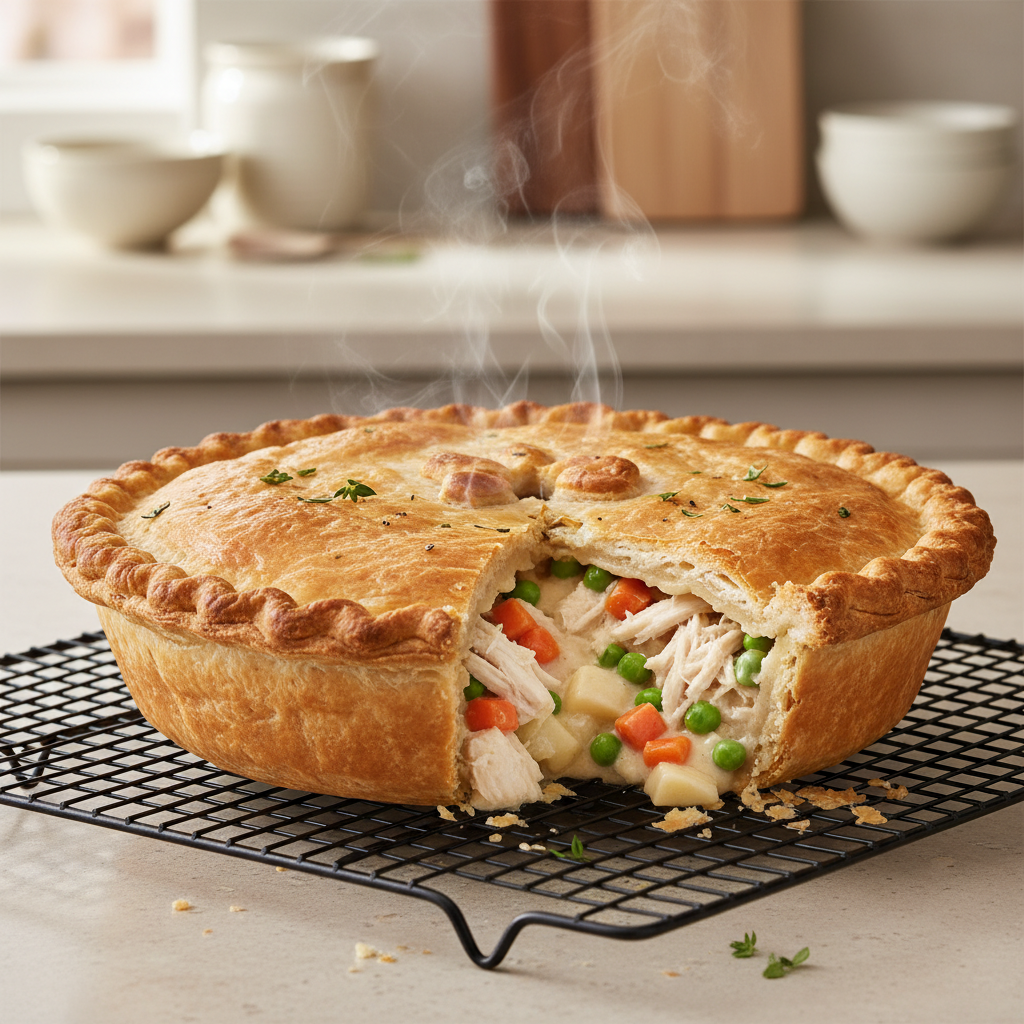
    A freshly baked golden-brown chicken pot pie with a flaky crust, steam gently rising, on a wire rack in a home kitchen.
    A close-up, mouth-watering, professional food photography shot of a perfectly golden-brown, baked chicken pot pie, fresh out of the oven, sitting on a wire rack on a clean, light-colored kitchen counter. Steam should be gently rising from a small vent in the flaky crust. The pie should have a beautiful, golden-brown top crust, and some savory filling should be visible through a cut portion, showing tender chicken and colorful mixed vegetables. The background is slightly blurred but suggests a warm, inviting home kitchen environment. Photorealistic, high-quality food magazine photo style. No artistic interpretations, no illustrations, no vector graphics, no abstract art.

    Step 1: Cook the Vegetables

    First, let’s get the vegetables ready. This simple step builds the flavor foundation for your delicious pot pie and provides a quick start to a satisfying meal.

    If you’re wondering which vegetables work best, remember Recipe-GPT can generate ideas based on what’s in your fridge. It’s perfect for using up ingredients!

    1. Melt butter in a large pot or Dutch oven over medium heat.
    2. Add the diced carrots, celery, and onions. Sauté for 5-7 minutes, until they soften slightly.
    3. Stir in the minced garlic and cook for another minute until fragrant.
    4. Stir in the frozen peas and chopped potatoes (if using) and cook for 2-3 minutes more.

    Pro Tip: Recipe-GPT can suggest alternative vegetables if you don’t have these on hand. Think mushrooms, corn, or green beans for a personalized twist!

    Step 2: Create the Creamy Sauce

    Now it’s time to create the heart of the pot pie: the creamy, flavorful sauce that brings everything together.

    Our AI-powered assistant can help you fine-tune the sauce by suggesting seasoning adjustments or ingredient swaps to ensure it perfectly matches your taste.

    1. Sprinkle the all-purpose flour over the cooked vegetables and stir continuously for 1-2 minutes to cook out the raw flour taste.
    2. Gradually whisk in the chicken broth, then the milk (or half-and-half), until the mixture is smooth and begins to thicken.
    3. Bring the sauce to a gentle simmer and cook for 3-5 minutes, stirring occasionally, until it has thickened.
    4. Season with salt, black pepper, dried thyme, and poultry seasoning to taste.
    5. Remove the pot from the heat.

    AI Insight: If you prefer a richer sauce, Recipe-GPT can suggest adding a touch of heavy cream. It can also offer gluten-free flour alternatives instantly.

    Step 3: Add the Chicken and Assemble the Pie

    With your creamy sauce ready, it’s time to add the chicken and assemble the pot pie for baking.

    Recipe-GPT can save you valuable time by suggesting shortcuts, such as using leftover roast chicken or a store-bought rotisserie chicken.

    1. Gently stir your cooked, shredded, or diced chicken into the creamy vegetable mixture until just combined.
    2. Pour the filling into a 9-inch pie dish and spread it evenly.
    3. Carefully unroll one sheet of pie crust and place it over the filling. Trim the excess dough from the edges.
    4. Crimp the edges with a fork or your fingers to seal the pie with a decorative finish.
    5. Cut a few small slits in the top of the pie crust to allow steam to escape during baking.

    Quick Tip: Use Recipe-GPT to adjust ingredient quantities if you’re making individual pot pies or a larger family-sized dish. It’s smart and flexible!

    Step 4: Bake to Golden Perfection

    The final step is baking your masterpiece. As the crust turns golden and the filling bubbles, your kitchen will start to smell amazing!

    Recipe-GPT helps ensure perfect results by offering precise baking instructions that adapt to different oven types or alternative crusts.

    1. Preheat your oven to 400°F (200°C).
    2. Place the assembled chicken pot pie on a baking sheet to catch any potential drips.
    3. Bake for 30-40 minutes, until the crust is golden brown and the filling is bubbly.
    4. If the crust browns too quickly, loosely tent the pie with foil and continue baking until done.
    5. Remove the pie from the oven and let it cool for at least 10-15 minutes before serving. This allows the filling to set.

    Enjoy Your AI-Powered Meal! You’ve just created a comforting, homemade chicken pot pie with easy, AI-enhanced guidance. Recipe-GPT makes meal planning and cooking simpler, faster, and more enjoyable for everyone. Did you know that chicken pot pie has roots tracing back to ancient Roman times? (Source: https://www.foodtimeline.org/foodpies.html)

    How Can You Customize Your Chicken Pot Pie?

    Your easy chicken pot pie recipe is wonderfully versatile, allowing you to adapt it to your preferences or what you have on hand. Recipe-GPT is great for discovering personalized twists. Simply tell our AI what you’re looking for, and it can suggest exciting variations in seconds.

    Our AI-powered tool takes the guesswork out of customizing your meals. It offers tailored inspiration, turning mealtime indecision into clear, personalized recipe suggestions so you can cook with confidence every time.

    Making an Easy Chicken Pot Pie with Cream of Chicken Soup

    Using condensed cream of chicken soup is a fantastic shortcut for creating a rich, creamy base without extra fuss. This method is perfect for busy weeknights and for anyone new to making sauces from scratch.

    Here’s how you can make this easy pot pie variation:

    • Prepare your vegetables as usual by sautéing them until tender.
    • Stir in one can (10.5 ounces) of condensed cream of chicken soup. Do not dilute it.
    • Add about half a cup of milk or chicken broth, adjusting for your desired consistency.
    • Mix in your cooked chicken and any other desired ingredients.
    • Season to taste, remembering the soup already contains salt.
    • Pour the filling into your pie crust and bake as directed.

    Recipe-GPT can suggest this modification instantly. Just ask for a “quick and easy pot pie with soup,” and our AI will make your meal planning simple.

    Using a Rotisserie Chicken to Save Time

    A pre-cooked rotisserie chicken is a meal prep hero, slashing your cooking time significantly. This makes it a brilliant solution for busy families or for when you need quick dinner inspiration.

    Follow these simple steps:

    • Purchase a fully cooked rotisserie chicken from your local grocery store.
    • Shred or dice the meat. You will need about 2-3 cups of cooked chicken.
    • Skip the step of cooking raw chicken and add the shredded meat directly to your sautéed vegetables and sauce.
    • Continue assembling your pot pie as described in our main recipe.

    Recipe-GPT can incorporate rotisserie chicken into any pot pie recipe. Just tell our AI you want to “use leftover chicken” or “speed up dinner” for tailored meal inspiration at its best.

    How to Make an Easy Chicken Pot Pie with Biscuits

    A biscuit-topped chicken pot pie offers a delightful, comforting twist. Instead of a traditional pie crust, this version uses fluffy biscuits, making it an excellent choice for a hearty, family-friendly dish.

    To use biscuits for your topping:

    • Prepare your creamy chicken filling according to the recipe.
    • Pour the hot filling into a 9×13 inch baking dish or individual ramekins.
    • Open a can of refrigerated biscuit dough and separate the biscuits.
    • Place the biscuits on top of the hot filling in a single layer.
    • Bake in a preheated oven at 375°F (190°C) for 20-25 minutes, or until the biscuits are golden brown and cooked through.

    This variation is incredibly quick and practical. Recipe-GPT can generate recipes with biscuit toppings when you ask our AI for a “biscuit pot pie.” It provides clear, easy-to-follow cooking guidance.

    Trying a Puff Pastry or Crescent Roll Topping

    For a beautifully flaky and airy topping, consider using puff pastry or crescent rolls. Both options are simple to use and add an elegant touch to your homemade pot pie.

    Here’s how to use these convenient crusts:

    • Puff Pastry: Thaw one sheet of frozen puff pastry. Roll it out slightly larger than your pie dish and place it over the filling. Trim and crimp the edges, then cut a few slits for steam to escape.
    • Crescent Rolls: Unroll a can of crescent roll dough. Pinch the seams together to form a solid sheet, then drape it over your filling and seal the edges.
    • Bake at 375°F (190°C) for 25-35 minutes, or until the pastry is golden brown and puffed.

    Recipe-GPT can help you explore these choices, giving you the confidence to try new recipes with AI assistance. Ask our AI to help you discover diverse meals tailored to your taste!

    How to Store, Freeze, and Reheat Chicken Pot Pie

    A home cook's hands wrapping individual servings of chicken pot pie in plastic wrap and foil for storage in a clean kitchen.
    A professional food photography shot showing a real human home cook’s hands carefully wrapping a baked chicken pot pie, cut into individual servings, in clear plastic wrap and then aluminum foil on a clean, modern kitchen counter. In the background, there are stackable, freezer-safe airtight containers ready for meal prep. The kitchen is bright, clean, and well-lit, emphasizing organization and freshness. Photorealistic, high-quality food magazine photo style. No artistic interpretations, no illustrations, no vector graphics, no abstract art.

    Storing Your Homemade Pot Pie

    You’ve mastered your easy chicken pot pie recipe. Now, let’s make sure those delicious leftovers stay fresh. Proper storage is key for both safety and taste.

    Refrigerating Cooked Chicken Pot Pie

    If you have leftover chicken pot pie, cooling it quickly is essential. This simple step prevents bacteria growth and keeps your pie tasting great. Your AI assistant at Recipe-GPT can even help you plan meal sizes to reduce waste from the start.

    • Cool Completely: Let your homemade pot pie cool to room temperature within two hours of baking.
    • Airtight Container: Transfer slices or the entire pie to an airtight container to keep air out and moisture in.
    • Refrigerate Promptly: Store your pot pie in the refrigerator for up to 3-4 days [2].

    Freezing Chicken Pot Pie for Future Meals

    Freezing chicken pot pie is a fantastic way to get ahead. It makes meal planning simple, especially for busy families. Recipe-GPT can help you scale your recipe for batch cooking, ensuring you have extra portions ready to freeze.

    Freezing a Fully Baked Pot Pie

    This method is perfect if you’ve already enjoyed some of your easy chicken pie and want to save the rest.

    1. Cool Down: First, let the baked pot pie cool completely. Placing warm food in the freezer creates condensation, which leads to ice crystals.
    2. Wrap Tightly: Next, wrap the entire pie or individual slices tightly in plastic wrap. For extra protection, add a layer of aluminum foil. This double layer is the best way to prevent freezer burn.
    3. Label and Freeze: Finally, label the package with the date and freeze it. It will keep for up to 2-3 months.

    Freezing an Unbaked Chicken Pot Pie

    For that fresh-baked convenience later, try freezing your pot pie unbaked. You can assemble it ahead of time, then bake it whenever you’re ready.

    1. Assemble Without Baking: Prepare your easy chicken pot pie as described in the recipe, but do not bake it.
    2. Chill Thoroughly: Place the assembled, unbaked pie in the refrigerator for at least 30 minutes to help the crust firm up.
    3. Wrap Securely: Wrap the pie tightly in several layers of plastic wrap, followed by a layer of foil.
    4. Freeze: Freeze for up to 2-3 months.
    5. Baking From Frozen: When you’re ready to bake, do not thaw. Remove all wrapping and bake the pie directly from frozen at 375°F (190°C) for 60-90 minutes. To prevent the edges from over-browning, you can cover them with foil. The internal temperature must reach 165°F (74°C) [3].

    Reheating Your Delicious Pot Pie

    The right reheating method is the secret to a crispy crust and a warm, creamy filling. Recipe-GPT can help you find quick sides to pair with your reheated pie, making mealtime even easier.

    Reheating from the Refrigerator

    • Oven Method (Recommended): For the best results, use your oven. Preheat it to 300-325°F (150-160°C) and place the pot pie on a baking sheet. Reheat for 20-30 minutes, or until warmed through. This is the best way to keep the crust flaky.
    • Microwave Method: For a quick reheat, you can microwave individual slices. Heat on medium power for 2-4 minutes, checking periodically. The crust won’t be as crispy, but it’s much faster.

    Reheating from the Freezer

    Reheating a frozen pot pie requires a bit more time, but the oven is the best method for achieving a great texture.

    • Baked Pot Pie (Frozen): Preheat your oven to 350°F (175°C). Unwrap the frozen pie and place it on a baking sheet. Heat for 45-60 minutes, or until the filling is bubbling and the crust is golden. If the crust browns too quickly, you can tent it with foil.
    • Unbaked Pot Pie (Frozen): For an unbaked pie, simply follow the full baking instructions provided in the freezing section above.

    Frequently Asked Questions

    How do you make chicken pot pie filling only?

    Making chicken pot pie filling by itself is a smart move for meal prep. It’s incredibly versatile—you can enjoy it on its own or use it in different ways later. To make it, simply follow the filling steps from our main recipe.

    First, cook your vegetables until tender. Next, create the rich, creamy sauce. Then, stir in your cooked chicken and any other desired add-ins. This process yields a delicious, ready-to-use mixture.

    Recipe-GPT can also help. If you search for “chicken pot pie filling,” our AI will generate specific instructions and even suggest variations based on the ingredients you have on hand, ensuring a perfect filling every time.

    Here’s how to do it:

    • Sauté Vegetables: Cook diced onions, carrots, celery, and peas in butter.
    • Make a Roux: Whisk in flour to create a thickener.
    • Add Liquids: Gradually pour in chicken broth and milk (or cream). Stir until the sauce thickens.
    • Incorporate Chicken: Stir in shredded cooked chicken and seasonings. Simmer gently.
    • Season to Taste: Adjust salt, pepper, and herbs as needed.

    This filling is great for quick weeknight dinners. Just warm it up and serve it over rice, pasta, or toast. You can also freeze portions for future meals.

    How do you make a creamy chicken pot pie from scratch?

    Creating a creamy chicken pot pie from scratch is easier than you might think. Our step-by-step guide walks you through the process, starting with fresh ingredients to build layers of flavor.

    The key to creaminess is a well-made roux, a blend of butter and flour that thickens the sauce into a rich, velvety base. Fresh vegetables add natural sweetness and depth, while a quality chicken broth enhances the overall taste.

    Recipe-GPT can customize this recipe for you. If you prefer an extra-creamy pie, simply mention it in your prompt. Our AI will adjust the liquid-to-thickener ratio for a richer result, making personalized cooking simple.

    Here are the core steps for a truly creamy pie:

    1. Prepare Ingredients: Dice your vegetables and cook your chicken.
    2. Build the Sauce Base: Melt butter in a pot, then cook the vegetables until soft.
    3. Create the Roux: Stir in flour and cook for about a minute to remove the raw flour taste.
    4. Whisk in Liquids: Gradually add warm chicken broth and milk (or heavy cream), whisking constantly until smooth and thick.
    5. Combine & Season: Fold in your cooked chicken and herbs like thyme and parsley. Season generously.
    6. Assemble & Bake: Pour the creamy filling into a pie crust, top with another crust, and bake until golden.

    This method ensures a rich, satisfying pie that’s far more flavorful than versions using canned soup. Plus, you control every ingredient for a healthier meal.

    Can you make individual chicken pot pies?

    Absolutely! Individual chicken pot pies are a fantastic option for portion control and easy meal prep. Plus, everyone gets their own adorable little pie, making them ideal for busy families or solo dinners.

    You can use various dishes for individual pies. Muffin tins work wonderfully for bite-sized versions, while small ramekins create charming, single-serving pies. You can even use oven-safe bowls.

    Recipe-GPT simplifies this process. Just tell the AI you want “individual chicken pot pies,” and it will suggest adjusted baking times and suitable crust options, taking the guesswork out of getting perfect portions.

    Here’s how to adapt the recipe:

    • Prepare Filling: Follow the recipe for the creamy chicken pot pie filling.
    • Choose Your Dishes:
      • For small pies, use a standard 12-cup muffin tin.
      • For larger individual portions, use 6-ounce or 8-ounce ramekins.
    • Adjust Crust:
      • Cut pie crust into circles to fit the bottom and top of your dishes.
      • For muffin tins, use smaller circles for the bottom and slightly larger ones for the top.
      • For ramekins, cut larger circles that can be pressed into the dish and trimmed.
    • Assemble: Fill each prepared dish with the chicken pot pie mixture. Top with the second crust and crimp the edges.
    • Bake: Baking time will be shorter: typically 20-25 minutes at 375°F (190°C) for muffin tins and around 30-35 minutes for ramekins. Always bake until the crust is golden brown and the filling is bubbly.

    Individual pies are also great for freezing. You can bake them, let them cool completely, and then freeze them for convenient grab-and-go meals.

    What is a good substitute for cream of chicken soup in pot pie?

    Many home cooks prefer to avoid condensed cream of chicken soup, and luckily, several excellent substitutes can create a delicious pot pie. These alternatives give you more control over the ingredients and flavor.

    The best substitute is a homemade béchamel-style sauce. This involves making a simple roux (flour and butter) and adding milk or cream to create a creamy base without the added sodium or preservatives of canned soup. [4]

    Using Recipe-GPT? Simply ask for a “chicken pot pie without cream of chicken soup.” Our AI will generate a recipe using fresh, wholesome ingredients, ensuring a personalized meal.

    Consider these fantastic alternatives:

    • Homemade Béchamel Sauce:
      • Melt 2 tablespoons of butter in a saucepan.
      • Whisk in 2 tablespoons of all-purpose flour and cook for 1-2 minutes.
      • Gradually whisk in 1 cup of milk (whole milk or half-and-half works best for creaminess).
      • Cook, stirring constantly, until the sauce thickens. Season with salt, pepper, and a pinch of nutmeg.
      • For a more savory flavor, add a splash of chicken broth.
    • Chicken Broth & Cornstarch Slurry:
      • For a lighter option, use chicken broth as your liquid base.
      • To thicken it, whisk 1-2 tablespoons of cornstarch with an equal amount of cold water to create a slurry.
      • Stir this slurry into the simmering broth until it reaches your desired consistency.
    • Roux with Cream Cheese or Sour Cream:
      • Prepare a basic roux (butter and flour).
      • Whisk in chicken broth until thickened.
      • For extra richness and tang, stir in 2-3 ounces of cream cheese or a few tablespoons of sour cream at the end.

    Each of these options delivers a delicious and creamy filling while allowing you to tailor the flavor profile to your family’s preferences. This makes your homemade pot pie even more special.


    Sources

    1. https://www.bls.gov/opub/btn/volume-6/household-time-use.htm
    2. https://www.foodsafety.gov/food-safety-charts/cold-food-storage-chart
    3. https://www.foodsafety.gov/keep-food-safe/food-safety-basics/safe-minimum-internal-temperature-chart
    4. https://www.thespruceeats.com/what-is-bechamel-sauce-996455