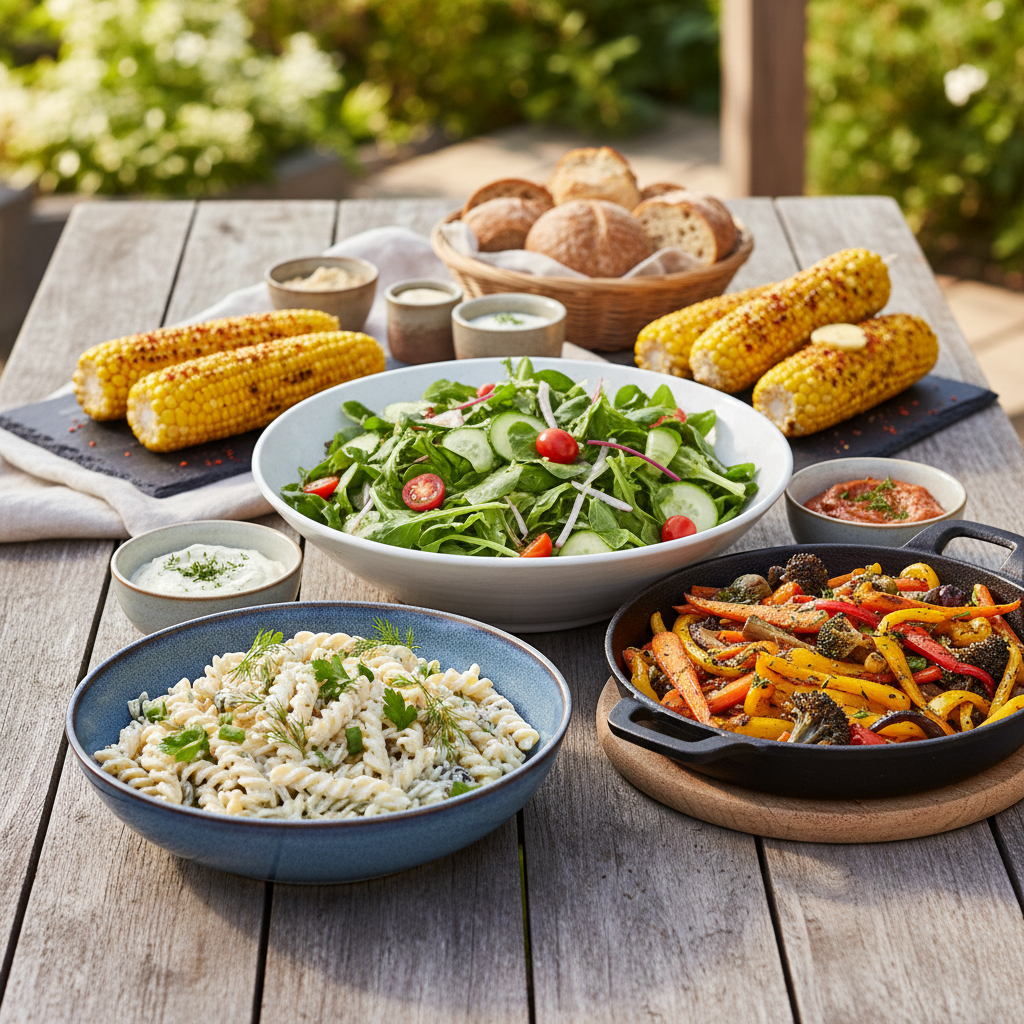
A simple salad is a quick and easy dish typically made with a base of fresh greens, a few common vegetables like tomatoes or cucumbers, and a light dressing. It’s designed for fast preparation, making it a perfect side dish or a light, healthy meal that can be easily customized with AI.
Ever stare into the fridge, craving something fresh, healthy, and fast, but dreading the thought of a complicated meal? You want delicious, nutritious options without the fuss of endless searching or long ingredient lists. What if finding the perfect simple salad could be as easy as a few clicks?
At Recipe-GPT, we make it that easy. Our open-source, AI-powered generator takes the guesswork out of meal planning, delivering quick, personalized salad suggestions that fit your busy life. Whether you’re a seasoned home cook or just starting, you can instantly generate tailored recipes perfect for a fast lunch, light dinner, or a refreshing side.
This article dives into what truly makes a salad “simple” and shows you how our AI creates your ideal match. Say goodbye to complicated culinary quests and hello to stress-free, delicious meals. Let’s explore how Recipe-GPT can help you discover your next favorite easy salad, making every mealtime simpler and more enjoyable.
Tired of Complicated Salads? Let AI Find Your Perfect Match
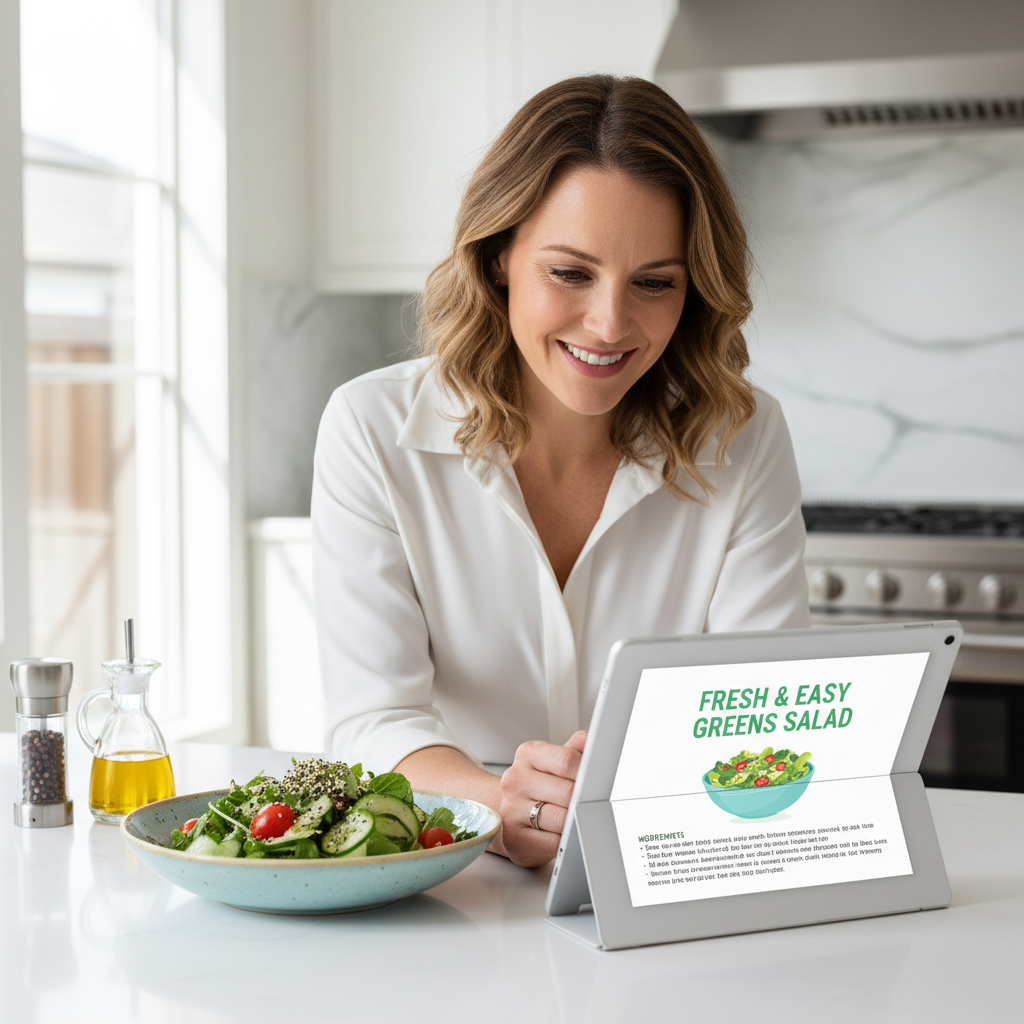
Professional food photography. Photorealistic. High-quality food magazine photo style. A modern, clean, well-lit home kitchen. A real human woman, early 30s, with a friendly smile, is looking at a tablet or smartphone displaying an AI-generated simple salad recipe on a clean white countertop. Her hands are gently resting near the device. Adjacent to the tablet, a beautifully arranged, vibrant, simple green salad with a few colorful vegetables like cherry tomatoes and cucumber slices, perfectly dressed in a stylish ceramic bowl. Natural daylight streams in, creating soft shadows. The scene conveys ease, convenience, and modern culinary inspiration.
Do you ever feel stuck staring at your fridge, wondering what to make? Complicated recipes can turn even a simple salad into a chore, leading to mealtime indecision. The good news is that creating a fresh, delicious salad doesn’t have to be difficult.
Recipe-GPT is your helpful AI cooking companion, designed to take the guesswork out of meal preparation. Our tool quickly finds your perfect simple salad and uses the power of AI to simplify your entire cooking journey.
How Recipe-GPT Simplifies Your Salads
Forget endless searching and complicated ingredient lists. Our AI-powered platform makes finding simple salad recipes easy by tailoring suggestions directly to your needs.
Personalized Meal Ideas: Tell Recipe-GPT your preferences, and it will generate unique, easy salad recipes just for you.
Ingredient-Based Suggestions: Use what you already have on hand. Our AI crafts delicious meals from your pantry staples.
Dietary Adjustments: Need vegan, gluten-free, or high-protein options? Our AI adapts to help you effortlessly stick to your dietary goals.
Quick & Practical: Get fast, practical recipe suggestions that save you valuable time and effort in the kitchen.
Say goodbye to mealtime indecision and gain the confidence to prepare diverse, tasty dishes. Recipe-GPT transforms your cooking experience, so you can enjoy delicious, easy salads without the fuss.
What Makes a Salad ‘Simple’?
Focus on Few, Fresh Ingredients
A simple salad starts with just a handful of quality ingredients. Using fewer components often means more flavor, and it also simplifies your shopping list.
When you use fresh, high-quality produce, each ingredient shines. Crisp lettuce, juicy tomatoes, and crunchy cucumbers can be the stars of the show without needing complicated additions.
Recipe-GPT helps you use what you already have. Just tell our AI your available ingredients, and it will generate personalized, simple salad recipes. This approach reduces food waste and helps you create delicious meals quickly. [1]
With AI, you can easily discover new ways to combine basic items, making meal prep a breeze and ensuring fresh flavors every time.
Quick Preparation Time
For a simple salad, speed is key. Because you’re busy, quick preparation is essential, which means minimal chopping and fast assembly.
A simple salad should be ready in under 15 minutes. The process involves just washing, chopping, and tossing—no complex cooking or special techniques required.
Our AI-powered generator, Recipe-GPT, is designed for speed and efficiency. It highlights ingredients that require little effort, so you spend less time in the kitchen and more time enjoying your meal.
This approach turns mealtime indecision into a clear, quick plan, allowing you to enjoy fresh, healthy food without the fuss.
Easy-to-Make Dressings
A simple salad deserves a simple dressing. Instead of elaborate concoctions, the best dressings use just a few pantry staples that can be whisked together in moments—no special equipment needed.
Common ingredients include olive oil, vinegar, and lemon juice, seasoned with salt and pepper. You might also add a touch of mustard or a fresh herb for extra flavor.
Recipe-GPT can suggest the perfect easy dressing for your salad. Our AI considers your ingredients and dietary preferences to generate options like a classic vinaigrette or a creamy, dairy-free alternative.
Here are common simple dressing elements:
Oil: Olive oil, avocado oil
Acid: Lemon juice, apple cider vinegar, balsamic vinegar
This simple approach means you can always have a fresh dressing on hand. With AI, personalized dressing ideas are at your fingertips, making meal planning easier than ever.
What are some easy salad recipes with few ingredients?
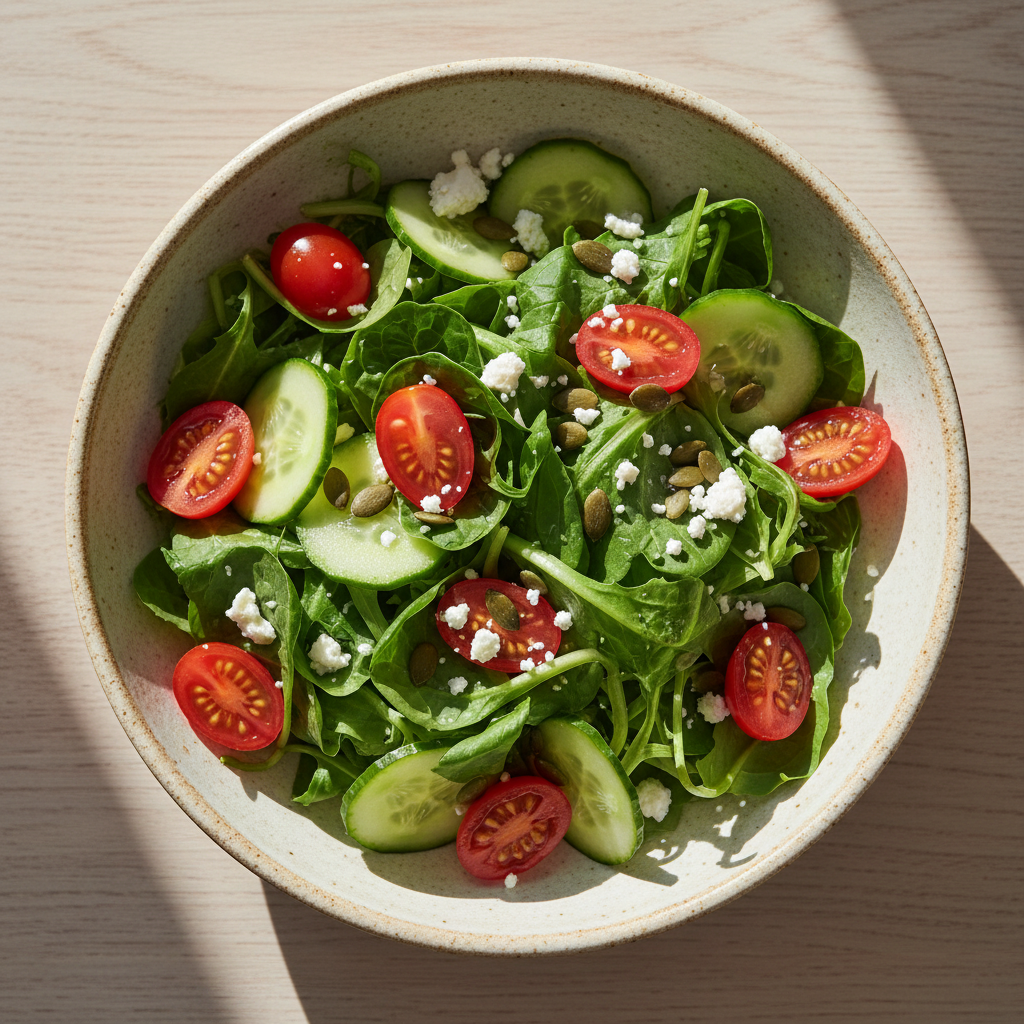
Professional food photography. Photorealistic. High-quality food magazine photo style. A close-up, top-down shot of a beautifully plated, simple green salad. The salad features fresh, crisp mixed greens, halved cherry tomatoes, thinly sliced cucumber, and a light sprinkle of feta cheese or toasted seeds. The ingredients are minimal but perfectly arranged in a rustic, light-colored ceramic bowl on a clean, light wooden table. Bright, natural lighting highlights the freshness and texture of each ingredient. The image emphasizes simplicity, freshness, and visual appeal.
Tired of overthinking mealtime? These easy salad recipes prove you don’t need many ingredients for delicious results. Recipe-GPT makes it even simpler: Just tell our AI what you have on hand, and it will generate personalized ideas like these, ready in minutes.
Classic Green Salad with Lemon Vinaigrette
Fresh and versatile, this go-to salad pairs well with almost any meal. Recipe-GPT can help you adjust this recipe—simply specify any greens or add-ins you prefer!
Ingredients:
5 ounces mixed salad greens
1/4 cup extra virgin olive oil
2 tablespoons fresh lemon juice
1/2 teaspoon salt
1/4 teaspoon black pepper
Optional: a few cherry tomatoes or cucumber slices
Instructions:
Place your mixed greens into a large bowl.
In a small bowl, whisk together the olive oil, lemon juice, salt, and pepper to create the vinaigrette.
Pour the dressing over the greens.
Toss gently until the greens are lightly coated.
Serve immediately.
Tip: For an extra flavor boost, add a pinch of dried Italian herbs to your dressing. Recipe-GPT can also suggest other easy herb combinations.
Simple Tomato, Cucumber, and Onion Salad
Perfect for summer, this refreshing salad highlights fresh garden produce. Our AI can adapt this recipe by swapping ingredients based on what’s in your fridge, saving you a trip to the store.
Ingredients:
2 large ripe tomatoes, chopped
1 large cucumber, peeled and chopped
1/4 red onion, thinly sliced
2 tablespoons olive oil
1 tablespoon apple cider vinegar
1/2 teaspoon dried oregano
Salt and pepper to taste
Instructions:
In a medium bowl, combine the chopped tomatoes, cucumber, and red onion.
In a small bowl, whisk together the olive oil, apple cider vinegar, and oregano.
Pour the dressing over the vegetables.
Season with salt and pepper, then toss gently to combine.
Let the salad sit for 5-10 minutes to allow the flavors to meld.
Serve chilled.
Tip: If you enjoy a touch of sweetness, add a tiny drizzle of honey to the dressing. Recipe-GPT can provide these kinds of flavor variations instantly.
Quick Three-Bean Salad
This hearty, protein-packed salad uses pantry staples, making it fantastic for meal prepping. Enjoy it as a side or a light lunch. Recipe-GPT can help you find similar budget-friendly recipes—just specify “pantry staples” in your request!
Ingredients:
1 (15-ounce) can garbanzo beans (chickpeas), rinsed and drained
1 (15-ounce) can kidney beans, rinsed and drained
1 (15-ounce) can green beans, drained
1/2 red bell pepper, finely diced
1/4 cup apple cider vinegar
2 tablespoons olive oil
1 tablespoon sugar (or maple syrup for a natural option)
Salt and pepper to taste
Instructions:
In a large bowl, combine the garbanzo beans, kidney beans, green beans, and diced red bell pepper.
In a small bowl, whisk together the apple cider vinegar, olive oil, and sugar.
Pour the dressing over the bean mixture.
Season with salt and pepper, then toss well to ensure all ingredients are coated.
For best flavor, chill for at least 30 minutes before serving.
Tip: No red bell pepper? No problem! Recipe-GPT can suggest substitutions, such as celery for crunch or corn for sweetness.
Easy Caprese Salad
This classic Italian favorite requires only three main ingredients but delivers incredible flavor. Our AI can suggest ways to elevate this simple dish, such as adding grilled chicken for a complete meal.
Ingredients:
2 large ripe tomatoes, sliced 1/4-inch thick
8 ounces fresh mozzarella, sliced 1/4-inch thick
1/4 cup fresh basil leaves
2 tablespoons balsamic glaze (store-bought or homemade)
Pinch of salt and freshly ground black pepper
Instructions:
Arrange alternating slices of tomato, mozzarella, and basil leaves on a platter.
Drizzle generously with balsamic glaze.
Season lightly with salt and pepper.
Serve immediately.
Tip: You can quickly make your own balsamic glaze by simmering balsamic vinegar until it thickens. Recipe-GPT offers simple cooking tips that make tasks like this straightforward for beginners.
How do you make a simple salad dressing?
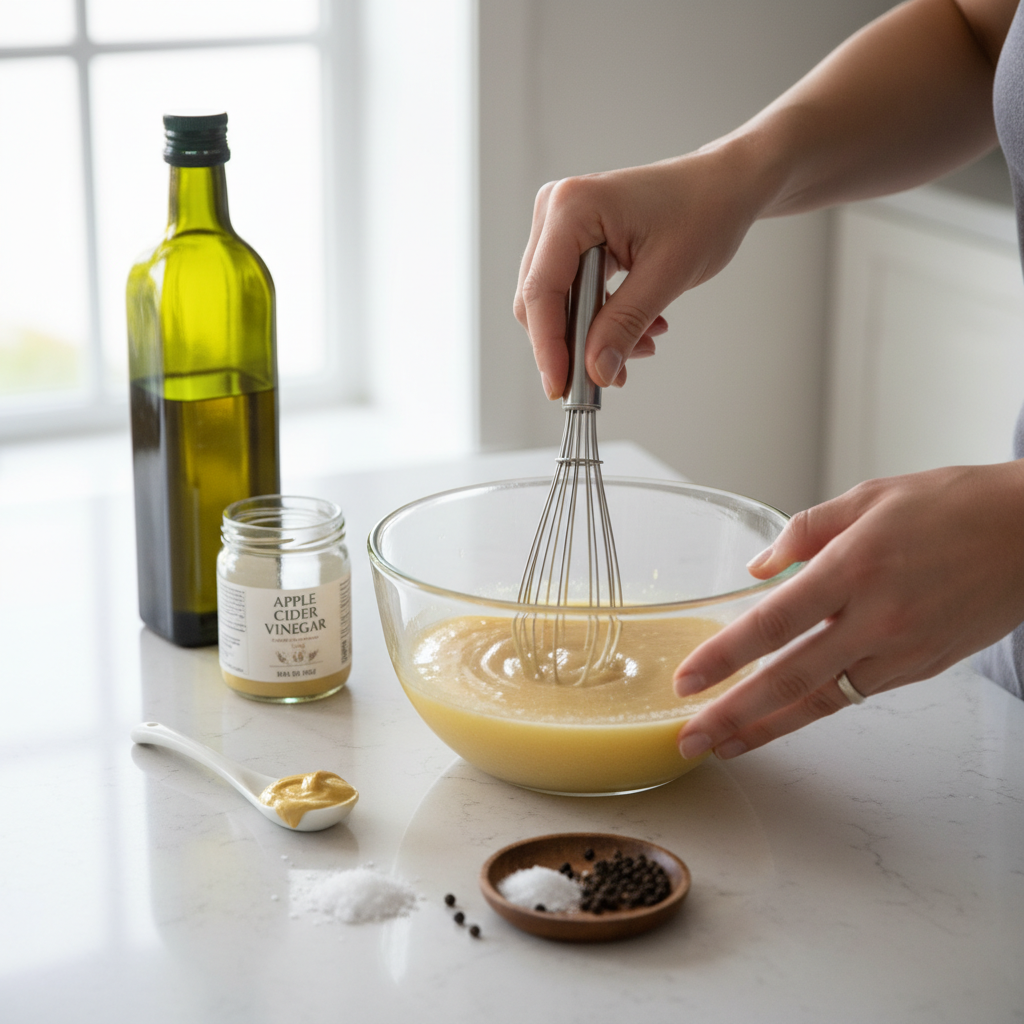
Professional food photography. Photorealistic. High-quality food magazine photo style. A home cook’s hands (real human, gender-neutral) are actively whisking a simple vinaigrette in a clear glass mixing bowl. The bowl is positioned on a clean, light-colored kitchen counter or culinary workspace. Visible ingredients around the bowl include a bottle of olive oil, a small jar of apple cider vinegar, a spoonful of Dijon mustard, salt, and black pepper. The motion of whisking creates a slight blur in the dressing, conveying action. Bright, inviting, natural light illuminates the scene, focusing on the simple, approachable process of making dressing.
The 3-Ingredient Balsamic Vinaigrette
Making your own salad dressing is surprisingly simple. This classic balsamic vinaigrette, for instance, requires just three core ingredients you probably have on hand. It’s a perfect example of easy meal prep, and Recipe-GPT can help you customize it.
Need to adjust this recipe? Our AI-powered generator can help. For example, ask Recipe-GPT for a low-sugar version or a different oil substitution.
Ingredients:
2 tablespoons balsamic vinegar
6 tablespoons olive oil
Salt and black pepper to taste
Instructions:
In a small bowl, combine the balsamic vinegar, olive oil, salt, and pepper.
Whisk vigorously until the dressing is well combined and slightly emulsified.
Taste and adjust seasonings if needed.
Drizzle over your favorite green salad, pasta salad, or roasted vegetables.
Recipe-GPT Tips & Variations:
Sweeten it up: Add ½ teaspoon of honey or maple syrup for a touch of sweetness. Recipe-GPT can suggest other natural sweeteners too.
Herbal boost: Stir in a pinch of dried oregano or Italian seasoning. Our AI can recommend herb combinations that match your main course.
Spice it: A tiny pinch of red pepper flakes adds a nice kick.
AI Pairing: Use Recipe-GPT to discover quick salad recipes that pair perfectly with this simple dressing.
Creamy Lemon Herb Dressing
Craving a creamy dressing without the heavy ingredients? This bright, tangy, and herb-filled recipe is the perfect solution. It’s light, fresh, and instantly elevates any simple salad.
Recipe-GPT can generate salad ideas that will shine with this dressing. It can also suggest dairy-free alternatives for a plant-based option, making your meal planning effortless.
Ingredients:
¼ cup plain Greek yogurt (or a dairy-free alternative like unsweetened soy or oat yogurt)
2 tablespoons fresh lemon juice
1 tablespoon olive oil
1 teaspoon chopped fresh dill (or ½ teaspoon dried)
1 teaspoon chopped fresh parsley (or ½ teaspoon dried)
Salt and black pepper to taste
Instructions:
In a small bowl, whisk together the Greek yogurt, fresh lemon juice, and olive oil until smooth.
Stir in the fresh dill and parsley.
Season with salt and black pepper.
Mix well and serve immediately or chill for the flavors to meld.
Recipe-GPT Tips & Variations:
Garlic Lover: Add ¼ teaspoon of minced garlic for extra flavor.
Herb Swap: Try chives, mint, or cilantro. Recipe-GPT can help you experiment with different herb profiles.
Thinner Consistency: Add a splash of water or milk until your desired consistency is reached.
Personalized Meals: Ask Recipe-GPT to generate a full meal plan around this dressing, considering your dietary needs and available ingredients.
Honey Mustard Vinaigrette
This sweet and tangy honey mustard vinaigrette is incredibly versatile and a true family favorite. Best of all, it comes together in just minutes. You’ll forget all about store-bought options when homemade is this simple and delicious.
Customizing this dressing is easy with Recipe-GPT. Need a vegan version? Our AI will suggest using maple syrup instead of honey. Looking for a spicier kick? Just ask for quick variations to match your preferences.
Ingredients:
2 tablespoons Dijon mustard
1 tablespoon honey (or maple syrup for a vegan option)
1 tablespoon apple cider vinegar
3 tablespoons olive oil
Salt and black pepper to taste
Instructions:
In a small bowl, whisk together the Dijon mustard, honey, and apple cider vinegar until smooth.
Slowly drizzle in the olive oil while continuously whisking until the dressing is emulsified.
Season with salt and black pepper to your liking.
Serve immediately or store in the refrigerator.
Recipe-GPT Tips & Variations:
Spicy Kick: Add ¼ teaspoon of cayenne pepper or a dash of hot sauce.
Creamy Texture: For a creamier version, incorporate a tablespoon of mayonnaise or Greek yogurt.
Herb Infusion: A pinch of dried thyme or a few fresh chives can add depth. Our AI can help you explore many more herb combinations.
Effortless Planning: Let Recipe-GPT create an entire menu featuring this dressing, tailored to your family’s tastes and what’s in your pantry.
How Can AI Create Your Perfect Simple Salad?
Generate Recipes from Ingredients You Have
Ever open your fridge and wonder what to make? Recipe-GPT instantly solves this problem. Simply tell our AI what ingredients you have, and it will craft a simple salad recipe just for you. The result is less food waste and more delicious, easy meals.
For example, imagine you have leftover chicken, a bag of mixed greens, and a forgotten avocado. Just list these items for Recipe-GPT, and it will quickly suggest a fresh salad using those exact ingredients. You’ll save time and a trip to the grocery store.
Reducing food waste is good for both your wallet and the planet. Households in the United States waste an estimated 32% of the food they buy [2]. Recipe-GPT helps you turn surplus ingredients into tasty dishes instead of tossing them.
Quick Ideas: Get instant inspiration for using what’s on hand.
Reduce Waste: Make the most of every ingredient in your kitchen.
Save Money: Avoid unnecessary grocery runs and impulse buys.
Customize for Dietary Needs
Our AI makes it simple to create personalized salads that cater to everyone’s needs. Easily adjust any recipe to fit specific dietary preferences or restrictions.
Need a gluten-free dressing or a vegetarian protein source? Just ask Recipe-GPT to modify your salad. It will instantly provide suitable alternatives, ensuring everyone at your table can enjoy a delicious, stress-free meal.
Vegan/Vegetarian: Easily swap meat for plant-based options like chickpeas or tofu.
Gluten-Free: Get suggestions for gluten-free dressings and ingredients.
Low-Carb: Find options that fit your low-carbohydrate lifestyle.
High-Protein: Discover ways to boost the protein content of your salad.
This level of personalization takes the guesswork out of meal prep and builds your confidence in cooking for diverse tastes.
Adjust Recipes for Any Occasion
A simple salad is incredibly versatile. Recipe-GPT helps you tailor any recipe to fit the occasion and serving size. Whether you’re making a quick solo lunch or preparing for a large family gathering, our AI has you covered.
Need a light side salad for dinner or a hearty main dish for a potluck? Simply tell Recipe-GPT your requirements. It will adjust ingredient quantities and suggest variations to suit the event, helping you plan meals effortlessly.
Lunch: Generate a single-serving, easy salad for a busy workday.
Dinner: Get ideas for a balanced, simple salad to complement your main course.
Parties: Scale up a recipe to feed a crowd, complete with make-ahead tips.
Think of our AI as your personal recipe assistant, ensuring your salad is always perfect for the moment. This approach makes meal planning both efficient and enjoyable.
Frequently Asked Questions About Simple Salads
What is a good simple salad for dinner?
The best simple dinner salads include a good protein source. This addition turns your salad into a complete meal, keeping you full and energized.
A Chicken Caesar Salad is a fantastic, easy-to-prepare choice. For a vegetarian option, you can swap the chicken for roasted chickpeas or grilled halloumi.
Recipe-GPT can help you customize this further. For example, you can ask it to:
Suggest a low-carb version.
Find a dairy-free Caesar dressing.
Generate ideas using ingredients you already have, like leftover chicken or turkey.
This ensures your simple dinner salad perfectly fits your tastes and dietary needs.
What is an easy green salad recipe?
An easy green salad is all about fresh ingredients and a simple dressing. It comes together in minutes, making it perfect for a quick side or a light lunch.
Try this basic recipe for a delightful Everyday Green Salad:
Gather your greens: Start with 4-5 cups of mixed greens, such as romaine, butter lettuce, or spring mix.
Add some crunch: Toss in 1/2 cup of thinly sliced cucumber and 1/4 cup of halved cherry tomatoes.
Prepare the dressing: In a small bowl, whisk together 3 tablespoons of extra virgin olive oil, 1 tablespoon of white wine vinegar, 1 teaspoon of Dijon mustard, and a pinch of salt and pepper.
Toss and serve: Drizzle the dressing over the salad and toss gently to coat everything evenly.
Recipe-GPT can help you explore variations. Just ask it to suggest different vegetables or a new easy dressing to make mealtime simple and fun.
What are the 7 different types of salads?
Salads are incredibly versatile and go far beyond leafy greens. While classifications can vary, here are some common types you’ll find in the culinary world [3]:
Green Salads: The most common type, these salads use fresh leafy greens as the base and are often tossed with a light vinaigrette.
Bound Salads: Ingredients are mixed with a thick dressing, such as mayonnaise, that binds them together. Think of potato salad or coleslaw.
Main Course Salads: These are substantial enough to be a full meal, as they usually include a protein like chicken, fish, or beans.
Side Salads: Smaller portions intended to complement a main dish. A simple garden salad is a perfect example.
Fruit Salads: Made primarily from a mix of fresh fruits, these are often served as a refreshing snack or dessert.
Vegetable Salads: These salads focus on a variety of non-leafy vegetables, such as tomatoes, cucumbers, and bell peppers.
Composed Salads: Ingredients are arranged artfully on a plate, with each component remaining distinct rather than being tossed together.
Recipe-GPT helps you explore all these types. You can ask for a “bound salad recipe” or a “main course salad with salmon” to get ideas that adapt to your needs.
How do you make a classic salad?
Making a classic salad involves balancing fresh flavors and textures. This simple foundation allows for endless customization.
Follow these steps to create a versatile classic salad:
Choose your greens: Start with a base of crisp, fresh lettuce, like romaine, green leaf, or butter lettuce. Be sure to wash and dry the leaves thoroughly.
Add supporting vegetables: Include simple, crunchy additions like sliced cucumbers, cherry tomatoes, and thinly sliced red onion.
Consider protein (optional): For a more filling salad, add grilled chicken, hard-boiled eggs, or chickpeas.
Select a dressing: A simple vinaigrette is perfect. A basic recipe uses olive oil, vinegar (like red wine or balsamic), Dijon mustard, salt, and pepper.
Toss gently: Place all ingredients in a large bowl. Add just enough dressing to lightly coat everything, and toss right before serving to prevent sogginess.
Recipe-GPT can simplify this process. Ask it to generate a “classic salad recipe with ingredients I have.” It provides clear steps and suggests personalized variations, making meal prep effortless.
A quick pickle recipe, also known as a refrigerator pickle, involves submerging vegetables in a simple brine of vinegar, water, salt, and optional sugar and spices. Unlike traditional canning, these pickles are not heat-processed for long-term shelf stability. They are stored in the refrigerator and are typically ready to eat within a few hours to a day, offering a crisp texture and tangy flavor.
Looking for that perfect tangy crunch to elevate a sandwich, liven up a salad, or use up extra vegetables in your fridge? While store-bought options are convenient, nothing beats the fresh, vibrant flavor of a homemade pickle. The best part? You don’t need complicated canning equipment or days of waiting. We have an incredibly easy recipe for quick pickles that are ready in a flash.
This guide will walk you through a fantastic recipe that’s perfect for beginners and seasoned cooks alike. Instead of long fermentation times, our method focuses on delicious refrigerator pickles you can enjoy almost immediately. Imagine customizing your favorite refrigerator dill pickles with the perfect spices or turning any vegetable into a zesty side dish. For even more inspiration, Recipe-GPT makes it simple to discover personalized, quick, and practical meal ideas, including countless variations for your next batch of homemade pickles.
Ready to add a burst of flavor to your meals and simplify your kitchen routine? Let’s dive into why making your own quick pickles is a game-changer and how you can get started today.
Why Make Your Own Quick Pickles?
Have you ever considered making your own quick pickles? It’s a game-changer for home cooks and surprisingly simple to do. Making pickles at home unlocks a world of fresh flavors, allowing you to transform everyday vegetables into tangy, delightful snacks or sides. Many people find it far more rewarding than buying pre-made jars from the store.
The Benefits of Homemade Quick Pickles
Making your own quick pickles offers several advantages. The process is accessible to any skill level, from beginners to experienced chefs, and it allows you to customize every aspect of the flavor.
Unbeatable Freshness and Flavor: Because you control every ingredient, homemade pickles have an unbeatable freshness and allow you to create your ideal flavor profile. Say goodbye to generic store-bought tastes.
Ingredient Control and Health: You know exactly what goes into your jar, so you can avoid artificial preservatives and adjust salt and sugar levels. This makes them a healthier snack that can be tailored to specific dietary needs.
Cost-Effective Cooking: Making your own pickles is much more economical than buying them, especially when you use seasonal produce.
Reduce Food Waste: Have extra cucumbers, carrots, or onions? Quick pickling is an excellent way to use them before they spoil, which helps reduce food waste at home [1].
Versatility and Customization: Almost any vegetable can be quick pickled, from traditional cucumbers to radishes and green beans. This allows for endless experimentation with different vegetables, spices, and vinegars.
Quick and Easy Process: True to their name, quick pickles are fast to make. Most recipes require minimal active time, need no special equipment, and are ready to eat in under 24 hours.
How Recipe-GPT Enhances Your Pickling Experience
Recipe-GPT makes it easy to dive into the world of quick pickles. Our AI is designed to provide instant, personalized recipe inspiration, giving you tailored guidance for every batch.
Personalized Brine Recipes: Tell our AI your flavor preferences—spicy, sweet, or extra tangy—and it will generate a custom brine recipe just for you.
Ingredient Suggestions: Not sure what to pickle? Input the vegetables you have on hand, and our AI will suggest the best combinations to help you use ingredients efficiently.
Step-by-Step Guidance: Every recipe includes clear, easy-to-follow instructions that build confidence for beginners and ensure you never feel overwhelmed.
Adjustable Serving Sizes: Whether you need a small batch for one or a large batch for a gathering, Recipe-GPT can instantly adjust ingredient quantities to ensure perfect proportions.
With Recipe-GPT, making your own quick pickles becomes an easy, intuitive, and delicious journey. Turn mealtime indecision into confident, creative cooking and discover the joy of homemade goodness today.
The Easiest Quick Pickle Recipe (For Any Vegetable)
Professional food photography, photorealistic, high-quality food magazine photo style of a beautifully arranged glass mason jar filled with vibrant quick pickled cucumber slices and dill sprigs, sitting on a rustic wooden cutting board in a brightly lit home kitchen. A warm, inviting atmosphere, with soft natural light highlighting the freshness and crispness of the pickles. A real human hand, out of focus in the background, reaching towards the jar. The overall scene should evoke convenience and deliciousness for a beginner home cook.
Essential Ingredients You’ll Need
Crafting delicious quick pickles is simple. You likely have most of these items in your pantry already. This basic recipe works wonderfully for almost any vegetable.
Vegetables: Choose your favorites, such as cucumbers, red onions, carrots, bell peppers, or even green beans. Slice them thinly or into spears.
Water: Plain tap water works perfectly.
Vinegar: Distilled white vinegar is a classic choice, but apple cider or rice vinegar also offer great flavor variations.
Salt: Use non-iodized salt. Kosher or pickling salt are ideal for creating clear brines.
Sugar: Granulated sugar helps balance the acidity. You can adjust the amount to your taste.
Flavor Boosters (Optional): Add extra zing with dill sprigs, garlic cloves, mustard seeds, peppercorns, or red pepper flakes.
Step-by-Step Instructions
Making quick pickles is faster than you might think. Follow these easy steps to prepare a batch in minutes. Soon, you’ll have flavorful additions for any meal.
Prepare the Vegetables: Wash and slice your chosen vegetables to a uniform thickness for even pickling. Pack them tightly into clean glass jars.
Measure the Brine: For a basic brine, use equal parts water and vinegar. A good starting point is 1 cup of water, 1 cup of vinegar, 1 tablespoon of salt, and 1 tablespoon of sugar.
Combine and Heat the Brine: In a small saucepan, combine the water, vinegar, salt, and sugar, along with any optional spices. Bring the mixture to a boil over medium-high heat, stirring until the salt and sugar dissolve completely. This should only take a few minutes.
Pour the Brine: Carefully pour the hot brine over the vegetables in the jars, ensuring they are fully submerged. If needed, top off the jar with a little more water or vinegar.
Cool and Chill: Let the jars cool to room temperature on the counter. Once they are cool, secure the lids tightly and transfer the jars to the refrigerator.
Enjoy!: Your quick pickles will be ready to eat in just a few hours, but for the best flavor, let them marinate overnight. They keep well in the fridge for up to two weeks [2].
How Recipe-GPT Can Personalize Your Brine
While this quick pickle recipe is a great starting point, Recipe-GPT takes it further. Our AI-powered platform makes it easy to personalize your brine and tailor any recipe to your exact needs.
Recipe-GPT also simplifies meal planning. You can generate custom brines based on the ingredients you have or the flavors you love, which means less guesswork and more delicious results.
Dietary Adjustments: Want less sugar for a low-carb diet? Simply tell Recipe-GPT. It can instantly adjust sugar levels or suggest low-sodium alternatives to fit your dietary preferences.
Flavor Variations: Craving a spicy kick or a hint of Asian flavor? Input your desired taste profile, and Recipe-GPT will suggest unique spice blends or alternative vinegars to help you discover new favorites.
Ingredient Optimization: Recipe-GPT can build a brine around the ingredients you already own, such as a specific type of vinegar. This helps reduce food waste and save money.
Quantity Customization: Whether you need a small batch for yourself or a large batch for a gathering, our AI can scale the recipe ingredients for you, ensuring perfect proportions every time.
Recipe-GPT transforms basic cooking into a personalized culinary adventure, offering tailored meal inspiration right at your fingertips. Discover how simple and fun cooking can be with smart AI guidance.
What are the three basic ingredients in pickling?
Professional food photography, photorealistic, high-quality food magazine photo style, a clean overhead flat lay shot of the essential ingredients for quick pickling. On a minimalist light-colored kitchen counter, prominently feature a clear glass bottle of apple cider vinegar, a small bowl of kosher salt, and a glass of filtered water. Beside these, neatly arranged fresh dill sprigs and thinly sliced cucumbers or carrots. The composition is clean, organized, and highlights the simplicity of the basic components. Bright, even lighting.
Making delicious quick pickles is simpler than you might think—no fancy equipment or chemistry degree required! At its heart, pickling relies on just three basic ingredients that work together to transform ordinary vegetables into tangy, flavorful delights.
Recipe-GPT can guide you in choosing the perfect combination for your pantry, making it effortless to customize your quick pickle recipe. Here are the core components:
The Vegetable or Fruit: This is your star ingredient. Almost any vegetable can be pickled—common choices include crisp cucumbers, sliced red onions, carrots, and bell peppers—and experimenting is part of the fun. Recipe-GPT can suggest the best vegetables to use based on what you have, offering endless inspiration for your next homemade recipe.
Vinegar (Acid): This is the secret to preservation and flavor. By lowering the food’s pH, vinegar prevents spoilage and gives pickles their signature tang. While white vinegar is a popular choice for its clean taste, options like apple cider or rice vinegar also work well, each adding a unique nuance. Recipe-GPT can help you select the best vinegar, with options tailored to your taste preferences.
Salt: Salt does more than just add flavor. It also draws moisture from the vegetables, which contributes to a crisp texture, and it plays a vital role in food safety. Always use a non-iodized salt for pickling, such as kosher or canning salt. Avoid table salt, as its anti-caking agents can make your brine cloudy.
These three ingredients are the foundation of nearly every quick pickle. With Recipe-GPT, you can easily transform them into a personalized recipe, moving from indecision to clear, simple, and intuitive suggestions.
What is the 321 pickle rule?
The “3-2-1 pickle rule” is a fantastic guideline for making delicious, balanced quick pickles, like refrigerator dill pickles. It simplifies the brine into an easy-to-remember ratio, making it a handy starting point for any homemade pickle recipe. Following this rule helps you create a well-proportioned pickling liquid that gives vegetables a classic tangy flavor without being too harsh or too sweet.
Breaking Down the 3-2-1 Rule
Here’s what each number in the rule stands for in terms of volume:
3 Parts Water: This forms the base of your brine. It dilutes the vinegar to ensure your pickles aren’t overwhelmingly sour. You can use filtered water for the cleanest taste.
2 Parts Vinegar: Vinegar is key for pickling. It provides the acidity that preserves your vegetables and gives them their signature tang. White vinegar or apple cider vinegar are popular choices for quick pickles.
1 Part Sugar: The sugar balances the vinegar’s tartness, adding a subtle sweetness that rounds out the flavor profile. This amount won’t make your pickles overly sweet; instead, it simply harmonizes the overall flavor.
For example, if you use 3 cups of water, you would then add 2 cups of vinegar and 1 cup of sugar. This consistent ratio makes the process much less daunting.
Don’t Forget the Salt and Spices!
While the 3-2-1 rule covers the liquid base, salt and spices are crucial for developing flavor. These are typically added “to taste” rather than by a strict ratio.
Salt: Pickling salt or kosher salt is recommended. Avoid iodized salt, as it can make your brine cloudy. Salt not only enhances flavor but also contributes to preservation.
Spices: This is where you can truly personalize your pickles. For classic refrigerator dill pickles, fresh dill, garlic, and mustard seeds are essential. You might also add peppercorns, coriander seeds, or red pepper flakes for a kick.
Why It’s Great for Quick Pickles
This rule is ideal for quick or refrigerator pickles because the process is very forgiving. You’re not canning for long-term shelf stability, so precise measurements for preservation aren’t as critical as they are for traditional canning [3]. Instead, the focus is on achieving a delicious flavor quickly.
Using the 3-2-1 rule also allows you to easily scale your recipe up or down. Whether you’re making a small jar of pickled red onions or a large batch of cucumber pickles, the ratio remains consistent. This consistency ensures a reliable and delicious result every time.
Let Recipe-GPT Help Personalize Your Brine
Stuck on what kind of quick pickle to make? Recipe-GPT can help! Tell our AI what vegetables you have, and it can generate a customized quick pickle recipe for you. It can even suggest variations on the 3-2-1 rule to match your taste. For instance, if you prefer less sugar or want to use a specific type of vinegar, our AI can provide instant, personalized guidance.
Experimenting with different vinegars or spices is simple with Recipe-GPT’s suggestions, helping you create the perfect homemade pickle recipe for your tastes. Discovering new flavor combinations has never been easier.
What’s the best vinegar for pickling?
Choosing the right vinegar is crucial for making delicious quick pickles, and it’s about more than just flavor. Vinegar provides the essential acidity for both food safety and that signature tangy taste. While many vinegars work, some are better suited for your homemade pickle recipe.
The Best All-Around Choice: Distilled White Vinegar
For most quick pickle recipes, distilled white vinegar is your go-to. Here’s why:
Neutral Flavor: Its clean, sharp acidity won’t overpower your vegetables, allowing the natural flavors of your ingredients to shine.
Clarity: It’s colorless, which means your refrigerator dill pickles or pickled onions will maintain their vibrant, natural hues.
Consistent Acidity: Distilled white vinegar typically has a 5% acidity level. This is the ideal concentration for safe pickling [4].
Other Great Vinegar Options for Flavor Variations
Ready to experiment beyond white vinegar? Different vinegars can add unique flavor profiles to your easy pickle recipe.
Apple Cider Vinegar: This offers a fruitier, slightly mellower tang. It’s fantastic for a less sharp, more complex quick pickle. Just be aware that it can add a light golden hue to your brine.
Rice Vinegar: For a milder, subtly sweet pickle, rice vinegar is an excellent choice. It’s often used in Asian-inspired quick pickled carrots and daikon. Its acidity can be lower, so always check the label.
White Wine Vinegar: This vinegar is similar to distilled white but has a more sophisticated, fruity undertone that pairs well with delicate vegetables.
What about red wine vinegar or balsamic? While flavorful, they aren’t generally recommended for most quick pickles. Their strong colors can stain vegetables, and their intense flavors can easily overwhelm the main ingredients.
How Recipe-GPT Helps You Choose
Feeling overwhelmed by the choices? Recipe-GPT simplifies your decision-making. Our AI-powered tool can help you pick the perfect vinegar in several ways:
Ingredient-Based Suggestions: Tell Recipe-GPT what vinegars you have on hand, and it will suggest a quick pickle recipe tailored to your ingredients.
Flavor Profile Matching: Want a mild pickle or something super tangy? Describe your desired taste, and Recipe-GPT will recommend the best vinegar type.
Personalized Variations: Already have a favorite homemade pickle recipe? Ask Recipe-GPT to suggest vinegar variations for exciting new flavor experiences.
Ultimately, the “best” vinegar depends on your personal taste and the type of quick pickle you’re making. Experimentation is part of the fun, and Recipe-GPT is here to help you explore new ideas with confidence.
Achieving that satisfying crunch in your homemade dill pickles is easier than you think. After all, nobody wants a soggy pickle! The secret is using a few simple techniques to ensure every bite is perfectly crisp.
Start Super Fresh: Always use the freshest, firmest cucumbers you can find. Younger, smaller cucumbers are naturally crisper than older, softer ones.
Trim the Blossom End: This step is crucial for preventing mushy pickles. The blossom end of the cucumber contains enzymes that break down pectin, which leads to softness over time [5]. Simply trim about 1/16th of an inch from this end before slicing or packing.
Give Them an Ice Bath: Before brining, soak your cucumbers in ice water for 1-2 hours. This cold bath helps firm up their cellular structure, preparing them perfectly for the pickling process.
Consider Crispness Boosters: For an extra layer of crunch, you can add certain ingredients to your brine.
Calcium Chloride: A small amount of food-grade calcium chloride is a popular choice for home picklers. It helps maintain the firmness of vegetables.
Tannins: Natural sources of tannins, like a fresh grape leaf, oak leaf, or even a tea bag, can also help keep pickles crisp.
How Recipe-GPT Helps You Get That Crunch
You don’t need to be a pickling expert to make a great dill pickle recipe. Recipe-GPT simplifies how to achieve perfectly crisp refrigerator pickles.
When you want a quick pickle recipe, just tell Recipe-GPT your goal by requesting a “crispy dill pickle recipe” or “extra crisp quick pickle.” Our AI will then tailor the brine proportions and suggest crucial crispness-boosting ingredients. This eliminates guesswork and gives you clear, actionable advice right away.
This smart guidance helps transform mealtime indecision into confident cooking. Enjoying perfectly crisp, flavorful homemade pickles is now just a few clicks away.
What are common pickling mistakes to avoid?
Making your own quick pickles is a fun and rewarding experience, but even seasoned home cooks can make small missteps. For beginners, knowing a few common pitfalls can make all the difference. Recipe-GPT is here to guide you, ensuring your homemade pickles are crisp and flavorful every time.
Here are some common quick pickling mistakes and how to steer clear of them:
Not Using the Freshest Vegetables
The secret to crisp, delightful refrigerator pickles starts with fresh produce. If your cucumbers, onions, or carrots are already a bit soft, they won’t magically become firm in the brine.
The Mistake: Picking limp or old vegetables. This results in soggy, mushy pickles, which nobody wants!
The Fix: Always choose firm, vibrant vegetables. Inspect them carefully at the store or from your garden.
Recipe-GPT Tip: Our AI can suggest the best seasonal vegetables for your quick pickle batch, ensuring you start with peak freshness. It can even suggest local markets to find prime produce.
Incorrect Brine Ratios
The brine is the heart of your quick pickle recipe, creating that perfect balance of sweet, sour, and salty. Getting the ratios wrong can lead to bland or overpowering pickles.
The Mistake: Guessing the amounts of vinegar, water, salt, and sugar. This can result in pickles that are too salty, not sour enough, or improperly preserved.
The Fix: Follow a tested recipe precisely. The “3-2-1 rule” (3 parts vinegar, 2 parts water, 1 part sugar) is a great starting point for many quick pickles.
Recipe-GPT Tip: Our AI-powered recipe generator ensures you get the exact measurements for your personalized quick pickle. It can even adjust for dietary preferences, like less sugar, giving you a tailored brine every time.
Using Too Little Brine
For quick pickles, every piece of vegetable needs to be submerged. This prevents oxidation and ensures even pickling.
The Mistake: Filling your jar with vegetables but not having enough brine to fully cover them. Any exposed pieces won’t pickle correctly and can even spoil.
The Fix: Pack your jar snugly but leave enough room for the brine. Make sure all vegetables are completely under the liquid. Use a small weight if needed to keep them submerged.
Recipe-GPT Tip: Our step-by-step instructions include clear guidance on how to pack your jars and calculate the ideal brine volume. No more guessing games!
Insufficient Chilling Time
Patience is key for delicious, flavor-packed refrigerator dill pickles. The brine needs time to work its magic.
The Mistake: Tasting your quick pickles too soon. While you can technically eat them after a few hours, the flavors haven’t fully developed.
The Fix: Give your pickles at least 24 hours in the refrigerator. For the best dill pickle recipe results, waiting 2-3 days allows the flavors to deepen beautifully.
Recipe-GPT Tip: Every Recipe-GPT quick pickle recipe comes with clear chilling and “ready-to-eat” recommendations, so you know exactly when to enjoy your creation.
Not Using Clean Jars and Equipment
Even though quick pickles aren’t processed for long-term shelf stability, cleanliness is still crucial. It ensures food safety and the best flavor.
The Mistake: Using jars that aren’t sparkling clean or reusing old lids with compromised seals. This can introduce unwanted bacteria and shorten the life of your homemade pickle recipe [source: https://nchfp.uga.edu/how/can_01/prep_jars.html].
The Fix: Always wash your jars and lids thoroughly with hot, soapy water. Rinse them well and allow them to air dry or dry them completely.
Recipe-GPT Tip: Our guides emphasize simple, safe practices for all cooking steps, including proper hygiene for your easy pickle recipe success.
Overpacking the Jar
While you want to use your space efficiently, jamming too many vegetables into one jar can cause problems.
The Mistake: Stuffing jars so full that there’s no room for the brine to circulate evenly. This can lead to unevenly pickled vegetables.
The Fix: Leave a little headspace at the top of the jar (about half an inch). This ensures proper brine coverage and allows the liquid to circulate.
Recipe-GPT Tip: Our AI provides guidance on appropriate jar sizes and packing techniques, helping you get the most out of every batch of refrigerator pickles.
With Recipe-GPT, you’re set for success. Our AI takes the guesswork out of pickling, offering personalized recipes and clear instructions. Avoid these common pitfalls and enjoy perfect homemade pickles every time.
Ideas for Your Next Batch of Refrigerator Pickles
Professional food photography, photorealistic, high-quality food magazine photo style of a diverse and colorful display of several different jars of quick refrigerator pickles. Include jars filled with various vegetables like bright pink pickled red onions, green pickled green beans, vibrant yellow pickled carrots, and classic cucumber dill pickles. Each jar is clearly visible, showcasing the different textures and colors. The jars are arranged attractively on a light wooden kitchen island or rustic table in a well-lit home kitchen, suggesting abundance and culinary creativity. Soft, inviting light.
Quick Pickle Recipe for Cucumbers
Ready to make classic refrigerator dill pickles? This quick and simple recipe is the perfect place to start. Quick-pickled cucumbers add a zesty crunch to any meal and are perfect on sandwiches, in salads, or as a refreshing snack. Recipe-GPT can even help you fine-tune the recipe to your liking.
What You’ll Need:
1-2 English cucumbers or 4-5 small pickling cucumbers
1 cup water
1 cup distilled white vinegar (or apple cider vinegar)
1 tablespoon sugar (or to taste)
1 teaspoon salt (kosher or sea salt works best)
1-2 cloves garlic, thinly sliced
1/2 teaspoon black peppercorns
Fresh dill sprigs (optional, but essential for a classic dill pickle)
Simple Steps:
Prepare the Cucumbers: Wash the cucumbers thoroughly. Slice them into spears, rounds, or thin coins. The thinner the slices, the faster they will pickle.
Pack the Jar: Place the garlic, peppercorns, and dill into a clean, heat-proof jar. Pack the cucumber slices tightly on top.
Make the Brine: In a small saucepan, combine the water, vinegar, sugar, and salt. Bring this mixture to a simmer over medium heat, stirring until the sugar and salt dissolve.
Pour and Cool: Carefully pour the hot brine over the cucumbers, making sure they are fully submerged.
Chill: Let the jar cool to room temperature. Then, seal it with a lid and refrigerate for at least 1-2 hours before serving. For the best flavor, allow them to chill overnight.
Recipe-GPT Tip: Want to adjust the sweetness or spice? Just tell Recipe-GPT your preferences. Our AI will suggest brine variations to make sure your refrigerator pickles are tailored perfectly to your taste.
Quick Pickle Recipe for Red Onions
Quick-pickled red onions are a fantastic addition to many dishes. They add a bright, tangy kick and beautiful color. Best of all, this easy recipe takes just minutes to prepare. Use them to top tacos, salads, burgers, and avocado toast.
What You’ll Need:
1 large red onion
1 cup hot water
1/2 cup distilled white vinegar
1/2 cup apple cider vinegar
1 tablespoon sugar
1 teaspoon salt
Optional: a few black peppercorns or a pinch of red pepper flakes
Simple Steps:
Slice the Onion: Peel and thinly slice the red onion into rings or half-moons. Using a mandoline makes this step quick and easy.
Pack the Jar: Place the sliced red onion and any optional spices into a clean, heat-proof jar.
Make the Brine: In a bowl, combine the hot water, both vinegars, sugar, and salt. Stir well until the sugar and salt are fully dissolved.
Pour and Cool: Pour the brine over the onions, ensuring all slices are covered.
Chill: Let the jar cool on the counter. Then, seal and refrigerate for at least 30 minutes. You’ll see the onions soften and turn a vibrant pink.
Recipe-GPT Tip: Out of one type of vinegar? Recipe-GPT can suggest a quick substitution. Our AI understands common ingredient swaps, ensuring you can make this easy pickle recipe with what you have on hand.
Quick Pickled Carrots and Daikon
This classic Vietnamese-inspired pickle adds a delightful crunch and tang to many meals. It’s fantastic with banh mi, grilled meats, or in rice bowls. This quick pickle brings a unique flavor to your table.
What You’ll Need:
1 large carrot
1 small daikon radish (about the same size as the carrot)
1 cup hot water
1/2 cup distilled white vinegar
1/4 cup sugar
1 teaspoon salt
Simple Steps:
Prepare the Vegetables: Peel the carrot and daikon radish. Cut them into thin matchsticks about 2-3 inches long.
Pack the Jar: Pack the carrot and daikon matchsticks tightly into a clean, heat-proof jar.
Make the Brine: In a bowl, combine the hot water, vinegar, sugar, and salt. Stir until the sugar and salt completely dissolve.
Pour and Cool: Pour the brine over the vegetables, making sure they are fully submerged.
Chill: Let the jar cool to room temperature before sealing and refrigerating for at least 1 hour. These quick pickles taste even better after a few hours or overnight.
Recipe-GPT Tip: Don’t have daikon? Ask Recipe-GPT for an alternative! Our AI can suggest other root vegetables, helping you create a personalized recipe based on your pantry.
Other Vegetables to Try
One of the best things about quick pickling is its versatility. Almost any firm vegetable can be transformed into a tangy, delicious snack or condiment, so don’t be afraid to experiment.
More Quick Pickle Ideas:
Green Beans: Lightly blanched and pickled, they offer a delightful snap.
Cauliflower Florets: Small, bite-sized florets become wonderfully tender-crisp.
Bell Peppers: Sliced thin, they add vibrant color and a sweet-and-tangy flavor.
Asparagus: This is a fantastic way to preserve springtime freshness.
Cherry Tomatoes: These burst with flavor and are a great addition to salads.
Jalapeños: For those who love a spicy kick, quick-pickled hot peppers are a must-try.
How Recipe-GPT Helps You Explore: Feeling adventurous? Tell Recipe-GPT what vegetables you have on hand. Our AI can instantly generate a tailored recipe, complete with suggested spice pairings and flavor profiles. This simplifies meal planning and helps you discover new ways to use the ingredients you already have. Imagine turning everyday produce into gourmet additions with a few taps!
Frequently Asked Questions
What is the 3-2-1 rule for pickling?
The “3-2-1 rule” is a popular guideline for creating a balanced quick pickle brine, making it easy for beginners to achieve great flavor.
The ratio breaks down as follows:
3 parts vinegar: The primary pickling agent.
2 parts water: Dilutes the vinegar to a palatable level.
1 part sugar: Balances the acidity with a touch of sweetness.
For example, you could use 3 cups of vinegar, 2 cups of water, and 1 cup of sugar to create a versatile brine for many vegetables. Remember, this is just a starting point—feel free to adjust the ratio to your personal taste.
To take the guesswork out of balancing flavors, Recipe-GPT can tailor this ratio for you instantly. Simply tell our AI whether you prefer a sweeter or more tart pickle, and it will generate the perfect quick pickle recipe to match.
How long do quick pickles last in the fridge?
Quick pickles, also known as refrigerator pickles, have a shorter shelf life than traditionally canned pickles. Because they are not processed in a hot water bath, they are not shelf-stable.
Generally, homemade quick pickles last for about 2 to 4 weeks in the refrigerator [6]. For the best flavor and texture, aim to enjoy them within the first two weeks.
To maximize their shelf life, follow these tips:
Store them in a clean, airtight container.
Keep them fully submerged in the pickling brine.
Always use clean utensils when removing pickles from the jar.
To help prevent food waste, Recipe-GPT can adjust recipe serving sizes. This allows you to make smaller batches that you can enjoy while they’re fresh.
Can I use less sugar in my quick pickle recipe?
Absolutely. The amount of sugar in a quick pickle recipe is easy to adjust. In addition to sweetness, sugar serves a few key purposes:
Balances acidity: It mellows the sharp tartness of the vinegar.
Enhances flavor: Sugar adds depth and complexity to the overall taste.
Maintains texture: It helps contribute to a crisper pickle.
If you prefer a less sweet pickle, you can simply reduce the sugar or even omit it entirely for a purely savory and tart flavor. Keep in mind that less sugar will result in a more acidic taste, so it’s a good idea to test a small batch first to find your ideal balance.
Recipe-GPT makes this customization simple. Just ask the AI for a “less sweet quick pickle recipe,” and it will adjust the brine ratio for you. It can also suggest other spices to help balance the flavor without extra sugar, providing a truly personalized recipe every time.
The best mashed potatoes recipe involves boiling high-starch potatoes, like Russets or Yukon Golds, until they are very tender. Once cooked, drain them well and mash with warm butter, milk, or cream, and season with salt and pepper. The key is to avoid overworking the potatoes to achieve a light, fluffy texture.
Few side dishes are as comforting as a bowl of perfectly creamy, fluffy mashed potatoes. It’s a classic staple that’s perfect for any occasion, from a holiday feast to a simple weeknight meal. If you’ve ever wanted to achieve that ideal texture and flavor without the fuss, you’re in the right place. We believe making the best mashed potatoes recipe should be simple, not a chore.
At Recipe-GPT, we are dedicated to making mealtime decisions easy, fast, and fun. That’s why we’ve created this guide to making foolproof, easy mashed potatoes that will impress everyone. We simplify the process with clear, step-by-step instructions, so even beginners can achieve a delicious result. We will also show you how our AI-powered tool can help you personalize, adjust, or discover new variations for your simple mashed potatoes with just a few clicks.
Why is This the Best Mashed Potatoes Recipe for Beginners?
Learning to cook can feel daunting, but delicious food doesn’t need to be complex. This is the best mashed potatoes recipe for beginners because we’ve simplified every step.
Our goal is to build your kitchen confidence. With this recipe, you’ll create creamy, delicious mashed potatoes every time. This easy mashed potatoes recipe uses readily available ingredients and requires no fancy equipment.
Here’s why this recipe stands out for new cooks:
Simple Ingredients: You likely have most of these items in your pantry. We avoid obscure or hard-to-find components.
Clear Steps: Each instruction is broken down into plain, actionable language, so you know exactly what to do next.
Guaranteed Success: We focus on proven techniques that deliver perfect results—creamy, not gummy, mashed potatoes.
Quick & Practical: This recipe is designed for busy lives. You can prepare it efficiently, making it perfect for everyday meals.
Beyond the recipe itself, Recipe-GPT makes your cooking journey even smoother. Our AI platform offers personalized help to transform mealtime indecision into clear choices. It’s more than just a recipe; it’s your personal cooking companion.
Recipe-GPT helps beginners by:
Tailoring to You: Our AI can adjust this easy mashed potatoes recipe for your needs. Need smaller servings? Recipe-GPT adapts the quantities instantly.
Suggesting Variations: Want to add a twist? Our AI provides creative ideas, like cheesy or garlic mashed potatoes.
Simplifying Planning:Discovering new dishes is fast. Just input the ingredients you have to get instant inspiration.
Building Confidence: Our platform empowers you to try diverse recipes without stress, creating more enjoyable cooking experiences.
This approach moves you from uncertainty to confident cooking. You’ll master this classic side dish quickly and can then explore many more delicious options with Recipe-GPT’s guidance.
What’s the secret to great mashed potatoes?
A photorealistic, professional food photography image depicting a key step in a culinary workspace. A real human home cook’s hands, in a clean, modern home kitchen, are actively using a metal potato ricer to press cooked potatoes into a large stainless steel bowl. The focus is on the action, showing the fluffy, fine texture of the riced potatoes accumulating in the bowl, with subtle steam visible. The lighting is bright and natural, highlighting the ingredients and the precision of the process.
Choosing the Best Potatoes for Mashing
The journey to amazing mashed potatoes starts with picking the right spud, as not all potatoes are created equal for mashing.
For the best results, you want starchy potatoes because they break down easily when cooked, which makes them light and fluffy when mashed. Waxy potatoes, in contrast, hold their shape and can lead to a gluey texture.
The top choices for fluffy, delicious mashed potatoes are:
Russet or Idaho Potatoes: High in starch, these potatoes produce the classic, fluffy mash.
Yukon Gold Potatoes: As a medium-starch potato, they offer a naturally creamy texture and a slightly buttery flavor that many cooks find perfect.
Wondering what to do with the potatoes you have on hand? Recipe-GPT can help! Just tell our AI your ingredients, and it will suggest the best recipes, even recommending substitutions for different potato types.
Tips for a Perfectly Creamy Texture
Achieving a dreamy, creamy texture is simpler than you think. It’s all about avoiding the common pitfalls that lead to gummy mashed potatoes.
Follow these quick tips for mashed potato perfection:
Cut Evenly: Chop your potatoes into similar-sized pieces to ensure they cook at the same rate. Uneven cooking can leave you with a mix of hard and soft bits.
Don’t Overcook: Cook potatoes just until a fork can easily pierce them. If they get too mushy, they will absorb excess water, making your final dish watery or gummy.
Drain Well: After boiling, drain the potatoes thoroughly and let them sit in the hot pot for a minute or two. The residual heat helps evaporate excess moisture, allowing them to absorb butter and milk more effectively.
Mash Gently: Use a potato ricer or a hand masher, and avoid a food processor. A food processor can overwork the potatoes, releasing too much starch and resulting in a sticky, gluey mess.
Work Quickly: Mash the potatoes while they are still hot. They absorb liquids and fats more readily at this stage, leading to a smoother, creamier consistency.
Recipe-GPT provides these expert tips with every mashed potato recipe. Our AI-powered guidance ensures you get it right every time so you can cook with confidence.
Why Warm Milk and Butter Are Key
This small step makes a huge difference. Adding warm dairy and fat is a key secret to achieving a luxurious texture in your mashed potatoes.
Here’s why this step is so important:
Better Absorption: Hot potatoes absorb warm milk and melted butter more easily, allowing them to blend smoothly. Cold ingredients, on the other hand, can shock the potatoes and won’t incorporate as well.
Maintains Temperature: Using cold ingredients cools your potatoes down, making them harder to mash and affecting the final texture. Warm additions maintain the temperature, keeping the potatoes easy to work with.
Prevents Gummy Texture: When potatoes cool, their starches can seize up. Adding cold liquids can make this worse, creating a tough texture. Warm liquids keep the starches pliable, helping to create a smooth, creamy result.
Always gently warm your milk and melt your butter before adding them. Recipe-GPT includes this crucial detail in our step-by-step guides. This attention to detail helps you master simple techniques for amazing meals and elevates your home cooking.
How to make mashed potatoes easy step by step?
A photorealistic, professional food photography image in a high-quality food magazine photo style. A close-up, appetizing shot of a perfectly smooth and creamy serving of mashed potatoes, scooped into a rustic ceramic bowl. The potatoes are garnished with finely chopped fresh chives and a small pat of butter melting into the warm surface. The background is a subtly blurred, warm home kitchen setting with natural light, emphasizing the inviting texture and appealing presentation of the finished dish.
Simple Ingredients You’ll Need
You don’t need a long list of fancy ingredients to create fantastic mashed potatoes. Simplicity is the secret to the best results, and you likely have most of these staples on hand.
Potatoes: About 2 pounds. Russets or Yukon Golds are perfect for a creamy texture.
Butter: 1/2 cup (1 stick), unsalted. Good quality butter adds richness.
Milk: 1/2 cup, whole milk. Warm it gently before adding.
Salt: 1 teaspoon, or to taste. Essential for flavor.
Black Pepper: 1/4 teaspoon, freshly ground. Adds a nice finish.
This recipe is a great starting point, so feel free to use what you have. For quick adjustments, Recipe-GPT can help you scale the ingredients.
Step 1: Prepare and Boil the Potatoes
This first step is crucial for achieving a wonderfully smooth texture. Proper preparation makes all the difference.
Peel and Cut: First, peel your potatoes and cut them into uniform 1-inch pieces to ensure they cook evenly.
Rinse Well: Place the cut potatoes in a colander and rinse them under cold water until it runs clear. Rinsing away excess starch is the key to preventing gummy mashed potatoes[1].
Cold Water Start: Put the rinsed potatoes into a large pot and cover them with cold water by about one inch. Add a generous pinch of salt.
Boil Until Tender: Bring the water to a boil over high heat, then reduce the heat to a simmer. Cook for 15-20 minutes, or until the potatoes are very tender and a fork slides through them easily.
Starting the potatoes in cold water helps them cook evenly from the outside in, preventing mushy exteriors and undercooked centers.
Step 2: Drain and Dry
Draining and drying the cooked potatoes is a vital step for preventing a watery, bland result. Don’t skip it!
Drain Thoroughly: Pour the potatoes into a colander and let them drain for a minute or two to remove all excess water.
Return to Pot: Transfer the well-drained potatoes back to the hot, empty pot.
Dry Them Out: Place the pot back on the stove over low heat. Shake the pot gently for 1-2 minutes to evaporate any remaining moisture. Drier potatoes absorb butter and milk more effectively, resulting in a creamier mash.
This quick drying step is a game-changer, ensuring your mashed potatoes turn out perfectly rich and creamy instead of watery.
Step 3: Mash to Perfection
Now for the fun part: mashing. This is where you transform humble potatoes into a delightful side dish. Using warm ingredients is the key to success in this step.
Warm Ingredients: While the potatoes are drying, gently warm the milk and melt the butter in a small saucepan or the microwave. Do not let them boil. Hot potatoes absorb warm ingredients more easily, which creates a smoother mash.
Mash the Potatoes: Use a potato masher, fork, or ricer to gently mash the dry potatoes until they reach a smooth but slightly textured consistency. Be careful not to over-mash.
Add Butter: Gently stir the warm, melted butter into the potatoes until it is fully incorporated.
Add Milk, Salt, and Pepper: Slowly pour in the warm milk, stirring continuously until you reach your desired level of creaminess. Season with salt and pepper to taste.
Serve Immediately: Serve your delicious, simple mashed potatoes while they’re hot for the best flavor and texture.
For an extra-smooth mash, a potato ricer works wonders. If you prefer a slightly chunkier texture, a traditional masher is perfect. Looking for other variations? Recipe-GPT can offer quick suggestions!
AI Tip: Let Recipe-GPT Adjust Your Servings
Whether you’re cooking for one or a large gathering, Recipe-GPT makes it easy to scale recipes. You no longer need to do the math yourself.
Our AI can instantly adjust the ingredient quantities for this recipe—just tell it how many servings you need. It can also suggest alternative cooking methods, like using a crock pot.
Recipe-GPT also suggests personalized variations. If you’re out of milk, for example, our AI can recommend a suitable substitute, making your cooking experience easy and tailored to you.
This feature saves time, reduces food waste, and gives you the confidence to adjust old favorites or try new ones. Make your mealtime decisions simple and stress-free with AI assistance.
How Can I Customize My Mashed Potatoes?
A photorealistic, professional food photography image in a high-quality food magazine photo style. Three individual, small, elegantly arranged bowls of mashed potatoes are displayed on a rustic wooden cutting board in a well-lit home kitchen. Each bowl features a distinct customization: one with crispy bacon bits and shredded cheddar cheese, another with roasted garlic cloves and fresh rosemary sprigs, and the third with a drizzle of truffle oil and fresh parsley. The image highlights the variety of textures and colors, suggesting easy customization options.
Once you’ve mastered the easy mashed potatoes recipe, it’s time to get creative. Customizing your mash is a simple and fantastic way to match any meal or mood.
Here are a few popular ideas to inspire you, plus how Recipe-GPT can help you discover endless personalized variations.
Creamy Garlic Mashed Potatoes
For a classic side dish with a wonderful depth of flavor, try adding garlic.
Here’s how to make them:
During the last 5-10 minutes of boiling your potatoes, add 3-4 peeled garlic cloves to the pot to soften them.
Drain the potatoes and garlic together.
Mash the garlic right along with the potatoes until it blends smoothly.
Proceed with adding warm milk and butter as usual. You can also infuse your butter with garlic beforehand for an extra kick.
Cheese makes everything better, and this incredibly comforting variation is a guaranteed family favorite.
To make cheesy mashed potatoes:
After mashing your potatoes with milk and butter, stir in 1/2 to 1 cup of shredded cheese.
Cheddar, Monterey Jack, or Parmesan are excellent choices.
Continue stirring until the cheese is fully melted and incorporated.
Taste and add more salt or pepper if needed.
This cheesy version is a quick and easy way to upgrade your side dish.
Sour Cream and Chive Variation
For a tangy, fresh twist with a lighter, brighter flavor, try adding sour cream and chives.
Follow these quick steps:
Once your potatoes are mashed with milk and butter, fold in 1/4 to 1/2 cup of sour cream.
Add 2 tablespoons of freshly chopped chives.
Mix gently until just combined to keep the texture light.
Using AI to Find More Ideas
Looking for other customization options? Recipe-GPT is your go-to AI assistant for finding new twists on your best mashed potatoes recipe.
Our AI simplifies mealtime decisions by providing personalized recipe suggestions in moments.
Here’s how Recipe-GPT helps you explore:
Ingredient Spotlight: Tell Recipe-GPT what you have on hand, and it will suggest creative mashed potato variations using those ingredients.
Dietary Adjustments: Need vegan or low-carb mashed potatoes? Simply input your dietary needs, and the AI will generate tailored recipes.
Flavor Combos: Ask for spicy mashed potatoes, herbed mashed potatoes, or even different root vegetable blends for instant inspiration.
Serving Size Smarts: Easily adjust any recipe for a small dinner or a large gathering. The AI handles all the calculations for you.
Recipe-GPT transforms meal planning from a chore into a quick, intuitive process. Discover your next favorite mashed potato variation and get personalized, easy-to-follow cooking guidance with just a few clicks!
Can You Make Mashed Potatoes in a Crock Pot?
Easy Crock Pot Mashed Potatoes Instructions
Using a Crock Pot for mashed potatoes is a great way to simplify your cooking process. This hands-off method frees up valuable stovetop space, making it ideal for busy meal prep or holiday feasts. You can set it and forget it until it’s time to mash.
This approach turns a classic side dish into an effortless one, delivering delicious, creamy results with minimal work.
Ingredients You’ll Need:
5 pounds russet or Yukon Gold potatoes, peeled and quartered
1 cup chicken or vegetable broth (or water)
1 teaspoon salt
½ teaspoon black pepper
½ cup milk (whole milk or half-and-half works best)
½ cup unsalted butter, melted
Step-by-Step Instructions:
Prepare Potatoes: Peel the potatoes and cut them into evenly sized quarters. This ensures they cook uniformly.
Load Crock Pot: Place the quartered potatoes into your slow cooker and add the broth, salt, and pepper.
Cook: Cover and cook on high for 3-4 hours or on low for 6-8 hours. The potatoes are done when they are tender enough to be easily pierced with a fork.
Drain: Carefully drain any excess liquid. You can reserve a small amount to mix back in later for a thinner consistency.
Mash: Add the milk and melted butter, then mash the potatoes directly in the Crock Pot until you reach your desired consistency.
Adjust and Serve: Taste the potatoes and adjust seasonings if needed. For a creamier texture, stir in a bit more milk.
AI Tip: Need to scale this recipe for a smaller family or a larger gathering? Simply tell Recipe-GPT your desired serving size! Our AI can instantly adjust ingredient quantities for you, making meal planning a breeze.
How to Keep Mashed Potatoes Warm for a Party
Keeping mashed potatoes warm for a party is easy with a slow cooker. The appliance maintains a consistent, gentle heat that keeps them ready to serve without overcooking.
This method ensures your guests will enjoy hot, perfectly creamy mashed potatoes throughout the event.
Tips for Warming Mashed Potatoes in a Crock Pot:
Use the “Warm” Setting: Once the potatoes are mashed, switch the Crock Pot to its “Warm” setting. This will keep them at the perfect temperature without overcooking them.
Add Extra Moisture: To prevent the potatoes from drying out, stir in a splash of warm milk or broth. For extra richness and moisture, you can also add a small amount of cream cheese.
Cover Tightly: Keep the lid on the slow cooker at all times to effectively trap heat and moisture.
Stir Occasionally: Gently stir the potatoes every 30-60 minutes to distribute heat evenly and prevent the bottom layer from scorching.
Garnish Just Before Serving: Add fresh herbs, butter, or other garnishes right before you serve to keep them looking fresh.
With these simple tips, your mashed potatoes will stay warm, creamy, and ready to serve whenever your guests are ready to eat.
AI Benefit: Cooking for a crowd? Recipe-GPT can help you plan your party menu. Get personalized suggestions for sides that pair perfectly with mashed potatoes. It even helps you generate a shopping list instantly.
Frequently Asked Questions
How to Make Simple Mashed Potatoes
Creating delicious mashed potatoes is easier than you think. Our simple, step-by-step guide is perfect for beginners and busy cooks alike.
First, choose the right potatoes, like Russet or Yukon Gold varieties. Then, peel and cut them into equal-sized chunks to ensure they cook evenly.
Boil the potato chunks in salted water for 15-20 minutes, or until they are fork-tender. Drain them completely and return them to the warm pot to help evaporate any remaining water.
Next, mash the potatoes until smooth. Add warm milk or cream and melted butter, then season with salt and pepper to taste. For personalized help, Recipe-GPT can instantly adjust quantities for your family size or suggest simple seasonings based on what’s in your pantry. [2]
Our AI makes mealtime decisions easy, so you can cook with confidence.
How to Make the Perfect Mashed Potatoes
Achieving “perfect” mashed potatoes means focusing on a few key details to balance texture and flavor.
Here are our top tips:
Choose the Right Potato: Starchy potatoes like Russets yield fluffy results. Waxy potatoes, such as red bliss, can become gummy. Yukon Golds offer a great balance of creamy and fluffy.
Consistent Chunks: Cutting potatoes into uniform pieces promotes even cooking and tenderness.
Salt the Water: Always salt your boiling water. Potatoes absorb this seasoning as they cook, enhancing their overall flavor.
Warm Dairy and Butter: Never add cold milk or butter. Warm ingredients blend more easily and keep your potatoes hot and creamy.
Don’t Over-Mash: Over-mashing releases too much starch, leading to a gummy texture. Use a ricer or a hand masher for the best results.
Recipe-GPT can help you explore different flavor profiles. Just tell our AI your preferences, and it will generate tailored ideas, such as a garlic-herb mash or a cheesy variation, making meal planning effortless.
What Are the Main Ingredients for Mashed Potatoes?
Making delicious mashed potatoes requires only a few core ingredients, most of which you likely already have on hand.
The essentials include:
Potatoes: Approximately 2-2.5 pounds for a standard side dish. Russet, Yukon Gold, or Desiree potatoes are excellent choices.
Dairy: Milk, heavy cream, or a combination. Start with about 1/2 cup and add more until you reach your desired consistency.
Butter: Unsalted butter is preferred so you can control the saltiness. Use 1/4 to 1/2 cup to add richness.
Salt: Essential for seasoning both the boiling water and the finished dish.
Pepper: Freshly ground black pepper adds a perfect finishing touch.
Need a substitute? Recipe-GPT can help. For example, if you’re out of milk, our AI can suggest chicken broth or plant-based milks for a dairy-free option. This ensures you can cook delicious meals with the ingredients you have.
How to Make Mashed Potatoes Creamy, Not Gummy
Avoiding gummy mashed potatoes is all about the right potato choice and proper mashing technique.
Follow these tips for creamy perfection:
Select Starchy Potatoes: Russets are ideal due to their high starch content, which makes them light and fluffy when mashed. Waxy potatoes are more likely to turn gummy. [3]
Don’t Overcook: Cook potatoes only until they are fork-tender. Overcooked potatoes absorb too much water, which can lead to a gummy mash.
Drain Thoroughly: After boiling, drain the potatoes completely. Return them to the hot, empty pot for a minute to evaporate any excess moisture.
Mash Gently: Use a potato ricer or a hand masher. Avoid food processors or stand mixers, as these tools overwork the potatoes and create a gluey texture.
Use Warm Ingredients: Always use warm milk and melted butter. Cold ingredients don’t blend in as smoothly and can cool your potatoes down.
If you’re ever unsure about quantities or techniques, Recipe-GPT is here to help. Our AI can offer quick tips and adjust recipes instantly to ensure your mashed potatoes are perfectly creamy every time.
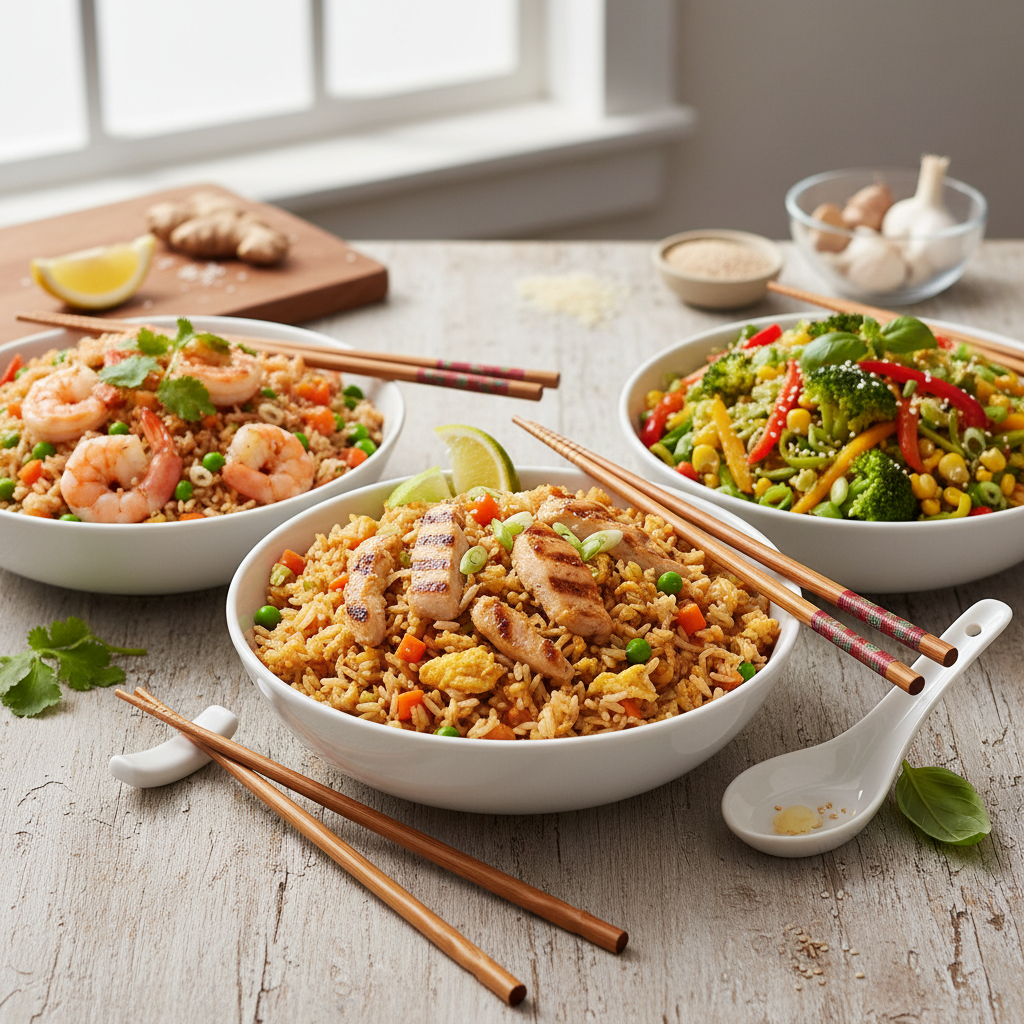
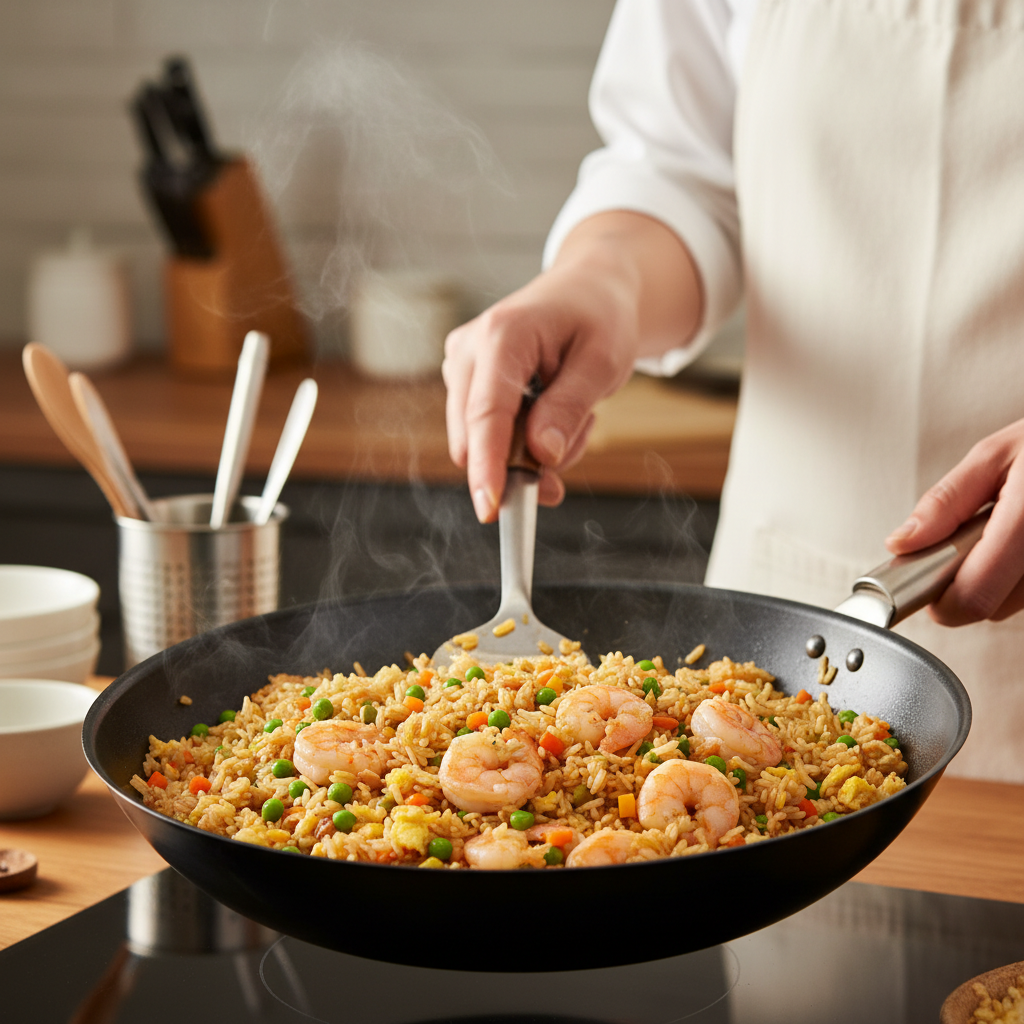
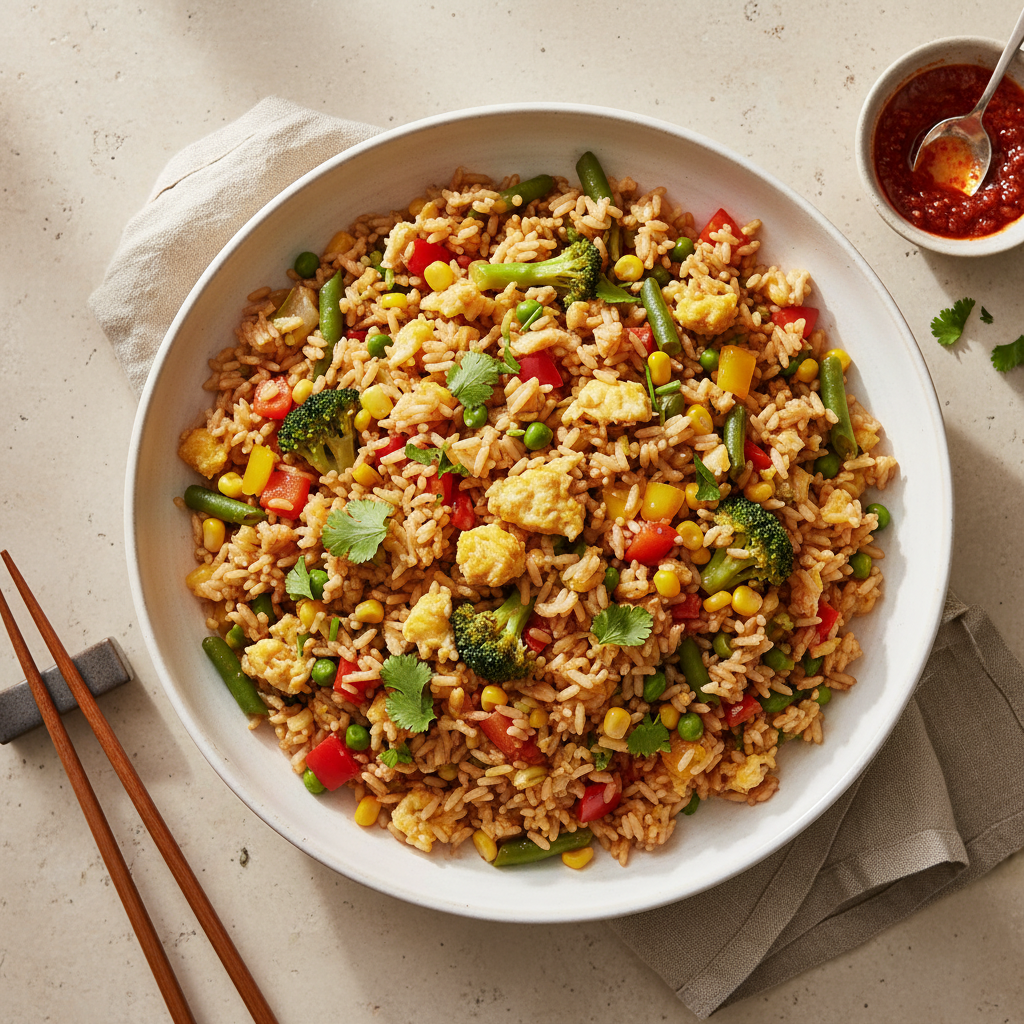
A classic fried rice recipe consists of stir-frying chilled, cooked rice with ingredients like scrambled eggs, diced vegetables (such as carrots, peas, and onions), and a protein like chicken, shrimp, or tofu. The dish is seasoned with a sauce typically made from soy sauce, oyster sauce, and sesame oil, all cooked quickly over high heat in a wok or large skillet.
Staring into the fridge and wondering what to make for dinner? When you’re craving something flavorful, fast, and satisfying, fried rice is a perfect choice. But then the big question hits: which kind? Deciding between hearty chicken, a delightful shrimp, or a vibrant veggie version can be a challenge, especially after a long day.
That’s where Recipe-GPT comes in. Our AI-powered platform makes mealtime decisions simple by helping you discover personalized recipes in seconds. So, whether you’re looking for an easy shrimp fried rice, a classic chicken stir-fry, or a wholesome vegetarian option, we’ll guide you to the perfect stir-fry recipe. In this guide, we’ll explore three fantastic variations and show you how AI can tailor each one to your kitchen.
Ready to end mealtime guesswork and start cooking with confidence? This guide breaks down the essential components of great fried rice. First, we’ll compare three crowd-pleasing options: chicken, shrimp, and veggie. Then, we’ll show you how Recipe-GPT helps you choose, adapt, and personalize your ideal dish, ensuring a quick and delicious meal every time.
Can’t Decide? How AI Helps You Choose the Perfect Fried Rice Recipe
Choosing what to cook can feel harder than the cooking itself, especially when you’re craving delicious fried rice but can't decide between the classic chicken fried rice, a savory shrimp fried rice, or a light and easy egg fried rice. This is where Recipe-GPT steps in.
Our AI-powered platform makes mealtime decisions simple and fast. We help you move from indecision to a perfectly tailored recipe in moments, ensuring a confident and enjoyable cooking experience every time.
Get Personalized Fried Rice Ideas Instantly
Recipe-GPT acts as your smart cooking companion, removing the guesswork from meal planning so you get ideas that truly fit your needs.
Choose Your Protein: Simply tell us if you prefer chicken, shrimp, tofu, or just veggies, and the AI will instantly generate the best fried rice recipe for you.
Dietary Preferences: Need a vegetarian fried rice or a gluten-free option? Our AI easily adapts to your dietary requirements and suggests suitable substitutions.
Ingredients On Hand: Use what you already have. Just input your available ingredients, like day-old rice and leftover chicken, and Recipe-GPT will craft a delicious homemade fried rice recipe.
Quickly Adapt Any Fried Rice Recipe
Flexibility is key for busy home cooks, and Recipe-GPT delivers practical, easy fried rice solutions.
Adjust Serving Sizes: Cooking for one or a family of five? Our AI can scale any quick fried rice recipe, making meal prep a breeze.
Ingredient Substitutions: Ran out of an ingredient? No problem. The AI suggests clever and tasty alternatives, such as using frozen peas instead of fresh.
Explore Variations: Want to try something new? Our AI can offer variations like Thai fried rice or Nasi Goreng, expanding your culinary horizons without extra effort.
Make Fried Rice Stress-Free and Delicious
Say goodbye to endless recipe searching. Recipe-GPT streamlines your cooking process, turning mealtime into a delightful adventure.
Simple Steps: Every stir fry rice recipe comes with clear, step-by-step instructions perfect for beginners and seasoned cooks alike.
Confidence in Cooking: With personalized guidance, you’ll cook like a pro and confidently make fried rice that tastes amazing every time.
Let Recipe-GPT be your guide to making the perfect fried rice, tailored just for you. It’s the ultimate tool for fast, practical, and personalized cooking inspiration.
The Core Components: What Are the Ingredients for Fried Rice?
Every fantastic fried rice dish starts with a strong foundation. Getting the core ingredients right is the first step to success, and Recipe-GPT makes it even easier. It helps you quickly identify what you need for a delicious, personalized meal, taking you from mealtime indecision to a clear plan in no time.
Let’s look at the essential components that make homemade fried rice truly shine.
Why Day-Old Rice is Best
Dreaming of restaurant-quality fried rice? The secret isn’t a fancy sauce—it’s day-old rice. Freshly cooked rice contains too much moisture, which makes it clumpy and mushy when stir-fried.
When rice sits in the fridge overnight, it loses moisture and the grains firm up. This allows them to separate beautifully in the wok, giving you that perfect, individual grain texture we all love.
Cooking your rice a day ahead also simplifies meal prep. Cold rice achieves the ideal chewy texture and prevents sticking during stir-frying [1].
Recipe-GPT can remind you of this crucial step, ensuring your fried rice is always a success. It’s like having a knowledgeable cooking companion in your kitchen.
The Easiest Vegetables for Quick Fried Rice
Fried rice is incredibly versatile, so you can use almost any vegetable you have on hand. For a quick and easy meal, focus on fast-cooking options that add color, nutrition, and crunch without extra effort.
Here are some of the easiest vegetables to use:
Frozen Mixed Vegetables: A classic blend of peas, carrots, and corn. They are pre-cut and cook in minutes, making them perfect for busy families.
Onions: Diced yellow or white onions add a base of savory flavor.
Garlic: Minced garlic offers an aromatic punch that pairs wonderfully with fried rice.
Green Onions: These provide a fresh, mild onion flavor. Add them at the very end for garnish.
Bell Peppers: Any color works well. Slice them thinly for quick cooking and a sweet crunch.
Broccoli Florets: Small florets cook quickly in a hot wok and offer a great texture.
This is where Recipe-GPT really shines. You can tell it what vegetables you have, and it will generate personalized recipe suggestions. If you need a substitution, Recipe-GPT provides instant alternatives, making your meal planning fast and efficient.
The Ultimate 5-Ingredient Fried Rice Sauce
A simple, flavorful sauce elevates your homemade fried rice from good to great. You don’t need dozens of ingredients; just five core components create a balanced, savory, and umami-rich flavor for a delicious meal every time.
Here’s the powerful quintet:
Soy Sauce: The foundation of savory flavor. Use a low-sodium version if you prefer.
Sesame Oil: Aromatic and nutty, a little goes a long way.
Oyster Sauce: This adds a rich, complex umami depth and is a secret weapon for restaurant-style flavor. For a vegetarian option, use a mushroom-based stir-fry sauce.
Sugar: Just a touch balances the savory and salty notes, enhancing the overall flavor.
White Pepper: Offers a subtle heat and authentic taste. Black pepper also works if you don’t have white.
To prepare the sauce, simply whisk all the ingredients together in a small bowl. This quick but crucial step ensures the flavor is distributed evenly throughout your fried rice.
Recipe-GPT can also help you customize this sauce. It effortlessly scales the ingredients to fit your serving size and can suggest variations for a personalized recipe. For example, it might recommend adding sriracha for a spicy kick or substituting tamari for a gluten-free option, simplifying meal planning for any dietary preference.
The Classic Choice: The Best Chicken Fried Rice Recipe
Professional food photography, photorealistic, high-quality food magazine photo style. A perfectly plated bowl of vibrant chicken fried rice, golden-brown chicken pieces, scrambled egg, green peas, carrots, and scallions, glistening with sauce. Served in a rustic ceramic bowl on a dark wooden surface, with a pair of chopsticks resting beside it. Soft, inviting light from the side, shallow depth of field, steam subtly rising. A real human cook’s hand is subtly visible in the background, perhaps adding a final garnish in a home kitchen setting.
Ingredients You’ll Need
Delicious chicken fried rice starts with simple ingredients. Use Recipe-GPT to quickly check what you have on hand and find smart substitutions!
Cooked Rice: 3 cups. Day-old, chilled rice is best, as it prevents the final dish from getting mushy.
Chicken Breast: 1 lb of boneless, skinless chicken, cut into small cubes. Our AI can help you adjust this quantity for more servings.
Eggs: 2 large, whisked.
Vegetable Oil: 2 tablespoons, plus more if needed.
Garlic: 2 cloves, minced.
Ginger: 1 teaspoon, grated (optional, but adds great flavor).
Frozen Mixed Vegetables: 1 cup. A mix of peas, carrots, and corn is a convenient choice.
Soy Sauce: 3 tablespoons. Recipe-GPT can suggest low-sodium or gluten-free alternatives!
Sesame Oil: 1 teaspoon. This adds an authentic, nutty aroma.
Green Onions: 2, thinly sliced, for garnish.
Step-by-Step Instructions
Ready to create the best chicken fried rice? Our AI-powered guide makes it easy. Follow these simple steps for a quick, family-friendly meal.
Prepare Your Chicken: First, heat 1 tablespoon of vegetable oil in a large skillet or wok over medium-high heat. Add the cubed chicken and cook for 5-7 minutes, until browned and cooked through. Remove the chicken from the skillet and set it aside.
Cook the Eggs: If the skillet is dry, add a little more oil. Pour in the whisked eggs and scramble them quickly until just set. Use your spatula to break the eggs into small pieces, then transfer them to the same plate as the chicken.
Sauté Aromatics & Veggies: Next, add the remaining 1 tablespoon of vegetable oil to the skillet. Add the minced garlic and grated ginger (if using) and stir-fry for about 30 seconds until fragrant. Add the frozen mixed vegetables and cook for another 2-3 minutes, until they are tender-crisp.
Add the Rice: Add the day-old rice to the skillet. Use your spatula to break up any large clumps. Stir-fry for 3-5 minutes, allowing the rice to heat through and become slightly crispy. This step is key for achieving a restaurant-quality texture.
Combine and Sauce: Return the cooked chicken and scrambled eggs to the skillet. Pour the soy sauce and sesame oil over everything. Stir thoroughly to combine, making sure the sauce evenly coats all the ingredients. Cook for 1-2 more minutes to heat everything through.
Serve It Up: Finally, remove the skillet from the heat. Garnish your homemade chicken fried rice with thinly sliced green onions. Serve immediately and enjoy your delicious, AI-inspired meal!
Our Recipe-GPT tool can further customize this recipe. For instance, you can ask it to suggest a spicier version or find high-protein variations. It makes meal planning effortless.
The Seafood Favorite: An Easy Recipe for Shrimp Fried Rice
Professional food photography, photorealistic, high-quality food magazine photo style. A close-up shot of a steaming hot wok filled with freshly cooked shrimp fried rice. Large, succulent pink shrimp are visible among the fluffy rice, mixed with bright green peas, carrots, and scrambled egg. A real human chef’s hand, wearing a clean apron, is actively tossing the ingredients with a spatula. Dynamic motion, warm lighting from above, in a clean, modern home kitchen culinary workspace.
Ingredients You’ll Need
Craving a delicious and quick seafood meal? Shrimp fried rice is a fantastic choice, featuring one of the world’s most popular types of seafood [2]. This easy recipe brings authentic restaurant flavors right to your kitchen. Recipe-GPT helps you gather everything you need and can even suggest clever substitutions if you’re short on an ingredient.
Cooked Rice: 3 cups. Cold, day-old rice works best to prevent a mushy texture.
Shrimp: 1 lb (about 450g), peeled, deveined, and with tails removed. Medium or large shrimp are ideal.
Eggs: 2 large, lightly whisked.
Mixed Vegetables: 1 cup. A frozen medley of peas, carrots, and corn is perfect, but fresh diced carrots and peas also work well.
Garlic: 2 cloves, minced.
Ginger: 1 teaspoon, grated (optional but recommended).
Soy Sauce: 3 tablespoons. Use low-sodium if preferred.
Sesame Oil: 1 tablespoon, for a rich, nutty flavor.
Oyster Sauce: 1 tablespoon (optional, for a deeper flavor). Recipe-GPT can suggest vegan alternatives.
Vegetable Oil: 2 tablespoons, or another oil with a high smoke point.
Green Onions: 2, sliced for garnish.
Salt and Pepper: To taste.
Step-by-Step Instructions
This fast, flavorful meal comes together in just a few simple steps. Follow this guide for perfect shrimp fried rice every time. For personalized tips, Recipe-GPT can assist you as you cook.
Prepare Shrimp: Pat the shrimp dry with paper towels and season them with a pinch of salt and pepper.
Cook Eggs: In a large skillet or wok, heat 1 tablespoon of vegetable oil over medium-high heat. Pour in the whisked eggs and scramble until just set. Remove the eggs from the skillet and set them aside.
Cook Shrimp: Add the remaining tablespoon of oil to the skillet. Cook the shrimp for 1-2 minutes per side, or until pink and opaque. Be careful not to overcook. Remove the shrimp and set aside with the eggs.
Sauté Aromatics: Add the minced garlic and grated ginger to the hot skillet. Stir-fry for about 30 seconds until fragrant.
Cook Vegetables: Toss in the mixed vegetables and cook for 2-3 minutes, until they are tender-crisp.
Fry the Rice: Add the cold rice to the skillet, breaking up any clumps with your spatula. Stir-fry for 3-4 minutes until the rice is heated through and lightly toasted.
Add Sauces: Pour in the soy sauce, sesame oil, and oyster sauce (if using). Stir thoroughly to coat everything evenly and cook for another 1-2 minutes.
Combine and Serve: Return the cooked shrimp and eggs to the skillet. Gently fold everything together. Taste and adjust seasoning if needed. Garnish with sliced green onions and serve immediately.
Quick Tips for Success with Recipe-GPT
Our AI assistant, Recipe-GPT, can help you customize this recipe to fit your tastes and dietary needs. Use it to easily explore variations and find smart substitutions.
Personalize Your Plate: If you want extra spice, Recipe-GPT can suggest adding sriracha or red pepper flakes.
Dietary Adjustments: For a gluten-free version, our AI will recommend using tamari instead of soy sauce.
Meal Planning: Recipe-GPT can scale this recipe up or down. Get exact ingredient amounts for one person or a whole family.
Ingredient Swaps: Don’t have shrimp? Ask Recipe-GPT for great substitutions like chicken or tofu.
The Veggie-Packed Option: A Simple Egg Fried Rice Recipe
Professional food photography, photorealistic, high-quality food magazine photo style. A bright, overhead shot of a generous serving of colorful egg fried rice in a white ceramic dish. The rice is studded with fluffy scrambled egg, vibrant broccoli florets, diced bell peppers (red and yellow), green beans, and corn, garnished with fresh cilantro. The dish is set on a light-colored, minimalist culinary workspace. Crisp focus, excellent lighting, inviting and fresh appearance.
Looking for a delicious, veggie-packed meal that’s quick, customizable, and always a crowd-pleaser? Our simple egg fried rice is the perfect solution. This dish is great for busy weeknights, a satisfying meat-free option, or a clever way to use up leftover rice and vegetables. For personalized suggestions, like using your favorite vegetables, Recipe-GPT can help you easily adapt this recipe. Let’s get cooking!
Ingredients You’ll Need
Gathering your ingredients beforehand, a technique known as “mise en place,” ensures the cooking process is smooth and efficient. If you’re missing something, Recipe-GPT can even suggest substitutions.
2 cups cooked day-old rice: Cold, leftover rice is key for the best texture.
2 large eggs: Lightly beaten.
1 tablespoon vegetable oil (or preferred cooking oil): For frying.
1/2 cup diced onion: A foundational aromatic.
1 cup mixed frozen vegetables: Peas, carrots, corn, and green beans work well.
2 cloves garlic: Minced for flavor.
1 tablespoon soy sauce: For savory depth.
1/2 teaspoon sesame oil: Adds a nutty aroma.
Optional: green onions, sliced: For garnish and fresh flavor.
Optional: a pinch of white pepper: For an authentic touch.
Step-by-Step Instructions
This simple fried rice is straightforward to prepare. Follow these steps for a tasty meal in minutes, perfect for any skill level.
Prepare Your Eggs: First, heat a small amount of oil in a large wok or pan over medium-high heat. Pour in the beaten eggs and scramble them until fully cooked. Remove the eggs from the pan and set them aside.
Sauté Aromatics: Next, add a little more oil to the pan if needed. Add the diced onion and cook for 2-3 minutes until it softens. Stir in the minced garlic and cook for another 30 seconds until fragrant.
Add Vegetables: Add the mixed frozen vegetables and stir-fry for 3-5 minutes, until they are tender-crisp.
Add the Rice: Add the cold day-old rice to the pan, using your spatula to break up any clumps. Stir-fry for 2-3 minutes until the rice is heated through and slightly toasted.
Season and Combine: Pour in the soy sauce and sesame oil. Continue to stir-fry for another 2 minutes to ensure all the flavors are evenly distributed.
Return Eggs and Serve: Finally, add the scrambled eggs back to the pan and toss gently to combine. Taste and adjust seasoning if necessary. Garnish with sliced green onions and serve immediately.
There you have it—a quick and satisfying egg fried rice! This recipe is easy to adjust. Ask Recipe-GPT for variations, like using different vegetables or adding a spicy kick. Enjoy your personalized, homemade fried rice!
How to Cook Fried Rice Step by Step: A Master Guide
Step 1: Prepare Your Ingredients (Mise en Place)
Great fried rice starts with great preparation. The culinary term “mise en place” simply means having all your ingredients prepped and ready before you start cooking. This simple step ensures the stir-frying process is smooth and stress-free.
First, gather, chop, and measure all your components, including protein, vegetables, and sauce ingredients. Having everything ready to go is the key to a quick and easy cooking experience.
Chop your veggies: Cut onions, carrots, peas, or your vegetables of choice into small, uniform pieces.
Dice your protein: Whether using chicken, shrimp, or tofu, cut it into bite-sized pieces.
Whisk your eggs: Lightly beat the eggs in a small bowl.
Mix your sauce: In a separate bowl, combine soy sauce, sesame oil, and any other seasonings. This is crucial for even flavor distribution.
If you’re short on ingredients, Recipe-GPT can instantly suggest smart substitutions based on what you have. Our AI also helps you plan ahead, ensuring nothing gets overlooked and providing quick, personalized ideas for any meal.
Step 2: Cook Your Protein and Eggs
Cooking your protein and eggs separately is key to ensuring they are perfectly cooked. This also prevents your wok or pan from getting overcrowded, which can cause ingredients to steam instead of fry.
To begin, heat a tablespoon of oil in your wok or a large skillet over medium-high heat. Next, add your chosen protein.
For chicken: Cook for 3-5 minutes until it’s no longer pink and is slightly browned, then remove it from the pan.
For shrimp: Sauté for 2-3 minutes until pink and cooked through, then take it out of the pan.
For eggs: Add a little more oil to the pan. Pour in the whisked eggs and scramble them until just set. Break them into small pieces, remove from the pan, and set aside.
If you want to use a different protein, Recipe-GPT can instantly adapt the recipe with adjusted cooking times and instructions. This provides tailored meal inspiration in seconds.
Step 3: Sauté Aromatics and Vegetables
Now it’s time to build flavor with aromatics and vegetables, which add depth and texture to your fried rice. Start by making sure your pan is still hot.
Add another tablespoon of oil to the wok and toss in your aromatics, like minced garlic and ginger. Sauté for about 30 seconds until fragrant, being careful not to burn them.
Next, add harder vegetables (like carrots and onions) and stir-fry for 2-3 minutes until they begin to soften. Follow with softer vegetables, such as peas or corn, and cook for another 1-2 minutes.
Want to try new vegetable combinations? Recipe-GPT can help you discover creative and accessible meal ideas, offering user-friendly, customized cooking guidance.
Step 4: Fry the Rice
The rice is the star of the dish. For the best results, use day-old, chilled cooked rice to prevent mushiness. Cold rice grains are firmer and separate more easily, allowing them to crisp up beautifully in the wok [3].
Clear a space in the center of your wok and add a final splash of oil. Add the cold rice, spread it out in an even layer, and let it sit for a minute without stirring. This allows some grains to get crispy.
Next, break up any clumps with your spatula and continue stir-frying for 3-5 minutes, or until you see some slightly browned, toasted grains. This step is crucial for achieving an authentic fried rice texture.
If you only have fresh rice, Recipe-GPT can offer quick fixes, such as techniques for drying it out or suggesting alternative fried rice variations. Our AI provides practical solutions for any cooking situation.
Step 5: Combine, Sauce, and Serve
Almost done! In this final step, you’ll bring all the components together to create a harmonious and flavorful dish. Your homemade fried rice is nearly ready to enjoy.
Return the cooked protein and eggs to the wok with the rice and vegetables. Pour your pre-mixed sauce over everything, then quickly toss and stir for 1-2 minutes until all ingredients are evenly coated.
Finally, remove the pan from the heat. Taste and adjust seasonings if needed—a sprinkle of white pepper works well. Garnish with chopped green onions for extra flavor and appeal, then serve your amazing easy fried rice immediately!
Need to feed a crowd? Recipe-GPT can instantly adjust recipe serving sizes, making meal planning efficient and ensuring you’ll have enough for everyone. Our AI-powered recipes simplify your cooking journey.
How Can AI Personalize Your Homemade Fried Rice?
Get Recipe Variations Instantly
Craving something new? Don’t settle for the same homemade fried rice every time. Recipe-GPT helps you explore delicious global variations in an instant.
Just tell our AI what you’re in the mood for. For example, ask for a “Thai-style fried rice” or a “Nasi Goreng recipe,” and Recipe-GPT will show you how to adapt your dish with different spices and ingredients.
Explore popular variations like:
Thai Fried Rice: Expect bright flavors with fish sauce, lime, and a hint of basil.
Nasi Goreng: Discover the savory sweetness of Indonesian fried rice, often with kecap manis (sweet soy sauce) and a fried egg on top.
Schezwan Fried Rice: Experience a spicy kick from Sichuan peppercorns and chili oil.
Transforming your simple fried rice is quick and exciting. It’s a fantastic way to try new cuisines without a stack of cookbooks, putting fresh meal ideas right at your fingertips.
Find Ingredient Substitutions in Seconds
Ever start cooking, only to realize you’re missing an ingredient? Recipe-GPT can help. Our AI suggests clever substitutions instantly, saving you a last-minute trip to the store.
Simply tell Recipe-GPT what you don’t have, and it will quickly offer practical alternatives. This feature is a game-changer for busy home cooks and beginners alike.
Here are a few ways our AI can help:
Protein Swaps: No chicken for your best chicken fried rice? Ask for alternatives like shrimp, tofu, or even leftover pork.
Vegetable Replacements: Missing peas or carrots? Our AI can suggest other easy vegetables like corn, bell peppers, or broccoli florets.
Sauce Adjustments: Ran out of soy sauce? Recipe-GPT might recommend tamari for a gluten-free option, or coconut aminos.
Dietary Needs: Easily adapt your ingredients for vegan fried rice, or a gluten-free stir fry rice recipe.
This smart assistance helps you reduce food waste and cook with what you already have. As a result, you can make homemade fried rice effortlessly, every time.
Adjust Serving Sizes for Meal Planning
Meal planning just got much easier. Recipe-GPT takes the guesswork out of scaling recipes, so whether you’re cooking for one or a crowd, you’ll get the perfect portion size.
Simply input how many people you’re serving, and our AI will adjust all ingredient quantities for you. That means no more complicated math or wasted food.
This simplifies your routine in several ways:
Cooking for One: Get precise measurements for a single serving, avoiding unwanted leftovers.
Family Meals: Easily scale up your easy egg fried rice to feed a family of four or more.
Meal Prep: Planning for the week? Our AI can calculate ingredients for multiple servings, making batch cooking simple and efficient.
Budget-Friendly: Avoid over-buying by knowing exactly how much of each ingredient you need.
Recipe-GPT helps you manage your time and ingredients more effectively by personalizing recipes to your needs. Enjoy stress-free cooking and meal planning with AI at your side!
Frequently Asked Questions About Making Fried Rice
Making delicious fried rice is easier than you think. To help you achieve perfect results every time, we’ve answered a few common questions. Remember, Recipe-GPT can also instantly tailor these tips to your unique needs!
How do you make fried rice taste like a Chinese restaurant?
Achieving that authentic restaurant flavor, often called “wok hei,” comes down to a few key techniques that rely on high heat and quick cooking.
Use a Hot Pan: Heat your wok or large skillet until it’s smoking before adding oil. This creates the signature smoky flavor and prevents sticking.
Cold, Day-Old Rice: This is the most crucial step. Leftover, chilled rice is drier than fresh rice, which allows it to fry beautifully without clumping or getting mushy.
Cook in Batches: Don’t overcrowd your pan. Cooking ingredients in smaller batches ensures the pan stays hot enough to brown everything nicely.
The Right Sauce Blend: A simple mix of soy sauce, oyster sauce, and a touch of sesame oil is often all you need. Add it toward the end of cooking.
Quick Stir-Frying: Keep everything moving. The high heat means ingredients cook in moments.
Recipe-GPT can help you craft personalized fried rice recipes by suggesting authentic sauce variations or ingredient combinations to match your favorite restaurant style.
What’s the best way to cook the egg for fried rice?
The egg adds wonderful flavor and texture to fried rice. There are two popular, easy-to-master methods.
Scrambled and Removed: Many chefs prefer to cook the beaten eggs first. Briefly scramble them in the hot pan until just set, then remove them. Add the cooked egg back in at the very end to keep it light and fluffy.
Thin Omelet Ribbons: Another great approach is to pour the beaten egg into the hot pan, spreading it thinly like a crepe. Cook until set, then remove. Once it’s cool, roll it up and slice it into thin ribbons for a lovely visual and textural element.
Both methods prevent the eggs from becoming overcooked or lost in the rice. Recipe-GPT can integrate your preferred method right into your step-by-step recipe, making it simple to follow.
Can I make fried rice without vegetables?
Yes, absolutely. While vegetables add color, nutrition, and texture, they aren’t essential. Many simple fried rice recipes focus primarily on the core ingredients: rice, egg, and protein.
Focus on Basics: You can create delicious fried rice with just rice, egg, and your choice of protein, such as chicken or shrimp.
Minimalist Options: For a hint of freshness without adding a lot of vegetables, consider using sliced green onions or a touch of minced garlic for flavor.
Recipe-GPT empowers you to customize your meals. Just tell our AI you prefer no vegetables, and it will generate a delicious, simple recipe tailored to your exact preferences for quick and practical meal inspiration.
How do I keep my fried rice from getting mushy?
Mushy fried rice is a common pitfall, but it’s easy to avoid with a few simple tricks. For perfect texture, follow these critical steps.
Use Cold, Day-Old Rice: This is the golden rule. Freshly cooked rice has too much moisture, while chilled, day-old rice is drier, allowing it to fry up crispy and separate.
High Heat is Key: A very hot pan fries the rice quickly and evenly, rapidly evaporating the moisture that causes sogginess.
Don’t Overcrowd the Pan: Adding too much at once lowers the pan’s temperature, steaming the rice instead of frying it. If you’re making a large amount, cook it in two or more batches.
Add Sauce Sparingly and Late: To prevent sogginess, add sauce in moderation toward the very end of the cooking process.
Keep it Moving: Stir and toss the rice frequently in the hot pan to promote even cooking and prevent it from sticking.
Recipe-GPT helps you avoid common cooking mishaps. Our clear, step-by-step instructions ensure your homemade fried rice turns out perfectly fluffy and flavorful every time for a stress-free cooking experience.
To make onion pickle, thinly slice your onions and pack them into a jar. Create a brine by heating vinegar, water, sugar, and salt in a saucepan until the solids dissolve. Pour the warm brine over the onions, let the jar cool to room temperature, then seal and refrigerate for at least one hour.
Looking for a secret ingredient to elevate your tacos, sandwiches, or grain bowls? Meet the quick pickled red onion: a bright, tangy condiment that adds a burst of flavor and a delightful crunch to almost anything. This simple, versatile condiment is incredibly easy to make and can transform your everyday meals into something special.
Making your own pickled onions is surprisingly simple, and with Recipe-GPT, the process becomes even more personalized and foolproof. We’ll guide you through creating the perfect recipe from scratch, showing you how our AI can help you customize it to your taste. You can adjust ingredients, explore new flavor combinations, or scale the recipe for a crowd, saying goodbye to guesswork and hello to instant, tailored meal solutions.
This guide is your go-to for creating fantastic pickled onions in minutes, designed for busy home cooks and beginners alike. Forget complicated steps and endless searching for inspiration. Ready to transform meals with a splash of tangy goodness and discover how AI can simplify your cooking decisions?
Why Will You Love This Quick Onion Pickle Recipe?
Unlock a world of vibrant flavor with our Quick Onion Pickle recipe! This isn’t just another side dish; it’s a game-changer for your everyday meals.
You’ll love how this recipe brings incredible flavor and convenience to your table with minimal effort.
Effortless Speed and Simplicity
This recipe lives up to its “quick” name. You can prepare a batch of these tangy, bright onions in minutes using simple ingredients and straightforward steps. Because you don’t need any fancy equipment, it’s the perfect recipe for even the busiest schedules.
Fast Prep: It takes just a few minutes of active cooking time.
Simple Ingredients: You likely have most items in your pantry already.
Beginner-Friendly: No complex techniques are required for delicious results.
Elevate Any Meal Instantly
Imagine adding a burst of tangy, slightly sweet, and zesty crunch to your plate. That’s what these quick pickled red onions deliver. They instantly transform ordinary dishes into something extraordinary by cutting through richness and adding a refreshing contrast.
Flavor Boost: Add a vibrant tang to tacos, Salads, and more.
Texture Contrast: Enjoy the satisfying crunch in every bite.
Brightens Dishes: Visually, their beautiful pink color enhances presentation.
Incredible Versatility
Once you make a batch, you’ll find countless ways to use them. These pickled onions are so versatile you can pair them with almost anything, making them a go-to condiment in your kitchen. Get ready to spark some creativity in your meal planning!
Enhance your cooking experience with Recipe-GPT. Our AI can instantly adapt this recipe to your needs, whether you’re looking for ingredient substitutions, adjusting serving sizes with a click, or exploring creative flavor variations. This tool is designed to reduce stress and help you transition from mealtime indecision to confident, personalized cooking.
How to Make the Best Onion Pickle
Professional food photography, photorealistic, high-quality food magazine photo style. A beautifully styled clear glass jar filled with vibrant quick red onion pickle, showcasing translucent, thinly sliced red onions marinated in a clear, glossy liquid. The pickle has a bright pinkish-red color, with subtle hints of fresh dill and mustard seeds visible. The jar is placed on a light wooden cutting board on a clean, brightly lit kitchen counter, with diffused natural light highlighting the textures. A few scattered fresh dill sprigs and a couple of whole mustard seeds are on the board next to the jar. The background is softly blurred, suggesting a warm and inviting home kitchen culinary workspace. Eye-level shot, shallow depth of field.
Ingredients You’ll Need
This quick pickled onion recipe uses simple ingredients that you likely have in your pantry. It makes about one pint, which is the perfect amount for a trial batch.
Red Onion: One large, thinly sliced. Red onions offer vibrant color and a crisp texture when pickled [1].
Water: Half a cup. This helps dilute the vinegar for a balanced brine.
Vinegar: Half a cup. Apple cider vinegar or white vinegar both work beautifully. Apple cider adds a touch of fruity sweetness.
Granulated Sugar: One tablespoon. Sugar balances the acidity and brings out the onion’s natural sweetness.
Salt: One teaspoon, preferably sea salt or kosher salt. This is crucial for flavor and preservation.
Optional Flavor Boosters: A few whole peppercorns, a bay leaf, or a smashed garlic clove can elevate your pickle.
Remember, Recipe-GPT can easily adjust this list. For example, if you only have white onions, our AI can adapt the recipe for you. It also suggests substitutions based on what’s in your fridge, making meal prep effortless.
Step-by-Step Instructions
These quick pickled onions are incredibly easy to make. Follow these simple steps to turn a basic onion into a flavorful topping. Our AI-powered guidance will help you follow along with confidence, even if you’re new to pickling.
Prepare the Onions: First, peel and thinly slice the red onion. Using a sharp knife or a mandoline will give you the best results. Slicing the onions thinly helps them absorb the brine quickly and achieve a perfect tender-crisp texture.
Pack the Jar: Tightly pack the sliced onions into a clean, heat-proof pint-sized jar. Don’t worry about overfilling; they will soften and shrink in the hot brine.
Make the Brine: In a small saucepan, combine the water, vinegar, sugar, and salt. Add any optional flavor boosters, like peppercorns or garlic. Bring the mixture to a boil over medium-high heat, stirring until the sugar and salt dissolve completely. This should take about one minute.
Combine and Cool: Carefully pour the hot brine over the onions, ensuring they are completely submerged. Tap the jar on the counter to release any trapped air bubbles. Then, let the jar cool to room temperature.
Chill and Enjoy: Once the jar is cool, seal it with a lid and place it in the refrigerator. The pickled onions will be ready in as little as 30 minutes, but their flavor improves after a few hours or overnight.
This streamlined process is perfect for busy cooks. Recipe-GPT can provide even more tips, like suggesting alternative spice combinations or adjusting quantities for larger batches. Enjoy your homemade quick pickled red onions!
How Can You Customize Your Onion Pickle?
Professional food photography, photorealistic, high-quality food magazine photo style. A culinary workspace scene showcasing a variety of fresh ingredients for customizing onion pickle. In the center, a small elegant glass bowl of basic red onion pickle. Surrounding it are small, organized piles of potential additions: a neat cluster of whole black peppercorns, a tiny ceramic dish of chili flakes, fresh sprigs of thyme and rosemary, thinly sliced bright green jalapeños, and a star anise pod. All ingredients are fresh, vibrant, and perfectly lit on a clean, light-colored kitchen counter. The arrangement is artful and appealing, suggesting creative possibilities. The focus is sharp on the ingredients, with a soft background blur of a modern, inviting kitchen.
Choosing Your Onions: Red vs. White
The type of onion you choose significantly impacts the flavor and color of your pickle. Both red and white onions bring unique qualities to the jar.
Red onions are a popular choice for quick pickling because they lend the pickle a beautiful, vibrant pink color. Their flavor is mild and slightly sweet once pickled. This makes them perfect for adding a pop of color and a gentle tang to a variety of dishes.
White onions, on the other hand, offer a sharper, more pungent flavor. When pickled, they retain more of their assertive oniony bite. They are an excellent choice if you prefer a bolder, more intense pickle. You can easily switch between them based on your meal or personal preference.
Recipe-GPT can help you decide. Just tell our AI if you prefer a milder or bolder onion flavor, and it will adjust the recipe details instantly for you.
Experimenting with Different Vinegars
Vinegar is the heart of your pickle’s tang. Since each type brings a distinct flavor profile, you can truly personalize your pickled onions by choosing carefully.
White Vinegar: This is the classic choice, providing a sharp, clean tang. It’s perfect for a traditional, bright-tasting pickle.
Apple Cider Vinegar: If you prefer a slightly fruitier and mellower tang, use apple cider vinegar. It adds a lovely depth of flavor.
Rice Vinegar: Milder and a bit sweeter, this option creates a subtle, less acidic pickle. It works wonderfully for Asian-inspired dishes.
Red Wine Vinegar: For a deeper, more robust flavor, try red wine vinegar. It adds a sophisticated twist to your pickle.
Feel free to mix and match. For example, a blend of white and apple cider vinegar creates a balanced tang. Recipe-GPT can suggest combinations based on your desired flavor profile, making experimentation simple and fun.
Adding Spices for Extra Flavor
Spices are a fantastic way to boost the flavor of your pickled onions. They infuse the brine with complex aromas, allowing you to customize your pickle even further.
Consider adding whole spices, which release their flavors slowly for a more complex taste. Using whole spices also prevents the brine from becoming gritty.
Here are some popular choices:
Whole Peppercorns: Black, white, or mixed peppercorns add a subtle peppery bite.
Bay Leaves: A bay leaf contributes a savory, slightly herbal note.
Mustard Seeds: Yellow or brown mustard seeds offer a mild, tangy warmth.
Red Chili Flakes: For a touch of heat, sprinkle in some chili flakes.
Coriander Seeds: These provide a citrusy, earthy undertone.
Dill Seeds: If you love a classic pickle taste, dill seeds are a must.
Recipe-GPT can generate unique spice blends. Just tell our AI your preferred flavors, and it will suggest combinations that perfectly complement your onions.
Comparing the No-Cook and Boiling Brine Methods
There are two main ways to prepare your pickling brine: a no-cook method and a boiling method. While both create delicious quick pickled onions, they produce different results in terms of speed and texture.
The right method for you will depend on your available time and preferred texture. Recipe-GPT can provide instructions for either option, adapting to your needs for an effortless experience.
Method
Pros
Cons
Best For
No-Cook Brine
Extremely fast preparation.
Retains more crispness in onions.
Less heat, perfect for hot weather.
Flavors infuse slower.
Slightly less shelf life.
Quickest results, maximum crunch, last-minute meals.
Professional food photography, photorealistic, high-quality food magazine photo style. A delicious-looking close-up of a serving suggestion featuring quick red onion pickle. The vibrant pickle is artfully placed as a generous topping on a gourmet taco, piled high with savory, well-textured fillings. The taco is held by a hand belonging to a home cook, slightly visible in the foreground, with a blurred background of a modern, inviting dining table or casual meal setting. The pickle looks appetizing, glistening, and perfectly complements the other ingredients with its bright color and texture. Excellent, warm lighting, sharp focus on the food, inviting and appetizing composition.
Tacos, Nachos, and Burritos
Quickly pickled onions are a game-changer for your favorite Mexican-inspired dishes. Their crisp, tangy bite cuts through rich flavors beautifully while adding a vibrant pop of color.
Consider adding quick pickled red onions to:
Tacos: A spoonful elevates beef, chicken, fish, or veggie tacos by providing a welcome contrast to savory fillings.
Nachos: Sprinkle them over loaded nachos after baking. The tanginess brightens up all that cheesy goodness.
Burritos and Bowls: Mix them into your burrito filling or add them as a topping for your bowl for an extra layer of flavor and crunch.
Recipe-GPT can help you craft the perfect taco night! Just tell it your main ingredients, and it can suggest delicious combinations that might include this zesty topping.
Salads and Grain Bowls
Elevate your salads and grain bowls with one simple addition: pickled onions. Their bright, acidic punch transforms ordinary greens into something special, adding complex flavor with minimal effort.
You can use quick pickled red onions in:
Green Salads: Toss them into any mixed green salad for an instant flavor boost that pairs well with a variety of dressings.
Grain Bowls: Add them to a quinoa, farro, or rice bowl. The tangy onions complement roasted vegetables, proteins, and fresh herbs.
Bean Salads: Incorporate them into chickpea, black bean, or lentil salads to add a refreshing counterpoint to the earthiness of the beans.
Looking for new salad ideas? Recipe-GPT can generate personalized salad recipes based on ingredients you have and even suggest adding pickled onions for that perfect tangy finish.
Sandwiches and Burgers
Say goodbye to boring sandwiches and burgers. Pickled onions offer a delightful crunch and a tangy kick that complements rich meats and cheeses, making for a simple upgrade that delivers a big difference in flavor.
Try them on:
Burgers: Place a generous spoonful on your burger for a refreshing contrast to the rich patty and melted cheese.
Deli Sandwiches: Add them to turkey, ham, or roast beef sandwiches, where the tangy flavor cuts through the richness of the meat.
Grilled Cheese: For a gourmet twist, add a few pickled onions inside your grilled cheese. The tartness perfectly balances the cheesy richness.
Pulled Pork or Chicken Sandwiches: It’s a classic pairing that provides necessary acidity and crunch.
Recipe-GPT can help you brainstorm lunch ideas instantly. Describe what you’re craving, and it can suggest sandwich or burger recipes, often recommending this flavorful addition.
Avocado Toast and Eggs
Quickly pickled onions aren’t just for lunch and dinner; they’re also a fantastic addition to breakfast and brunch favorites. Their sophisticated tang can brighten up even the simplest dishes.
Here’s how to use them:
Avocado Toast: Layer pickled red onions over creamy avocado toast. A sprinkle of everything bagel seasoning adds extra flair.
Scrambled Eggs or Omelets: Fold them into your scrambled eggs or sprinkle them over an omelet before serving for a fresh, zesty element.
–
Fried Eggs: Top your fried eggs with a few pickled onions. The acidity cuts beautifully through the richness of the yolk.
Breakfast Burritos: Add them to your breakfast burritos for a tangy and unexpected surprise.
Struggling with breakfast inspiration? Recipe-GPT can generate quick, easy breakfast ideas tailored to your pantry and suggest how to use your pickled onions for a more exciting morning meal.
How Can AI Personalize This Recipe for You?
Get Instant Ingredient Substitutions
Ever start a recipe only to realize you’re missing a key ingredient? Recipe-GPT has you covered. Our AI acts as your personal sous chef, ready with smart swaps.
If your pantry is missing an item, just ask the AI for a suitable alternative. You’ll get an instant suggestion, which means less stress and fewer last-minute grocery runs.
For your quick onion pickle, imagine these scenarios:
No Red Onions? Recipe-GPT might suggest using white or yellow onions and will advise you on how to adjust for flavor differences.
Out of Apple Cider Vinegar? Our AI can recommend white or rice vinegar and will explain the taste differences to help you choose.
Missing a Spice? The AI can suggest similar flavor profiles. For example, if you’re out of mustard seeds, it might recommend a pinch of mustard powder.
This intelligent assistance makes cooking more adaptable and fun, allowing you to confidently tackle any recipe, even with limited ingredients.
Adjust Serving Sizes Automatically
Cooking for one tonight but hosting a party next week? Recipe-GPT takes the guesswork out of scaling recipes by automatically adjusting ingredient quantities for you.
Forget about complicated math. Just tell the AI how many servings you need, and it will recalculate everything with precision. This ensures perfect proportions every time.
Whether you want a small batch of quick onion pickle for a sandwich or a large jar for a family barbecue, Recipe-GPT handles the math. You get an accurate ingredient list and instructions tailored to your needs.
Enjoy effortless meal planning, reduce food waste, and make cooking the right amount simple and efficient.
Discover New Flavor Variations with Recipe-GPT
Tired of the same old recipes? Recipe-GPT sparks your culinary creativity by helping you explore exciting new twists on familiar dishes.
Tell the AI your preferences to get custom variations. For instance, if you love spicy food or want to explore global flavors, our AI adapts to your palate.
For your quick onion pickle, Recipe-GPT could suggest:
Spicy Kick: Add sliced jalapeños or a pinch of red pepper flakes for extra heat.
Herbal Freshness: Include fresh dill or thyme to infuse a unique aroma.
Sweet & Tangy: A touch more sugar or a dash of honey can create a sweeter profile.
Global Inspiration: Try a splash of rice wine vinegar and a hint of ginger for an Asian-inspired pickle.
These AI-powered ideas help you transform simple recipes and discover new favorite flavors without extensive research. It’s personalized culinary inspiration, delivered instantly.
Frequently Asked Questions About Onion Pickle
What is the best pickled onions recipe?
The “best” pickled onions recipe is the one that suits your taste. For most people, that means a recipe that’s quick, easy, and customizable. Our quick pickle recipe, for example, is designed to be all three.
What makes a recipe truly stand out?
Speed: A quick pickle means you can enjoy fresh, tangy onions in under an hour.
Simplicity: Straightforward steps and common ingredients are key.
Customization: The ability to adjust flavors to suit your meal or preference.
Recipe-GPT can help you find your personal best by generating custom variations. Tell our AI what you like, and it will suggest spices, vinegars, or even different onion types to perfect your pickle!
Do you have to use boiling water for quick pickled red onions?
Yes, for truly “quick” pickled red onions, using boiling water for the brine is highly recommended. The heat is what makes the process so fast. Here’s why:
Faster Infusion: The hot brine rapidly draws out the sharp bite from the onions and infuses them with flavor.
Softer Texture: Heat slightly softens the onions, giving them a pleasant texture that’s still crisp but not raw.
Quick Readiness: This method allows your pickled onions to be ready to eat in about 30 minutes to an hour.
However, you can also make “no-cook” pickled onions with a cold brine. This method produces a much crisper onion, but it takes longer for the flavors to develop—typically around 24 hours.
Recipe-GPT can tailor your recipe to either method. Just let our AI know if you prefer a super fast, slightly softer pickle or a crisper, slower-marinated option!
How long do homemade quick pickled onions last?
When stored properly in the refrigerator, homemade quick pickled onions will last for 2 to 3 weeks. Some batches may stay fresh for up to a month.
To maximize freshness and safety, follow these key tips:
Airtight Container: Always store your pickled onions in a clean, airtight jar or container.
Refrigeration: Keep them in the fridge. This significantly slows down spoilage.
Clean Utensils: Use clean forks or tongs to remove onions from the jar. This prevents introducing bacteria [2].
Check for Spoilage: If you notice any mold, off-smells, or a slimy texture, it’s best to discard them.
Since Recipe-GPT makes it so easy to generate fresh batches, you can always make smaller amounts to enjoy at their peak!
Side dish recipes provide instructions for preparing smaller dishes served alongside a main course to complete a meal. Popular side dishes include mashed potatoes, simple salads, roasted vegetables, and rice, which can be easily adapted for any occasion, from a simple weeknight dinner to a large holiday gathering.
Struggling to find the perfect side dish to complete your meal? Finding the right accompaniment can feel like the hardest part of cooking, especially when you’re short on time. Whether you’re planning a weeknight family meal, a festive holiday spread, or a big BBQ, you need something delicious, easy, and impressive for your next dinner party.
That’s where this guide comes in. We’ve collected over 45 easy side dish recipes perfect for any occasion or skill level. You’ll find everything from classic comfort foods like the best mashed potatoes recipe to fresh salads and roasted vegetables. Plus, with Recipe-GPT, finding the ideal side is simpler than ever. Our AI uses your preferences, available ingredients, and dietary needs to generate personalized suggestions, taking the guesswork out of meal planning. Imagine finding an easy mashed potatoes recipe customized for you or a convenient way to make mashed potatoes in crock pot.
Get ready to make mealtime decisions simple instead of stressful. We’ll explore a wide range of options, from simple mashed potatoes that are incredibly easy to prepare to vibrant vegetable dishes and hearty grains. You’ll find the perfect side for any main course, ensuring you always have a delicious, crowd-pleasing option on hand. Let’s dive in and find an easy side dish to make your next meal unforgettable.
What Are the Easiest Side Dishes to Make?
Professional food photography, photorealistic, high-quality food magazine photo style of a beautifully arranged spread of diverse, easy-to-make side dishes on a rustic wooden dining table. The spread includes small bowls and platters of bright green steamed broccoli, golden roasted baby potatoes with herbs, a vibrant caprese salad with cherry tomatoes and mozzarella, a simple fluffy white rice, and a colorful corn salad. The lighting is warm and natural, emphasizing freshness and home-cooked comfort. A blurry background of a warm, inviting home kitchen. Shot from a slightly overhead angle.
The perfect side dish doesn’t have to be complicated. The best simple sides use minimal ingredients, come together in a few easy steps, and cook quickly. They typically rely on pantry staples and fresh produce, so you won’t need any fancy techniques.
Think about dishes that you can whip up while your main course cooks. These often include:
Quick Roasted Vegetables: Broccoli, asparagus, or carrots roasted with a little oil and seasoning.
Simple Salads: Fresh greens with a vinaigrette, or basic cucumber or coleslaw mixes.
Fast Pickles: Refrigerator pickles that need no canning.
These types of recipes save time and reduce stress, making mealtime more enjoyable for everyone, from busy families to beginners in the kitchen.
How Recipe-GPT Makes Finding Side Dishes Effortless
Searching for the perfect easy side dish online can feel overwhelming. Recipe-GPT eliminates the guesswork, transforming mealtime indecision into clear, personalized recipe suggestions in moments.
Simply tell Recipe-GPT what you’re looking for, and our AI handles the rest. You get quick, practical, and accessible recipes tailored just for you.
Here’s how Recipe-GPT simplifies finding your next favorite easy side dish:
Instant, Personalized Ideas: Skip the endless scrolling and get instant side dish recipes. Whether you need an “easy mashed potatoes recipe” or a “simple coleslaw recipe” to go with your BBQ, Recipe-GPT provides ideas immediately.
Use What You Have: Tell our AI which ingredients you have on hand, and it will suggest delicious side dishes. This helps you minimize food waste and maximize flavor.
Tailored to Your Main Meal: Planning steak for dinner? Ask Recipe-GPT for “easy side dishes for steak” to get perfectly paired suggestions. Our AI understands flavor profiles and recommends complementary dishes.
Dietary Needs Made Simple: Easily find vegetarian, vegan, gluten-free, or low-carb options. Need a dairy-free “best mashed potatoes recipe” or a sugar-free “homemade coleslaw recipe”? Recipe-GPT delivers.
Clear, Step-by-Step Guidance: Every recipe comes with straightforward instructions. Our AI breaks down steps into simple language, perfect for beginners and busy cooks alike.
Quick Adjustments and Variations: Want to add a twist to a “refrigerator dill pickles” recipe? Our AI can suggest variations, substitutions, or even adjust serving sizes with a simple prompt.
With Recipe-GPT, you’re not just getting recipes; you’re gaining a knowledgeable cooking companion. We make finding the best, easiest side dishes fast, practical, and perfectly suited to your kitchen and lifestyle.
Classic Potato Side Dish Recipes
Professional food photography, photorealistic, high-quality food magazine photo style featuring a serving bowl overflowing with perfectly golden-brown, crispy roasted potatoes, tossed with fresh rosemary and garlic. Steam gently rises from the hot potatoes. The bowl is placed on a clean white linen tablecloth with a scattering of fresh herbs around it. A slightly blurred background shows a modern home kitchen with warm lighting. Focus is sharp on the texture and appealing crust of the potatoes.
The Best Creamy Mashed Potatoes Recipe
Nothing says comfort like a pile of fluffy, creamy mashed potatoes. This classic side dish is a favorite because it’s simple to make, yet incredibly satisfying with any meal.
Feeling overwhelmed by options? Recipe-GPT can help. You can quickly generate a personalized mashed potato recipe by telling our AI if you prefer a garlicky mash, a cheesy blend, or a dairy-free version. Our AI handles all the details for you.
Here’s how to achieve perfect mashed potatoes every time:
Choose Your Potatoes: Start with the right base. Yukon Golds are naturally buttery and creamy, while Russets offer a fluffier texture.
Prep and Boil: Peel your potatoes and cut them into equal-sized chunks to ensure even cooking. Place them in a pot of cold, salted water, bring to a boil, and simmer until fork-tender.
Drain Thoroughly: Drain the potatoes well and return them to the hot pot for a minute. This step helps evaporate excess moisture, allowing the potatoes to absorb butter and cream more effectively.
Mash Away: Use a potato ricer, masher, or fork for the best texture. Avoid over-mashing, as too much processing can make the potatoes gluey.
Add Creaminess: Warm milk, heavy cream, or butter are essential for a rich result. Add them gradually while mixing to create a smooth, luxurious texture.
Season Perfectly: Salt and pepper are a must. For extra flavor, consider adding a touch of garlic powder or fresh chives. Always taste and adjust the seasoning as you go.
Recipe-GPT makes it easy to find the best mashed potato recipe, giving you clear instructions and custom tips for perfect results every time.
Easy Roasted Potatoes
For a crispy, flavorful side, roasted potatoes are hard to beat. They pair wonderfully with almost any main dish and are incredibly simple to prepare.
Recipe-GPT makes customizing your roasted potatoes a breeze. Our AI can suggest various herb combinations, such as rosemary and garlic or paprika and thyme. It can also offer ideas for different spice rubs, so you’ll get a fresh take on a classic every time.
Follow these straightforward steps for perfectly roasted potatoes:
Select Potatoes: Waxy potatoes like Yukon Golds or red potatoes work best because they hold their shape well after roasting.
Cut Evenly: Wash and chop your potatoes into uniform pieces. This helps them cook evenly.
Toss with Flavor: Drizzle the potatoes with olive oil and add your favorite seasonings. Salt, black pepper, and garlic powder are great staples, while fresh herbs like rosemary or thyme elevate the taste.
Spread and Roast: Arrange the potatoes in a single layer on a baking sheet. Be sure not to overcrowd the pan. Roast at a high temperature, around 400°F (200°C).
Flip for Crispness: Cook for 30-45 minutes, flipping the potatoes halfway through. This technique ensures all sides become golden and crispy.
Recipe-GPT takes the guesswork out of cooking, providing the fast, practical guidance you need for a plate of delicious roasted potatoes.
Simple Scalloped Potatoes Recipe
Scalloped potatoes offer a rich, creamy indulgence that looks impressive but is surprisingly easy to master. The dish features layers of thinly sliced potatoes baked in a savory cream sauce.
Want to switch things up? Recipe-GPT can help personalize your scalloped potatoes. Our AI can suggest different cheese blends, recommend adding ham or bacon, or even provide options for a lighter, milk-based sauce.
Here’s a basic guide to making this comforting dish:
Slice Potatoes Thinly: For best results, use a mandoline or a sharp knife to cut Russet or Yukon Gold potatoes into uniform, thin slices.
Prepare the Sauce: Melt butter in a saucepan and whisk in flour to make a roux. Slowly pour in warm milk or cream, stirring constantly until the sauce thickens. Season with salt, pepper, and a pinch of nutmeg.
Layer with Care: Lightly grease a baking dish. Create alternating layers of potato slices and creamy sauce. You can also sprinkle shredded cheese between the layers for extra richness.
Bake Until Golden: Cover the dish with foil for the first part of baking to help the potatoes cook through. Remove the foil toward the end and continue baking until the top is bubbly and golden brown.
Rest Before Serving: Let the dish rest for a few minutes after baking. This allows the sauce to set, making it easier to serve.
With step-by-step instructions from Recipe-GPT, you can confidently try new and delicious recipes like scalloped potatoes.
Homemade Potato Salad
No picnic or BBQ is complete without classic homemade potato salad. This versatile dish is a true crowd-pleaser that you can easily adapt to your preferences.
With Recipe-GPT, you can get a potato salad recipe tailored just for you. Our AI can generate a creamy, mayonnaise-based version. Or, if you prefer a tangy, vinegar-based dressing, it can suggest additions like hard-boiled eggs, crunchy celery, or fresh dill to take the guesswork out of meal planning.
Here’s how to create your perfect potato salad:
Cook Your Potatoes: Boil small, waxy potatoes like red new potatoes or Yukon Golds until they are tender but still firm, being careful not to overcook them. Let them cool slightly before cutting into bite-sized pieces.
Craft the Dressing: In a separate bowl, whisk together mayonnaise, mustard (Dijon or yellow), vinegar, and seasonings. A combination of salt, pepper, and a pinch of sugar often works well.
Add Your Mix-ins: Finely chopped celery or red onion adds a welcome crunch. Fresh herbs like parsley or chives brighten the flavor, while hard-boiled eggs provide extra richness.
Combine and Chill: Gently fold the potatoes and mix-ins into the dressing, ensuring everything is well coated. Cover and refrigerate for at least an hour to allow the flavors to meld beautifully.
Say goodbye to generic recipes. Recipe-GPT helps you whip up personalized side dishes effortlessly.
Best Breakfast Potatoes & Easy Potato Bakes
Kickstart your day with a hearty potato dish. Breakfast potatoes and easy potato bakes are perfect for a weekend brunch or a satisfying weekday meal, offering comfort and flavor in every bite.
Recipe-GPT can spark your breakfast inspiration. Our AI can quickly generate ideas for crispy home fries or a cheesy, layered breakfast casserole. Just tell it what ingredients you have, and it might suggest adding onions, bell peppers, or crumbled bacon. This way, every meal becomes a personalized delight.
Here are some ideas for delicious breakfast potato options:
Crispy Home Fries:
Par-boil diced potatoes for a few minutes to soften them.
Drain the potatoes well.
Sauté them in a hot skillet with oil, onions, and peppers.
Cook until golden brown and crispy, then season with salt, pepper, and paprika.
Cheesy Breakfast Bake:
Layer thinly sliced potatoes in a baking dish with cooked sausage or ham.
Add a generous amount of shredded cheese between layers.
Pour a mixture of eggs and milk over the top.
Bake until the casserole is set and the top is golden.
Potato Hash:
Start with diced, cooked potatoes.
Sauté them with chopped onions and add-ins like bacon bits or corned beef.
Serve with a fried egg on top for a complete meal.
Recipe-GPT is your go-to for instant, AI-generated meal ideas, making it incredibly fast and convenient to plan your breakfast, lunch, or dinner.
How do you cook mashed potatoes in a slow cooker?
Step-by-Step Crock Pot Mashed Potatoes
Cooking mashed potatoes in a slow cooker is a game-changer. It frees up your stovetop and oven, which is perfect for holiday meals or busy weeknights. This simple, hands-off approach is a fantastic way to prepare a beloved side dish.
Recipe-GPT can help you create the perfect slow cooker mashed potatoes. Just tell it your preferences, and it will generate a personalized recipe, making it easy to adjust for dietary needs or add creative flavor twists.
Ingredients You’ll Need:
Potatoes: 3-4 pounds of Yukon Gold or Russet potatoes.
Liquid: 1 cup chicken broth or vegetable broth.
Dairy: 1/2 cup milk or cream (plus more for mashing).
Fat: 1/2 cup unsalted butter, cubed.
Seasoning: Salt and black pepper to taste.
Optional: Garlic powder, fresh herbs, or a pinch of nutmeg.
Recipe-GPT can suggest dairy-free options like almond milk or oat milk. It can also recommend vegan butter for a plant-based version, making this recipe accessible for everyone.
Equipment:
6-quart slow cooker or larger.
Potato peeler.
Sharp knife.
Potato masher or electric mixer.
Easy Steps to Deliciousness:
Prepare Potatoes: Peel the potatoes and cut them into uniform 1-inch pieces to ensure they cook evenly.
Add to Slow Cooker: Place the potato pieces, broth, butter, salt, and pepper into your slow cooker.
Cook: Cover and cook on LOW for 3-4 hours or HIGH for 2-3 hours, until the potatoes are very tender when pierced with a fork.
Mash: Carefully drain most of the liquid, leaving about 1/4 cup in the slow cooker. Add the milk or cream, then mash the potatoes directly in the pot until you reach a smooth, creamy consistency.
Taste and Adjust: Taste the potatoes and add more salt, pepper, or milk if needed. For extra richness, stir in a bit more butter.
Serve Warm: Your delicious, easy-to-make mashed potatoes are ready. Serve them immediately.
Recipe-GPT can suggest variations based on what you have in your pantry. If you have cheddar cheese, it might suggest cheesy mashed potatoes. Want to add a kick? It can recommend roasted garlic or chives. This takes the guesswork out of customizing your meals.
Tips for Keeping Mashed Potatoes Warm
Keeping mashed potatoes warm and creamy is essential, especially when entertaining. The slow cooker is ideal for this task because it maintains their perfect texture without drying them out.
Using Your Slow Cooker:
Warm Setting: After mashing, switch your slow cooker to the “WARM” setting. This keeps them at a perfect serving temperature for hours.
Add Moisture: To prevent the potatoes from becoming too thick or dry, stir in an extra splash of warm milk or broth.
Cover Tightly: Always keep the lid on to trap moisture and heat inside.
Stir Occasionally: Give the potatoes a quick stir every 30-60 minutes to distribute heat evenly and prevent sticking.
Mashed potatoes can typically stay warm in a slow cooker for up to 2-4 hours on the “WARM” setting [1]. For food safety, always check the temperature to ensure they remain above 140°F (60°C).
Other Warming Methods (Quick Tips):
Double Boiler: Place your mashed potatoes in a heat-proof bowl set over a pot of simmering water and stir often.
Insulated Container: A preheated insulated food container can keep them warm for a shorter period.
With Recipe-GPT, meal planning becomes much easier. It can generate a full menu and provide timing advice, ensuring all your side dishes are ready and warm when you need them. This makes your cooking experience smoother and more enjoyable.
Fresh & Simple Salad Recipes
Professional food photography, photorealistic, high-quality food magazine photo style of a large, vibrant mixed green salad in a stylish clear glass bowl. The salad contains crisp lettuce, colorful bell peppers, cherry tomatoes, sliced cucumbers, and a light vinaigrette dressing glistening on the leaves. A hand, belonging to a real human home cook, is gently tossing the salad with wooden salad servers in a bright, clean home kitchen. Natural light floods the scene. Close-up shot emphasizing freshness and texture.
Easy Coleslaw Recipe & Dressing
Salads are the perfect light side dish, adding a refreshing crunch to any meal. A classic for a reason, coleslaw is simple, versatile, and always a crowd-pleaser.
With Recipe-GPT, creating your ideal coleslaw is a breeze. Ask our AI to generate a creamy or tangy dressing, suggest low-carb options, or give you quick ideas for adding extra vegetables. You’ll save time and get delicious results.
Simple Coleslaw Salad
Prep Time: 10 minutes
Serves: 4-6
Ingredients:
1 (14-ounce) bag pre-shredded coleslaw mix
½ cup mayonnaise
2 tablespoons apple cider vinegar
1 tablespoon sugar (or sweetener of choice)
½ teaspoon Dijon mustard
¼ teaspoon celery salt
Salt and black pepper to taste
Instructions:
Place the coleslaw mix in a large bowl.
In a separate small bowl, whisk together the mayonnaise, apple cider vinegar, sugar, Dijon mustard, and celery salt.
Season the dressing with salt and pepper. Taste and adjust as needed.
Pour the dressing over the coleslaw mix.
Toss gently until all the cabbage is evenly coated.
For the best flavor, cover and refrigerate for at least 30 minutes before serving. This allows the flavors to blend beautifully.
Recipe-GPT Tip: Ask our AI for a “vegan coleslaw dressing” or “spicy coleslaw variation.” It will instantly provide new ideas. Enjoy personalized twists on this classic dish.
Quick Mexican Corn Salad
Bursting with fresh flavors, this vibrant corn salad is perfect for summer gatherings or as a side with tacos. Best of all, it comes together in minutes. You can customize it effortlessly with Recipe-GPT—try asking for a dairy-free option or how to add grilled chicken to make it a main course.
Speedy Mexican Corn Salad
Prep Time: 10-15 minutes
Serves: 4
Ingredients:
3 cups cooked corn kernels (fresh, frozen, or canned)
½ cup finely diced red onion
½ cup chopped fresh cilantro
1 bell pepper, any color, finely diced
1 jalapeño, seeded and minced (optional, for heat)
2 tablespoons olive oil
2 tablespoons lime juice
½ teaspoon chili powder
Salt and pepper to taste
Optional: crumbled feta or cotija cheese for garnish
Instructions:
If using frozen corn, thaw it first. If using canned, drain well.
Combine the corn, red onion, cilantro, bell pepper, and jalapeño (if using) in a medium bowl.
In a small bowl, whisk together the olive oil, lime juice, and chili powder.
Pour the dressing over the corn mixture.
Toss everything together until well combined.
Season with salt and pepper. Adjust to your liking.
Garnish with cheese, if desired. Serve immediately, or chill for a bit.
Recipe-GPT Insight: Need to use up extra ingredients? Simply tell Recipe-GPT what you have on hand. Our AI will suggest modifications, making your meal planning much easier.
Easy Cucumber Salad
Refresh your plate with a simple cucumber salad that offers a cool, crisp counterpoint to richer dishes. Especially good on warm days, this side is also incredibly easy to prepare. Recipe-GPT can help you explore different versions. Just ask for a creamy or vinegar-based dressing, and our AI will adapt to your taste preferences.
Cool & Crisp Cucumber Salad
Prep Time: 10 minutes
Serves: 3-4
Ingredients:
2 large cucumbers, thinly sliced
¼ cup thinly sliced red onion (optional)
¼ cup sour cream or plain Greek yogurt
2 tablespoons white vinegar
1 tablespoon fresh dill, chopped
½ teaspoon sugar (optional, for balance)
Salt and black pepper to taste
Instructions:
In a medium bowl, gently combine the sliced cucumbers and red onion.
In a separate small bowl, whisk together the sour cream (or yogurt), white vinegar, dill, and sugar.
Season the dressing generously with salt and pepper.
Pour the dressing over the cucumbers.
Toss gently to ensure all slices are coated.
Serve immediately for the best crunch. Optionally, chill for 15-20 minutes.
Recipe-GPT Advantage: Our AI generates recipes based on your dietary needs. Ask for a “dairy-free cucumber salad” or “cucumber salad with a kick.” It provides instant, personalized guidance.
Hearty Fall & Warm Salad Ideas
Salads aren’t just for summer. Warm and hearty salads with ingredients like roasted vegetables and grains make excellent side dishes for cooler weather, adding depth and warmth to your plate.
Recipe-GPT excels at seasonal inspiration. Simply ask for “fall side salad ideas,” and our AI will generate unique recipes featuring ingredients like roasted sweet potatoes, apples, and pecans.
Recipe-GPT’s Warm Salad Inspiration
Roasted Root Vegetable Salad: Combine roasted carrots, parsnips, and beets. Add a simple vinaigrette. Top with goat cheese and walnuts.
Warm Grain Salad: Mix cooked quinoa or farro with roasted Brussels sprouts. Add dried cranberries and a lemon-herb dressing.
Harvest Apple & Kale Salad: Massage kale with a light dressing. Add sliced apples, toasted pecans, and crumbled blue cheese.
Butternut Squash & Spinach Salad: Roast cubes of butternut squash. Toss with fresh spinach, red onion, and a maple-Dijon dressing.
Using Recipe-GPT: Need a side dish for Thanksgiving? Ask Recipe-GPT for “warm holiday side salads” to get creative, tailored solutions. Our AI makes meal planning intuitive and fun.
Go from mealtime indecision to confident cooking. Recipe-GPT offers instant, personalized recipe ideas that transform your kitchen experience. Enjoy easy, efficient, and tailored meal decisions every day.
Easy Vegetable Side Dish Recipes
Transform your meal with simple, delicious vegetable sides. These recipes are perfect for any occasion and are easy to make.
Struggling to find inspiration for healthy vegetable dishes? Recipe-GPT is here to help. Our AI quickly suggests personalized ideas based on your tastes.
Just tell our AI what you have on hand, and it will generate recipes tailored to your preferences, giving you practical ideas in seconds.
The Best Green Bean Casserole
A timeless comfort food, green bean casserole is a wonderful and easy addition to any dinner table.
Ingredients:
1 can (10.5 ounces) condensed cream of mushroom soup
0.5 cup milk
1 teaspoon soy sauce
Pinch of black pepper
2 cans (14.5 ounces each) cut green beans, drained
1 can (6 ounces) crispy fried onions, divided
Instructions:
Preheat your oven to 350°F (175°C).
In a mixing bowl, combine the soup, milk, soy sauce, and pepper.
Stir in the drained green beans and half of the fried onions.
Pour the mixture into a 1.5-quart baking dish.
Bake for 25-30 minutes, or until heated through.
During the last 5 minutes of baking, top with the remaining fried onions.
Serve warm and enjoy this comforting side.
AI Tip: Recipe-GPT can offer variations, such as a gluten-free version or options using fresh green beans, which makes meal planning simple.
Simple Roasted Asparagus & Broccoli
Roasting brings out the natural sweetness in vegetables like asparagus and broccoli. This easy method creates the perfect quick side dish.
Ingredients:
1 bunch asparagus, tough ends trimmed
1 head broccoli, cut into florets
2 tablespoons olive oil
0.5 teaspoon salt
0.25 teaspoon black pepper
Optional: garlic powder, lemon wedges
Instructions:
Preheat your oven to 400°F (200°C).
Arrange the asparagus and broccoli in a single layer on a baking sheet.
Drizzle with olive oil.
Sprinkle with salt, pepper, and garlic powder if using.
Toss gently to coat all the vegetables evenly.
Roast for 10-15 minutes, or until they reach your desired tenderness.
Serve immediately with a squeeze of fresh lemon juice for extra flavor.
Personalized with AI: Recipe-GPT can suggest different seasoning blends. For example, you could try Italian herbs or a touch of red pepper flakes. The AI can also adjust cooking times for crispier or softer textures, ensuring your meal is exactly how you like it.
Cauliflower is a versatile and healthy vegetable that can be transformed into many delicious dishes, from a simple roasted side to a creamy main.
Simple Roasted Cauliflower
This quick method brings out a nutty flavor and is a great alternative to potatoes.
Ingredients:
1 head cauliflower, cut into florets
2 tablespoons olive oil
Salt and pepper to taste
Optional: Paprika, cumin, or curry powder
Instructions:
Preheat your oven to 400°F (200°C).
Toss the cauliflower florets with olive oil, salt, and pepper. Add optional spices if desired.
Spread the cauliflower in a single layer on a baking sheet.
Roast for 20-25 minutes, turning once, until tender and slightly browned.
Classic Cauliflower Cheese
This rich and creamy dish is a UK favorite. It’s a comforting side that pairs well with many main courses.
Ingredients:
1 head cauliflower, cut into florets
2 tablespoons butter
2 tablespoons all-purpose flour
2 cups milk, warmed
1.5 cups shredded cheddar cheese, plus extra for topping
Pinch of nutmeg
Salt and white pepper to taste
Instructions:
Steam or boil the cauliflower until tender-crisp, then drain it well.
In a saucepan, melt the butter over medium heat.
Stir in the flour and cook for 1 minute to form a roux.
Gradually whisk in the warm milk until the sauce is smooth and thickened.
Remove from the heat and stir in 1.5 cups of cheese, nutmeg, salt, and pepper until the cheese is melted.
Place the cooked cauliflower in an oven-safe dish and pour the cheese sauce over it.
Top with the extra cheese.
Bake at 375°F (190°C) for 20 minutes, or until bubbly and golden.
AI-Powered Substitutions: Need to adjust for dietary needs? Our AI can help. Ask Recipe-GPT for a dairy-free cauliflower cheese, a low-carb roasted version, or even different cheese pairings.
Best Zucchini Recipes (Sautéed & Baked)
Zucchini is a fantastic summer squash. It’s low in calories and packed with nutrients [2]. These simple preparations highlight its fresh, delicate taste.
Quick Sautéed Zucchini
This method is fast, perfect for busy weeknights, and brings out a lovely tenderness in the zucchini.
Ingredients:
2 medium zucchinis, sliced or diced
1 tablespoon olive oil
1 clove garlic, minced (optional)
Salt and pepper to taste
Fresh herbs like parsley or dill (optional)
Instructions:
Heat the olive oil in a large skillet over medium heat.
Add the zucchini and garlic (if using).
Sauté for 5-7 minutes, until tender-crisp and lightly browned.
Season with salt and pepper.
Stir in fresh herbs just before serving.
Easy Baked Zucchini Fries
This recipe is a healthier, crispy, and flavorful alternative to traditional fries.
Ingredients:
2 medium zucchinis, cut into fry shapes
1 tablespoon olive oil
0.25 cup grated Parmesan cheese
0.25 cup breadcrumbs (or almond flour for low-carb)
0.5 teaspoon garlic powder
Salt and pepper to taste
Instructions:
Preheat your oven to 400°F (200°C).
In a bowl, toss the zucchini fries with olive oil to coat them.
In a separate shallow bowl, mix the Parmesan, breadcrumbs, garlic powder, salt, and pepper.
Dredge each zucchini fry in the breadcrumb mixture until coated.
Arrange the fries in a single layer on a baking sheet.
Bake for 15-20 minutes, flipping halfway through, until golden and crispy.
AI for Creativity: Have extra garden zucchini? Recipe-GPT can help you use it up with creative ideas like zucchini noodles or stuffed zucchini boats. It provides endless inspiration to make your meal planning effortless.
Easy Cabbage Recipes
Cabbage is an affordable and nutrient-dense vegetable. Depending on how it’s cooked, it can offer a satisfying crunch or a tender sweetness. It’s also known for its health benefits, including being rich in Vitamin C [3].
Simple Sautéed Cabbage with Onion
This quick side dish highlights cabbage’s natural flavor and is a great complement to hearty mains.
Ingredients:
0.5 head green cabbage, thinly sliced
0.5 onion, thinly sliced
1 tablespoon olive oil or butter
Salt and pepper to taste
Optional: A splash of apple cider vinegar
Instructions:
Heat the olive oil or butter in a large skillet over medium-high heat.
Add the sliced onion and cook for 3-5 minutes until it has softened.
Add the sliced cabbage to the skillet.
Sauté for 8-12 minutes, stirring occasionally, until the cabbage is tender-crisp and slightly browned.
Season with salt and pepper. For extra brightness, add a splash of apple cider vinegar if desired.
Serve immediately as a warming side dish.
Meal Planning with AI: Recipe-GPT can suggest exciting variations, such as a spicy version of sautéed cabbage or ideas for a simple coleslaw dressing. Our AI provides instant suggestions to simplify your cooking routine.
Simple Rice Side Dish Recipes
Easy Fried Rice (Chicken, Shrimp, or Egg)
Fried rice is a fantastic side dish because it’s quick, delicious, and incredibly versatile. It’s the perfect way to use up leftover rice and whatever other ingredients you have on hand.
Not sure what to add? Recipe-GPT can help. Simply tell our AI what ingredients you have, and it will generate a personalized fried rice recipe featuring chicken, shrimp, egg, or just vegetables.
Our AI makes meal planning simple by providing practical, tailored ideas. Say goodbye to guessing in the kitchen!
Simple Fried Rice Base Recipe
This basic recipe is a great starting point that our AI can easily adapt for you.
Prep Time: 10 minutes
Cook Time: 15 minutes
Servings: 4
Ingredients:
3 cups cooked, cold day-old rice (essential for best texture!)
2 tablespoons vegetable oil
1 cup mixed frozen vegetables (peas, carrots, corn)
2 cloves garlic, minced
1/2 small onion, finely diced
2 eggs, lightly beaten (optional)
2 tablespoons soy sauce (or tamari for gluten-free)
1 teaspoon sesame oil
Salt and pepper to taste
Instructions:
Heat the vegetable oil in a large skillet or wok over medium-high heat.
Add the onion and garlic and sauté for 1 minute until fragrant.
Stir in the frozen vegetables and cook for 2-3 minutes, until tender-crisp.
Push the vegetables to one side of the pan and pour the beaten eggs into the empty space. Scramble until just cooked, then mix them with the vegetables.
Add the cold rice to the pan, using your spoon to break up any clumps.
Pour the soy sauce and sesame oil over the rice, stirring well to combine everything.
Cook for another 3-5 minutes, stirring frequently, until the rice is heated through and slightly crispy.
Season with salt and pepper to taste and serve immediately.
AI-Powered Variations & Tips:
Recipe-GPT offers endless customization, making your meals truly personal.
Add Protein: Tell our AI you have cooked chicken, shrimp, or tofu, and it will adjust the instructions accordingly.
Dietary Needs: Need a vegan or gluten-free meal? Recipe-GPT can suggest swapping eggs for extra vegetables or using tamari instead of soy sauce.
Spice It Up: Ask for a spicy version, and the AI might suggest adding sriracha or red pepper flakes.
Serving Size: Easily scale the recipe up or down. Our AI will adjust all ingredient amounts for you.
Basic Rice Recipes for Dinner
Rice is a staple side dish worldwide that pairs well with almost anything. While making perfect rice can seem tricky, it doesn’t have to be.
Recipe-GPT simplifies the process. Just tell our AI your rice type, and it will generate a basic recipe with clear, step-by-step guidance for fluffy, delicious results every time.
Fluffy White Rice (Stovetop Method)
This simple and reliable method is perfect for beginners.
Prep Time: 2 minutes
Cook Time: 20 minutes
Rest Time: 10 minutes
Servings: 4
Ingredients:
1 cup long-grain white rice
2 cups cold water
1/2 teaspoon salt (optional)
1 teaspoon butter or oil (optional, for richer flavor)
Instructions:
Rinse the rice in a fine-mesh sieve under cold water until the water runs clear. This step removes excess starch for a fluffier texture.
In a medium, heavy-bottomed saucepan, combine the rinsed rice, cold water, and salt (if using).
Bring the mixture to a rolling boil over medium-high heat.
As soon as it boils, stir once and immediately reduce the heat to the lowest setting.
Cover the saucepan with a tight-fitting lid.
Cook for 18 minutes. Do not lift the lid during this time.
After 18 minutes, remove the pan from the heat and let it rest, still covered, for 10 minutes. This allows the steam to finish cooking the rice.
Fluff the rice gently with a fork and serve hot.
Quick Flavored Rice Ideas with AI:
Transform basic rice into a star side dish. Recipe-GPT helps you add flavor effortlessly.
Garlic Butter Rice: Ask our AI for this variation. It will guide you to sauté minced garlic in butter before adding the rice and water.
Lemon Herb Rice: For a bright flavor that pairs well with fish or chicken, our AI can suggest adding lemon zest, juice, and fresh herbs like parsley or dill after cooking.
Cilantro Lime Rice: Perfect for Mexican-inspired meals. Recipe-GPT will show you how to stir fresh cilantro and lime juice into the cooked rice.
AI Meal Pairing: Tell our AI your main course, and it will suggest the best flavored rice to accompany it. For example, if you’re making tacos, it will recommend cilantro lime rice.
These simple, budget-friendly rice dishes can enhance any meal. Let Recipe-GPT be your guide to discovering delicious, personalized sides with ease.
Quick Pickle & Baked Bean Recipes
Easy Refrigerator Dill Pickles Recipe
Craving a tangy crunch? Our easy refrigerator dill pickles are the perfect solution. They require no special canning equipment and are ready in just a few days, making this quick pickle method fantastic for beginners.
Recipe-GPT can help you master this recipe. Simply tell our AI your preferences—like sweet, spicy, or extra garlicky—and it will generate a tailored recipe for you. Our AI makes it simple to get the exact flavor you want.
Simple Ingredients for Quick Pickles
1 pound pickling cucumbers, sliced
1 ½ cups water
1 ½ cups white vinegar
1 tablespoon pickling salt
2-3 cloves garlic, peeled and smashed
1 teaspoon mustard seeds
½ teaspoon red pepper flakes (optional, for a kick)
Fresh dill sprigs
Quick Steps to Delicious Dill Pickles
Wash and slice your cucumbers into spears or rounds. Pack them tightly into clean jars.
Add the garlic, mustard seeds, red pepper flakes, and dill to each jar.
In a saucepan, combine the water, vinegar, and pickling salt. Bring the mixture to a boil, stirring until the salt dissolves.
Carefully pour the hot brine over the cucumbers, making sure they are fully submerged.
Seal the jars with lids and let them cool on the counter.
Once cool, transfer the jars to the refrigerator.
For the best taste, wait at least 2-3 days before enjoying to let the flavors develop. They stay fresh for several weeks in the fridge.
AI Tip: Ask Recipe-GPT to adjust the spices for you. You can request specific flavor profiles or even ask for suggestions on other vegetables to pickle, like carrots or green beans.
Quick Pickled Red Onions
Brighten up any dish with quick pickled red onions! They add vibrant color and tangy flavor to tacos, salads, and sandwiches. Best of all, this recipe is incredibly fast and easy to make.
Recipe-GPT can show you many ways to use them. Just ask our AI for serving suggestions based on your meal plans, and get ready for a delicious flavor boost!
Ingredients You’ll Need
1 large red onion, thinly sliced
1 cup hot water
½ cup apple cider vinegar (or white vinegar)
1 tablespoon granulated sugar
1 teaspoon salt
Optional additions: black peppercorns, bay leaf, a pinch of dried oregano
Fast Steps for Pickled Onions
Place the thinly sliced red onion into a clean, heatproof jar.
In a small bowl, whisk together the hot water, vinegar, sugar, and salt until dissolved. Stir in any optional spices.
Pour the liquid over the onions, ensuring they are fully covered.
Seal the jar and let it cool on your counter for about 30 minutes.
Once cool, refrigerate for at least one hour before serving. They will last for up to two weeks in the fridge, and the flavor improves over time.
AI Tip: Need ideas for dinner tonight? Tell Recipe-GPT you have pickled red onions, and our AI will suggest meals that pair perfectly. It’s instant meal inspiration!
Homemade Baked Beans from Scratch
Skip the can and make rich, flavorful baked beans at home. This classic side dish is surprisingly simple and uses common pantry staples. It’s a comforting choice, perfect for BBQs or a cozy dinner.
Recipe-GPT simplifies this classic even further. Ask our AI to modify the recipe for a vegetarian or gluten-free version, and it will provide personalized adjustments instantly. Cooking for everyone has never been easier.
In a large Dutch oven, cook the bacon over medium heat until crispy. Use a slotted spoon to remove the bacon and set it aside, leaving about 1 tablespoon of drippings in the pot.
Add the chopped onion to the pot and sauté for 5-7 minutes, until softened.
Stir in the soaked and drained beans.
Add the molasses, brown sugar, mustard, salt, and pepper, then pour in the water or broth.
Bring the entire mixture to a simmer.
Cover the pot tightly and transfer it to the preheated oven.
Bake for 2-3 hours, or until the beans are tender, stirring occasionally. If needed, add more water to keep the beans submerged.
For the last 30 minutes of cooking, remove the lid to help thicken the sauce.
Stir in the reserved crispy bacon just before serving.
AI Tip: Recipe-GPT can adapt this recipe for your specific needs. For a vegetarian version, ask for a bacon substitute like smoked paprika to add depth. You can also request adjustments to serving sizes, whether you’re cooking for one or a crowd. Our AI handles dietary preferences with ease.
Other Crowd-Pleasing Side Dishes
Easy Quiche Recipes
Quiche is a savory, open-faced pie that’s perfect for any meal. This versatile crowd-pleaser is also a fantastic way to use up ingredients you have on hand.
With Recipe-GPT, mealtime decisions are simple. Just tell our AI what you have—like leftover ham, cheese, and spinach—and it will generate a delicious quiche recipe tailored to you. It can even create variations, such as a gluten-free crust.
Our AI makes quiche easy for everyone. The clear, step-by-step guidance helps even novice cooks feel confident in the kitchen.
Quick Customization: Generate recipes based on your fridge’s contents.
Dietary Adjustments: Find options for vegetarian, dairy-free, or gluten-free quiche.
Effortless Planning: Simplify meal decisions for brunch, lunch, or a light dinner.
Best Zucchini Bread Recipe
Have a garden full of zucchini or just want a moist, flavorful treat? Zucchini bread is the perfect solution. This wonderfully comforting bread is surprisingly easy to make and a great way to sneak in some vegetables.
Recipe-GPT helps you create the perfect zucchini bread. Simply share your preferences—like whether you prefer chocolate chips or nuts—and our AI will instantly provide a personalized recipe. You can even specify how much zucchini you have to ensure nothing goes to waste.
From classic versions to unique twists, Recipe-GPT guides you and suggests ingredient substitutions. For example, it can recommend whole wheat flour or different sweeteners, helping you enjoy delicious homemade bread with minimal effort.
Ingredient Matching: Use up excess zucchini effectively.
Flavor Variations: Easily add chocolate chips, nuts, or spices.
Simple Substitutions: Get ideas for alternative flours or sweeteners.
Best Chia Pudding Recipe
For a healthy and easy make-ahead meal, look no further than chia pudding. Perfect for breakfast, a snack, or dessert, this dish is made with nutrient-packed chia seeds.
Customizing your chia pudding is a breeze with Recipe-GPT. Tell it your favorite milk, fruits, and sweeteners, and the AI will generate a recipe that fits your taste. Whether you prefer almond milk with berries or coconut milk with mango, our AI has you covered.
Achieve your health goals with personalized ideas from Recipe-GPT. It can suggest high-protein or vegan-friendly variations, taking the guesswork out of healthy eating. You’ll enjoy quick, delicious, and nutritious meals every time.
Personalized Combinations: Mix and match milks, fruits, and flavorings.
Dietary Options: Discover vegan, high-protein, or low-sugar versions.
Time-Saving Prep: Get simple instructions for make-ahead breakfasts.
Easy Broccoli Cheese Soup
Warm up with a bowl of classic broccoli cheese soup. This comforting favorite is hearty, simple to prepare, and a great way to enjoy your vegetables. It’s the ideal meal for a chilly evening or a quick lunch.
Recipe-GPT makes it easy to find the perfect broccoli cheese soup recipe. Just tell the AI what ingredients you have, like cheddar cheese and fresh broccoli, and it will craft a delicious, easy-to-follow recipe. Our system can even suggest ways to adjust the soup’s thickness.
Our AI removes the stress from cooking by providing clear, step-by-step instructions. You can even find ideas for adding protein like chicken, so you can enjoy a comforting, homemade meal tailored just for you.
Ingredient Flexibility: Create soup using common fridge staples.
Customizable Creaminess: Adjust to your preferred consistency.
Quick Inspiration: Get fast, practical ideas for a warm, family-friendly dish.
What Side Dishes Go Well With BBQ, Steak, or Ham?
The perfect side dish can elevate any meal. Whether you’re grilling BBQ, searing steak, or roasting ham, the right accompaniment makes all the difference.
Recipe-GPT takes the guesswork out of meal planning. Our AI suggests ideal side dishes for your main course in seconds. Simply tell our AI what you’re cooking to get instant, personalized ideas!
Best Side Dishes for BBQ
BBQ is all about bold flavors and a relaxed atmosphere. The best side dishes complement these rich tastes without overpowering them. Ideally, they should also be easy to prepare, so you can spend more time enjoying the party.
Recipe-GPT helps you find fast and practical BBQ side recipes. Our AI can even tailor suggestions to the ingredients you already have.
Consider these crowd-pleasing options:
Easy Coleslaw: Crisp, creamy coleslaw cuts through the richness of BBQ meats. Recipe-GPT can generate a simple coleslaw recipe or a homemade coleslaw recipe using ingredients you have on hand.
Homemade Potato Salad: Creamy and satisfying, potato salad is a BBQ staple. Our AI offers variations to match your preferences, from classic to loaded.
Homemade Baked Beans: Sweet and savory baked beans are a must-have. Recipe-GPT can adapt recipes for speedy preparation or specific dietary needs.
Corn on the Cob: Simple grilled or boiled corn is always a hit. The AI can suggest fun flavorings, such as chili-lime butter.
Transform your BBQ from ordinary to extraordinary. Recipe-GPT delivers quick, personalized recipes every time.
Perfect Side Dishes for Steak
A perfectly cooked steak deserves an equally impressive side dish. The goal is to enhance the steak’s rich flavor with complementary textures and tastes, creating a balanced plate.
Recipe-GPT provides tailored inspiration for your steak dinner. Our AI helps you quickly discover both classic and new pairings.
Easy Roasted Asparagus: A light, green vegetable adds freshness, and roasting brings out its natural sweetness. Recipe-GPT provides simple roasted asparagus recipes.
Creamed Spinach: This rich, savory side is a steakhouse favorite. Our AI can provide easy versions that any home cook can master.
Simple Scalloped Potatoes: Decadent layers of thinly sliced potatoes baked in a creamy sauce. Recipe-GPT makes preparing simple scalloped potatoes a breeze.
Quick Green Salad: A simple salad with vinaigrette offers a refreshing counterpoint. Our AI can suggest a variety of dressing ideas.
Let Recipe-GPT turn mealtime indecision into delicious action. Enjoy a stress-free steak night with the perfect side.
Classic Side Dishes for Ham
Roasted or glazed ham has a distinct sweet-and-savory profile. The best side dishes balance this flavor while adding complementary colors and textures to the plate.
Recipe-GPT simplifies your ham dinner planning. Our AI provides user-friendly guidance to find the perfect pairing.
Some timeless options include:
Scalloped Potatoes: The creamy layers of simple scalloped potatoes are a perfect match, offering a comforting, hearty side.
Green Bean Casserole: A holiday favorite, this dish pairs wonderfully with ham. Recipe-GPT can provide an easy green bean casserole recipe.
Roasted Root Vegetables: Roasting carrots, parsnips, and sweet potatoes with herbs adds sweetness and earthy flavors. Our AI can suggest different seasonings.
Simple Rice Pilaf: A light, fluffy rice pilaf is excellent for absorbing ham’s delicious juices. Recipe-GPT offers basic rice recipes for dinner.
Creamed Corn: Sweet and creamy, this side dish is a comforting addition that complements ham’s flavors beautifully.
With Recipe-GPT, you can confidently create a complete and delicious ham dinner. Get tailored recipes based on your preferences, every time.
Frequently Asked Questions
Can you make mashed potatoes and keep warm in a crock pot?
Absolutely! A slow cooker is a fantastic tool for keeping mashed potatoes warm, especially during holidays or large gatherings. Using one frees up valuable stove space and helps you serve a delicious side dish without any last-minute stress.
Recipe-GPT can help you generate the ideal mashed potato [source: Food Network] for a slow cooker, tailored to your preferences. It can even suggest ingredients to ensure they stay perfectly creamy.
Keeping Mashed Potatoes Warm in Your Crock Pot:
Once your mashed potatoes are fully prepared, follow these simple steps:
Transfer: Spoon the finished mashed potatoes into a lightly greased slow cooker.
Add Liquid: Stir in a splash of warm milk, cream, or chicken broth to maintain a creamy texture and prevent drying. About 1/4 to 1/2 cup for a standard batch is usually sufficient.
Set Temperature: Cover the slow cooker and set it to the “Warm” setting. Avoid using “Low,” as this can overcook the potatoes.
Stir Occasionally: Gently stir the potatoes every 30-60 minutes to distribute heat evenly and keep them moist.
Monitor Moisture: If the potatoes look too thick, add another tablespoon or two of warm liquid as needed.
This method keeps your mashed potatoes hot and delicious, just like they were freshly made. For an easy recipe that holds up well in a slow cooker, Recipe-GPT can suggest variations.
How long can you put potatoes in a slow cooker?
The time potatoes can spend in a slow cooker depends on whether you are cooking them from raw or just keeping them warm.
For Cooking Raw Potatoes:
Whole or Diced: Small whole potatoes or diced potatoes typically need 3-4 hours on high or 6-8 hours on low. Cooking times can vary based on the potato size and your slow cooker model.
For Mashed Potatoes: If cooking raw potatoes to mash later, cube them into even pieces. They should be tender enough to mash after 2-3 hours on high or 4-5 hours on low.
For precise cooking times, Recipe-GPT can generate a recipe for mashed potatoes in a crock pot that accounts for potato type and your desired doneness, ensuring consistently perfect results.
For Keeping Cooked Mashed Potatoes Warm:
Fully cooked mashed potatoes can be kept in a slow cooker on the “Warm” setting for up to 2-4 hours. For food safety, it’s crucial to maintain a temperature above 140°F (60°C) [source: USDA].
Add Liquid: Always mix in extra liquid (like broth or milk) to prevent the potatoes from drying out.
Monitor Temperature: If you are concerned about food safety, use an instant-read thermometer to verify the potatoes stay above 140°F.
Recipe-GPT can adapt any easy mashed potato recipe to include these warming tips, helping you plan your meals with confidence.
Can you put raw potatoes in the crockpot?
Yes, you can! Raw potatoes cook wonderfully in a slow cooker. They become very tender and absorb flavors beautifully, making them perfect for stews, roasts, or as a first step for easy mashed potatoes.
Tips for Cooking Raw Potatoes in a Slow Cooker:
Follow these tips for the best results:
Cut Evenly: Cut potatoes into uniform pieces to ensure they cook at the same rate. Larger chunks will take longer, while smaller ones cook faster.
Layer Appropriately: When making a dish like a roast, place potatoes at the bottom of the slow cooker. They can handle longer cooking times and will absorb the flavors from the other ingredients.
Add Liquid: Always include some liquid, such as broth, water, or sauce. This creates steam and prevents the potatoes from scorching.
Season Well: Potatoes need plenty of seasoning. Add salt, pepper, and your favorite herbs to infuse them with flavor as they cook.
Recipe-GPT can generate a simple recipe for making mashed potatoes from scratch in a crock pot. This simplifies the entire process by providing clear, step-by-step instructions.