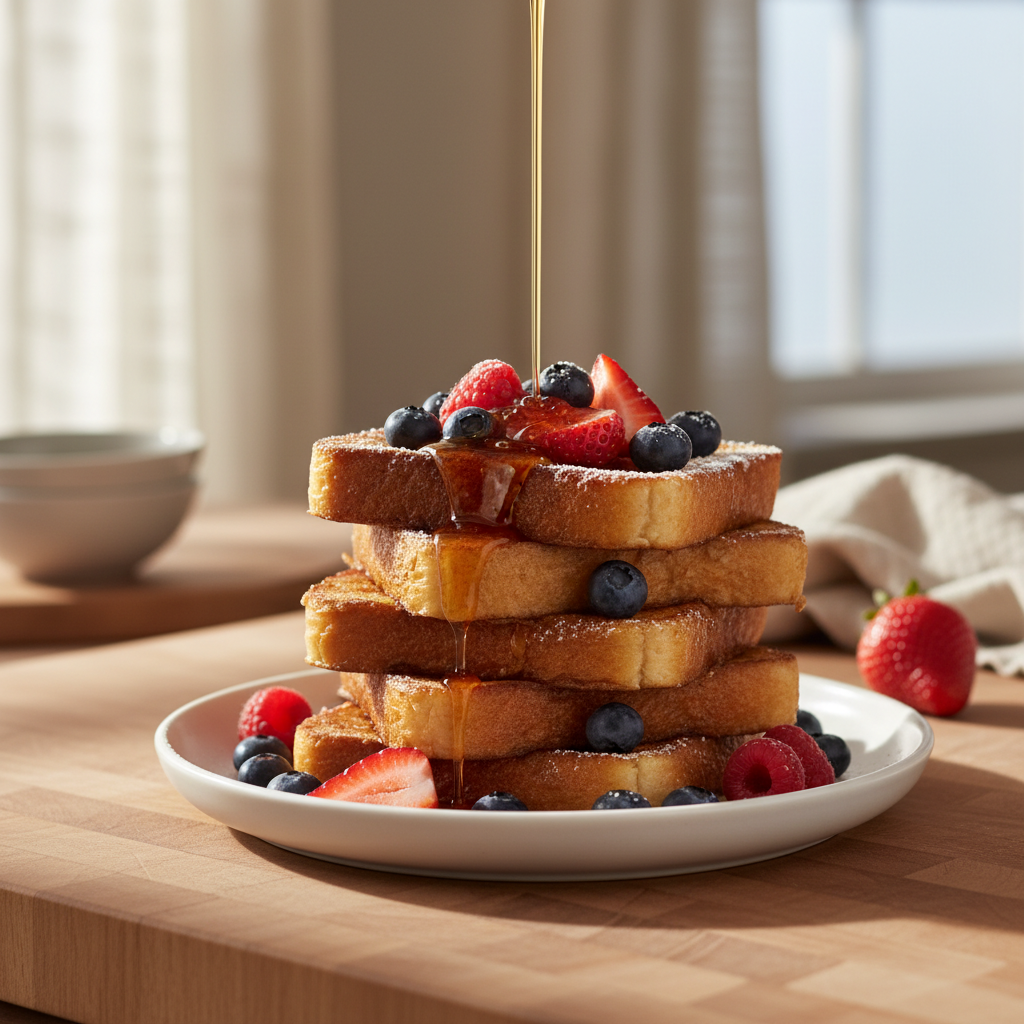
A classic French toast recipe involves dipping slices of bread (preferably slightly stale brioche, challah, or Texas toast) into a rich custard made from eggs, milk or cream, sugar, and spices like cinnamon and vanilla. The soaked bread is then pan-fried in butter until each side is golden brown and crispy, creating a soft, custardy interior.
Craving a special breakfast but dreading a complicated recipe? You’re not alone. Many of us want a delightful meal like French toast, but the effort can feel like too much on a busy morning. But what if making the best french toast recipe was not only simple but also perfectly customizable?
At Recipe-GPT, we believe cooking should be a joy, not a chore. That’s why we’re sharing a truly easy french toast recipe that delivers golden-brown perfection every time. Our step-by-step guide is designed for everyone, from kitchen novices to seasoned pros. Plus, we’ll show you how our AI can enhance this classic dish with instant tweaks and ideas for a personalized breakfast. Think of it as your friendly kitchen assistant, simplifying delicious decisions.
Forget the guesswork and get ready to turn simple ingredients into a breakfast masterpiece. Whether you need a quick weekday treat or are planning a special brunch, this simple french toast recipe has you covered. We’ll also share fun variations, like our amazing overnight french toast casserole, with clear instructions for each. Let’s get started and make your breakfast both effortless and delicious!
Ready for the Easiest French Toast Ever?
Ready for a breakfast classic that feels like a treat? French toast is a favorite for good reason. It’s warm, sweet, and comforting, but many people assume it’s complicated to make.
However, that’s a common misconception. Making delicious French toast at home is easier than you might think, and this guide will show you how to craft the perfect batch every time.
But what if you’re missing an ingredient or need to make this dish even faster? That’s where Recipe-GPT comes in. We simplify your mealtime decisions.
Our AI-powered platform delivers instant inspiration with quick and easy recipes tailored to your needs. Instead of scrolling endlessly through generic sites, you get personalized suggestions fast.
With Recipe-GPT, meal planning becomes effortless. We turn mealtime indecision into clear, delicious choices, helping you build confidence in the kitchen. Our platform can even customize a basic French toast recipe just for you.
Ready to make the best French toast of your life? Let’s dive into the simple steps, which begin with just a few basic ingredients.
What ingredients are in a French toast?
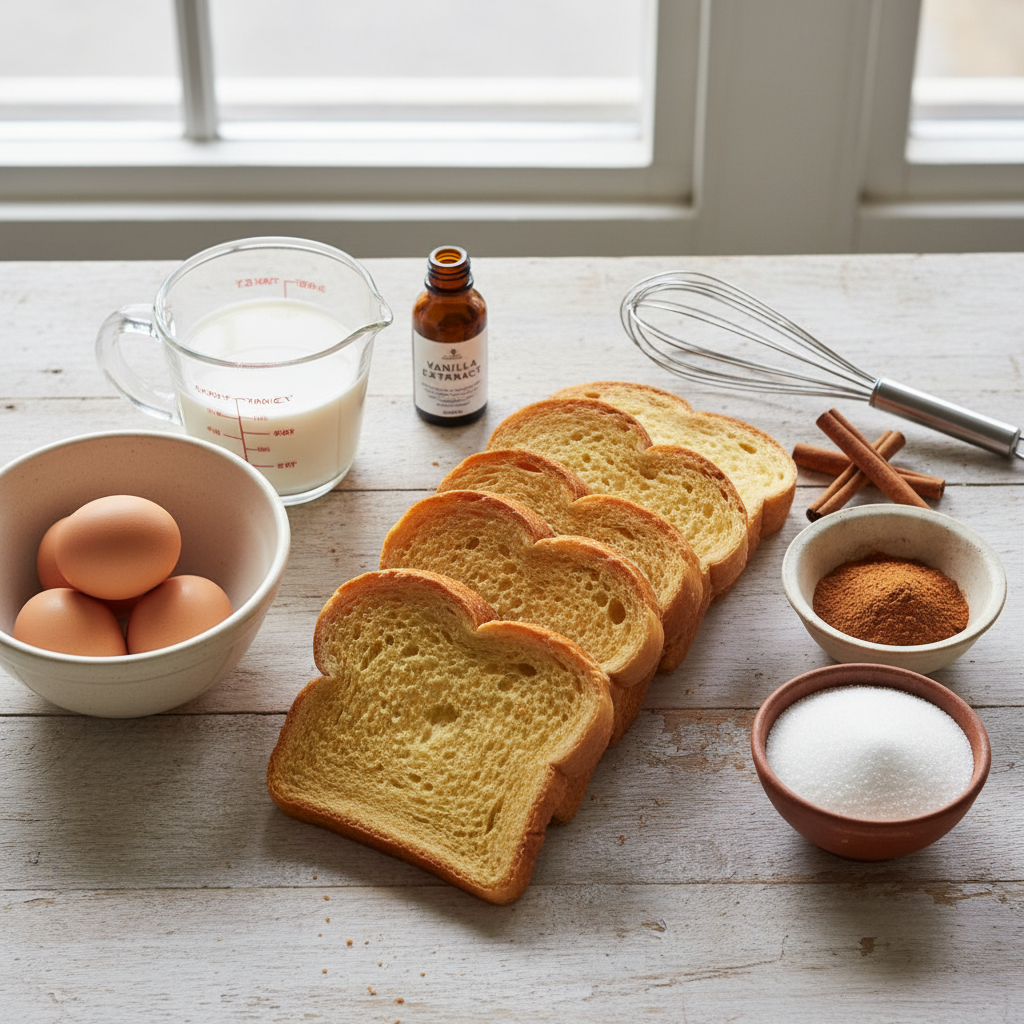
The Best Bread for French Toast
The foundation of amazing French toast is the right bread. You need a sturdy variety that can soak in the custard without falling apart while also absorbing the flavors beautifully.
Choosing the best bread makes all the difference. In fact, slightly stale, day-old bread often works better than fresh because it has less moisture. This lower moisture content allows it to soak up more of the delicious egg mixture without becoming soggy. [1]
Here are some top picks for your homemade French toast:
- Brioche: This rich, buttery bread is a classic choice that creates a wonderfully decadent French toast.
- Challah: Another excellent option, challah is slightly sweet and very absorbent. Its dense texture is perfect for soaking.
- Texas Toast: These thick slices are great for a hearty breakfast because they can handle a good, long soak.
- Sourdough: If you enjoy a slight tang, sourdough adds a unique flavor that contrasts nicely with sweet toppings.
Still not sure which bread to pick? Recipe-GPT can help. Just tell our AI what you have on hand, and it will suggest the best option or offer a smart substitution. It’s a quick and easy way to find the ideal bread for your breakfast.
The Perfect Custard Mix
Next up is the heart of your French toast: the custard. This creamy mixture provides the signature flavor and is surprisingly simple to make. In fact, you likely have all the ingredients in your kitchen already.
A delicious custard requires just a few key components. When combined in the right ratio, they create a rich, aromatic coating that guarantees a perfect outcome every time.
Here’s what you’ll need for a classic custard:
- Eggs: They bind everything together and create that lovely golden crust.
- Milk or Cream: Adds richness and moisture. Whole milk or half-and-half are great options.
- Sugar: A touch of sweetness enhances the flavor and helps with caramelization.
- Vanilla Extract: Essential for a warm, comforting aroma that truly elevates the dish.
- Cinnamon: This classic spice adds a cozy, familiar taste to your French toast.
Whisking these ingredients together until they are smooth is crucial. A uniform mixture ensures that every slice of bread is perfectly coated and flavorful. Want to try a dairy-free version or add a unique spice? Recipe-GPT can instantly generate personalized custard variations, making it easy to adapt to any diet or preference. Discover new twists on classic dishes with simple AI assistance.
How to make French toast in 5 steps?
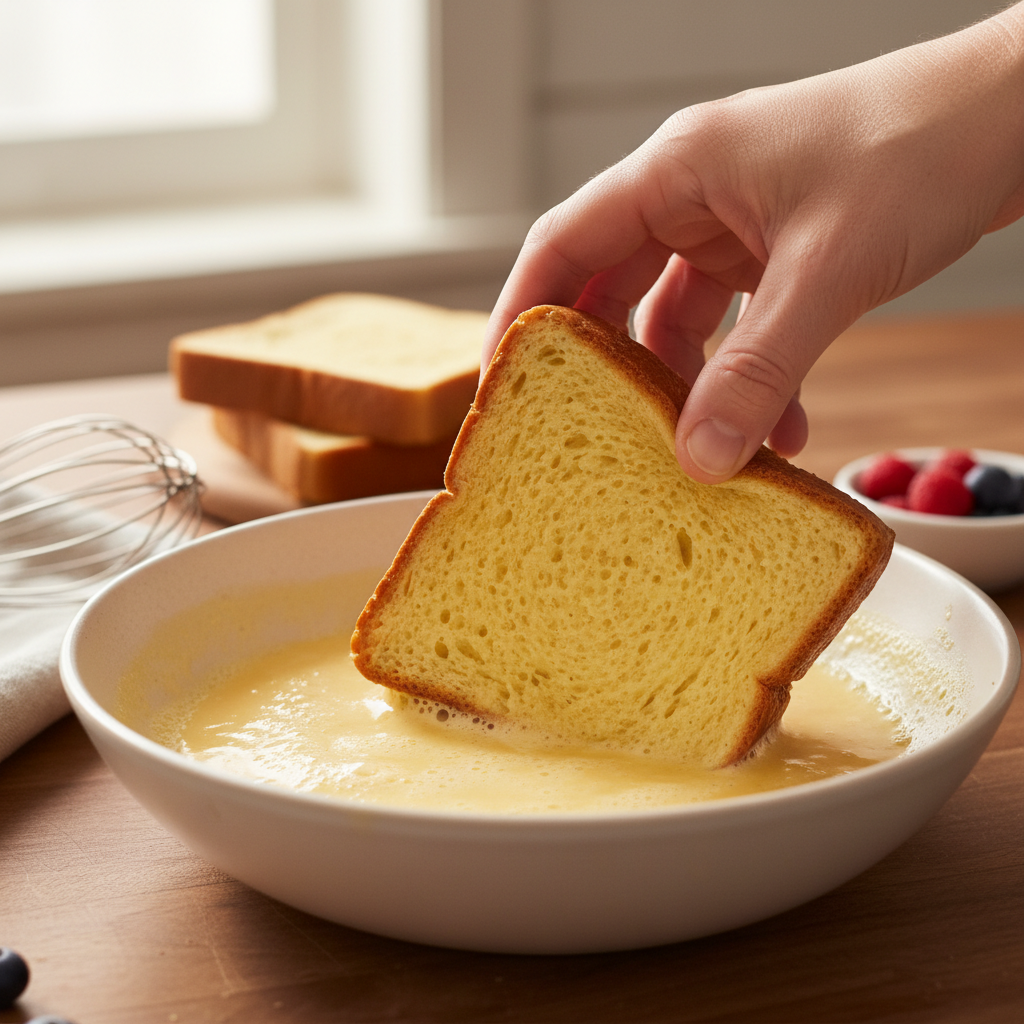
Step 1: Whisk the Egg Custard
First, let’s make the delicious egg custard. This is where the magic begins!
- In a shallow dish or pie plate, whisk together two large eggs.
- Stir in 1/2 cup of milk or cream and 1 tablespoon of granulated sugar.
- Next, add 1/2 teaspoon of vanilla extract.
- For extra warmth, add a pinch of cinnamon (about 1/4 teaspoon).
- Continue whisking until the mixture is smooth and well-combined.
Recipe-GPT can help here! Our AI can suggest dairy-free milk alternatives or different spices if you’re looking to personalize this classic.
Step 2: Soak the Bread Slices
Now it’s time to soak the bread. This step is crucial for achieving perfect French toast.
- Take your chosen bread slices and dip each one into the egg custard.
- Allow each side to soak for 15-20 seconds.
- The goal is to let the bread absorb the mixture thoroughly.
- Be careful not to over-soak, as this will make the bread soggy.
- Conversely, under-soaking will leave the center dry.
Our AI can guide you on ideal soaking times based on different bread types. Just tell Recipe-GPT what bread you have!
Step 3: Heat and Butter Your Pan
A properly heated pan is key to getting that perfect golden-brown finish. Get ready to cook!
- Place a large skillet or griddle over medium heat.
- Once the pan is warm, add a tablespoon of butter.
- Swirl the pan to let the melting butter coat the bottom evenly.
- The pan is ready when the butter foams slightly.
- This indicates it’s hot enough to cook but not so hot that it will burn.
Recipe-GPT provides clear, simple steps like this. It helps you build confidence in the kitchen, making cooking intuitive and easy.
Step 4: Cook Until Golden Brown
The moment of truth! Get ready for beautifully cooked French toast. You’re almost there.
- Carefully place the soaked bread slices onto the hot, buttered skillet.
- Avoid overcrowding the pan; cook in batches if necessary for the best results.
- Cook for 2-3 minutes on the first side until it’s a beautiful golden-brown.
- Flip the slices and cook for another 2-3 minutes until the other side is also golden.
- The center should be fully cooked through and no longer soggy.
Our AI can even suggest cooking times for different thicknesses of bread, ensuring a perfect result every time.
Step 5: Serve with Your Favorite Toppings
The best part! It’s time to personalize your French toast creation. Enjoy your delicious efforts!
- Transfer the cooked French toast to a plate.
- Drizzle with classic maple syrup.
- Top with fresh berries like strawberries or blueberries.
- Add a dollop of whipped cream for a decadent touch.
- Finish with a sprinkle of powdered sugar.
Recipe-GPT makes mealtime decisions easy. Our AI can generate unique topping ideas tailored to your pantry, ensuring you always find fresh inspiration!
What is one common mistake when preparing French toast?
Using the Wrong Bread
The right bread is key to delicious French toast, but a common mistake is using regular sandwich bread. Because this type of bread is often too thin and delicate, it can quickly fall apart when soaked.
Instead, opt for a sturdier loaf. Older, slightly stale bread works best because it absorbs the custard mixture without becoming soggy.
Pro Tip: Recipe-GPT can suggest the best bread types for French toast. It even offers substitutes if you only have specific ingredients on hand.
Not Soaking the Bread Long Enough
Rushing the soaking process is a common misstep. A quick dip can leave the center of your French toast dry, while the goal is to fully saturate the bread for a custardy interior.
However, be careful not to over-soak. Soaking the bread for too long, especially thinner slices, will make it soggy.
For a perfect balance, aim for about 15-30 seconds per side. Keep in mind that thicker slices, like brioche, may need a little more time.
Cooking at the Wrong Temperature
Proper heat control is vital for achieving golden-brown French toast. If the heat is too high, the outside will burn before the inside has a chance to cook, leaving it eggy.
On the other hand, cooking at a temperature that’s too low will dry out the bread or make it greasy from sitting in the butter for too long.
To get it just right, preheat your pan or griddle to medium heat. The perfect temperature is when the butter melts and sizzles gently, ensuring even cooking.
How AI Can Perfect Your French Toast Recipe
Get Instant Ingredient Substitutions
Ever start making French toast, only to realize you’re missing an ingredient? It happens. With Recipe-GPT, these moments are stress-free.
Our AI-powered tool instantly suggests smart substitutions, so you can keep cooking without a trip to the store. For instance, if you’re out of milk, Recipe-GPT might suggest using water or cream. It helps you find clever solutions with ingredients you already have on hand.
Here’s how Recipe-GPT simplifies ingredient swaps:
- No Milk? No Problem: The AI suggests alternatives like water, cream, or plant-based milks.
- Missing Spices: Get recommendations for spices with similar flavor profiles.
- Dietary Needs: Easily swap ingredients for dairy-free or gluten-free options.
This feature makes cooking more flexible, ensuring you can always enjoy your homemade French toast.
Adjust Serving Sizes for 1, 2, or a Crowd
Cooking for one, two, or a crowd? Guessing ingredient amounts can be tricky, but Recipe-GPT removes the guesswork.
Simply tell our AI how many servings you need, and it will instantly adjust all ingredient quantities. This saves time, reduces waste, and ensures you get the perfect amount every time.
With Recipe-GPT, you can easily adjust servings for any occasion:
- Solo Breakfast: Get precise measurements for French toast for one.
- Family Meal: Scale up for a delicious breakfast for the whole family.
- Large Gatherings: Prepare enough for a crowd without any stress.
Meal planning becomes incredibly efficient, so you can focus on enjoying your meal—not on math.
Discover Unique Variations like Baked Casseroles
Ready to move beyond classic French toast? Recipe-GPT is your go-to for culinary inspiration, suggesting exciting new takes on your favorite dishes.
Our AI learns your preferences to introduce delicious variations you might not have considered. For example, it can transform your recipe into an overnight casserole, a simple baked version, or a rich brioche French toast.
Explore new French toast ideas with Recipe-GPT:
- Overnight French Toast Casserole: Prepare ahead for a stress-free morning.
- Baked French Toast: A great option for feeding many without frying each slice.
- Savory French Toast: Discover unexpected twists with herbs and cheese.
- Dietary Versions: Find vegan, gluten-free, or high-protein variations.
This feature encourages creativity in the kitchen, making it easy to discover new favorite meals. With Recipe-GPT, cooking is an exciting journey.
Exploring French Toast Variations
Easy Overnight French Toast Casserole
Waking up to a delicious, mostly-prepared breakfast is easy with an overnight French toast casserole. This dish is a fantastic option for busy mornings or for feeding a crowd.
The main benefit is convenience. Simply assemble the casserole the night before, let the flavors meld overnight, and bake it in the morning. This approach is a lifesaver for holidays and weekend brunches.
With Recipe-GPT, finding the perfect recipe is effortless. Our AI can generate an overnight casserole recipe tailored to your tastes, whether you want to add pecans, berries, or use a specific type of bread.
- Prep Ahead: Soak bread in custard overnight.
- Customize: Add fruits, nuts, or chocolate chips.
- Bake and Serve: Pop it in the oven in the morning.
- AI Tip: Recipe-GPT can suggest dairy-free or gluten-free bread options for dietary needs.
Eliminate the stress of last-minute meal decisions. Our AI helps you turn simple ingredients into a personalized, time-saving breakfast.
Simple Baked French Toast in the Oven
For a hands-off approach to French toast, try baking it in the oven. This method frees up your stovetop and ensures every slice cooks evenly, no flipping required.
This technique is ideal for serving several people at once. Simply arrange the soaked bread slices on a baking sheet and let the oven do the work. The result is perfectly cooked French toast, free of soggy centers or burnt edges.
Recipe-GPT simplifies this process even more. Tell our AI which ingredients you have on hand, and it will suggest delicious oven-baked French toast ideas with clear, step-by-step instructions.
- Even Cooking: All slices bake at once.
- Hands-Off: Less active cooking time for you.
- Versatile: Easily adjust toppings or seasonings.
- AI Benefit: Our AI can help you scale the recipe for any number of servings instantly.
Cook with confidence thanks to AI assistance. It’s a fast and practical way to create delightful family meals.
Classic Brioche French Toast
To create an indulgent and truly special French toast, use brioche bread. Its rich, buttery texture soaks up custard perfectly without falling apart, making it the ultimate choice.
The high egg and butter content in brioche bread creates a sweet, tender crumb. When cooked, this results in French toast that is crispy on the outside and incredibly custardy on the inside.
Ready to try it? Recipe-GPT can guide you. Our AI will generate the perfect brioche French toast recipe, complete with delicious topping suggestions, making it simple and fun to explore new meals.
- Rich Flavor: Brioche adds a buttery, sweet note.
- Perfect Texture: Crispy exterior, custardy interior.
- Elevated Meal: Ideal for special breakfasts or brunches.
- Recipe-GPT Edge: Our AI can suggest pairings like homemade berry compote or maple-pecan syrup.
Replace mealtime indecision with confidence in the kitchen. Recipe-GPT helps you master classic dishes with ease and personalized guidance.
Frequently Asked Questions
How do you make French toast not soggy?
Nobody wants soggy French toast! To prevent it, you need to control two things: how much custard the bread absorbs and how you cook it.
- Choose the Right Bread: Use slightly stale, thick-cut bread. It absorbs the custard without falling apart. Sturdy breads like brioche or challah work best.
- Don’t Oversaturate: Dip each slice for just 10-20 seconds per side. The bread should be moist, not dripping.
- Proper Heat: Cook on medium heat. This allows the center to cook through while the outside turns golden brown. The steady heat also helps evaporate excess moisture, preventing sogginess. [2]
- Use Enough Fat: A pat of butter in the pan helps create a crispy, golden crust.
Recipe-GPT can help you find recipes that specify the best bread choices for a non-soggy result. It’s an easy way to get personalized cooking guidance quickly!
What is the best type of bread for French toast?
The best bread for French toast is sturdy enough to handle a soaking in custard but soft enough to absorb its flavor. Choosing the right kind will elevate your breakfast.
- Brioche: This rich, buttery bread is a top choice. Its high fat content and soft texture create a luxurious, tender result.
- Challah: Similar to brioche, challah is a sweet, eggy bread that soaks up custard beautifully and provides a fantastic texture.
- Texas Toast: Thicker slices offer more surface area for crispiness and a satisfyingly chewy interior.
- Sourdough: For a tangier flavor, dense sourdough holds its shape well and offers a nice contrast to the sweet custard.
Using day-old bread is ideal because it’s drier and can absorb more custard without turning mushy. With Recipe-GPT, you can find “best French toast recipe” ideas and get suggestions for using common pantry breads. Simply tell our AI what you have on hand!
Can I make French toast without milk?
Absolutely! Whether you’re out of milk, have dietary restrictions, or just want a richer flavor, there are several excellent substitutes. Recipe-GPT is perfect for tailoring recipes to your pantry and preferences.
- Water: For a lighter French toast, you can replace milk with water. It still helps the eggs bind to the bread.
- Cream or Half-and-Half: To make an even richer French toast, use cream for a decadent touch. [3]
- Dairy-Free Milks: Almond, soy, oat, or coconut milk are all great dairy-free options that add a creamy texture and subtle flavors.
- Buttermilk: This adds a lovely tang and helps make the French toast extra tender.
Recipe-GPT can generate delicious “easy French toast” recipes for specific dietary needs, like dairy-free or gluten-free. Just input your preferences, and our AI will provide creative solutions!
How do you make French toast for one person?
Making French toast for one is simple with a few adjustments. You don’t need a whole batch to enjoy a perfect breakfast!
Here’s a basic guide:
- Whisk one large egg with about 2-3 tablespoons of milk (or your chosen substitute).
- Add a splash of vanilla extract and a pinch of cinnamon.
- Dip one or two slices of bread into the mixture.
- Cook as usual in a buttered pan until golden brown on both sides.
This scaled-down method gives you a perfect single serving without any waste. To make it even easier, ask Recipe-GPT to instantly adjust any “basic French toast recipe” to your desired serving size. It’s an ideal tool for quick, personalized meal ideas without the guesswork.
Leave a Reply